EN
EN
Xenon vs LED Headlight Conversion: Key Differences for Auto Parts Distributors
For a distributor, comparing hid lights for cars with LED upgrades is not simply a brightness debate. It is a catalogue, fitment, warranty, and compliance decision. Xenon—also called HID, or high-intensity discharge—relies on an arc tube plus an igniter and ballast. LED systems use semiconductor emitters, driver electronics, and a heat-management design. Both can support a useful headlight upgrade when the complete system is engineered for the vehicle, but their sales and service risks are different.
That distinction matters when stocking led headlights for cars beside HID replacement parts. Automotive-lighting buyers increasingly ask for plug-and-play installation and a modern appearance, while installers still need predictable beam control, electrical compatibility, and a product trail they can document. The right inventory mix begins with the vehicle’s original headlamp architecture—not with the most aggressive lumen claim on a box.
Start With the Original Headlamp System
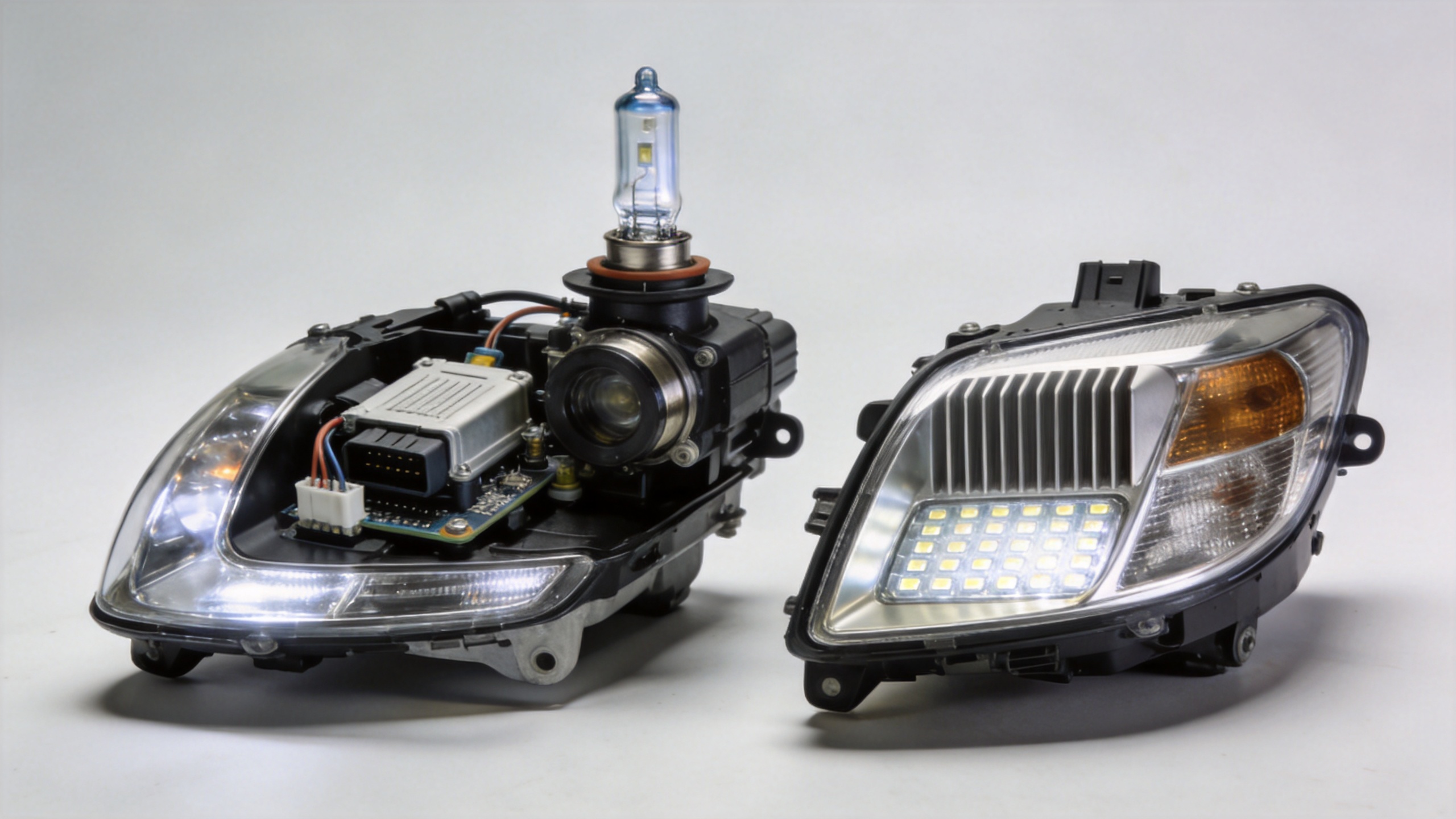
HID systems create light by striking an electrical arc inside a gas-filled capsule. A ballast manages start-up and operating power, and the optical housing was designed around that source. LED headlamps use diodes, optics, a driver, and heat sinks or fans. Because their physical light-emitting area, thermal behavior, and electrical control differ, a direct source swap can change the beam pattern even when the base type appears to fit.
For distributors of hid lights for cars, the practical first question is whether a customer needs an OEM-style replacement, a complete headlamp assembly, or a conversion kit. A D-series HID replacement for a factory HID assembly is a different sales proposition from an LED bulb intended to replace a halogen capsule. Treating every item as an interchangeable “upgrade bulb” raises returns, installation disputes, and compliance exposure.
HID and LED: The Comparison That Matters in Distribution
| Decision area | HID/Xenon route | LED route | Distributor implication |
|---|---|---|---|
| System components | Bulb, igniter, ballast, compatible optics | LED emitter, driver, thermal system, compatible optics | Stock service parts and application data, not only bulbs. |
| Start-up behavior | Requires ignition and warm-up | Typically reaches usable output quickly | Clarify customer expectations for daily driving and premium replacements. |
| Heat management | Heat is concentrated around the arc tube and housing design | Heat must leave the LED junction through a heat sink or fan | Check rear clearance, dust-cap fit, and airflow before calling an item plug-and-play. |
| Electrical integration | Ballast and igniter condition are critical | Driver design and vehicle diagnostics can be critical | Maintain vehicle-specific notes for CAN-bus warnings, adapters, and harnesses. |
| Optical outcome | Depends on a projector/reflector designed for HID | Depends on emitter placement and optics designed for LED | Beam pattern should be validated at the assembly level. |
The table is a useful training tool because wattage alone does not predict usable road light. One LED design may draw a similar power level to another yet deliver a different pattern because of emitter position, driver control, and thermal stability. In the same way, a bright HID capsule cannot correct an unsuitable reflector, aging ballast, or degraded lens. For hid lights for cars, system matching is the product feature customers remember after installation.
Fitment Is More Than a Socket Code
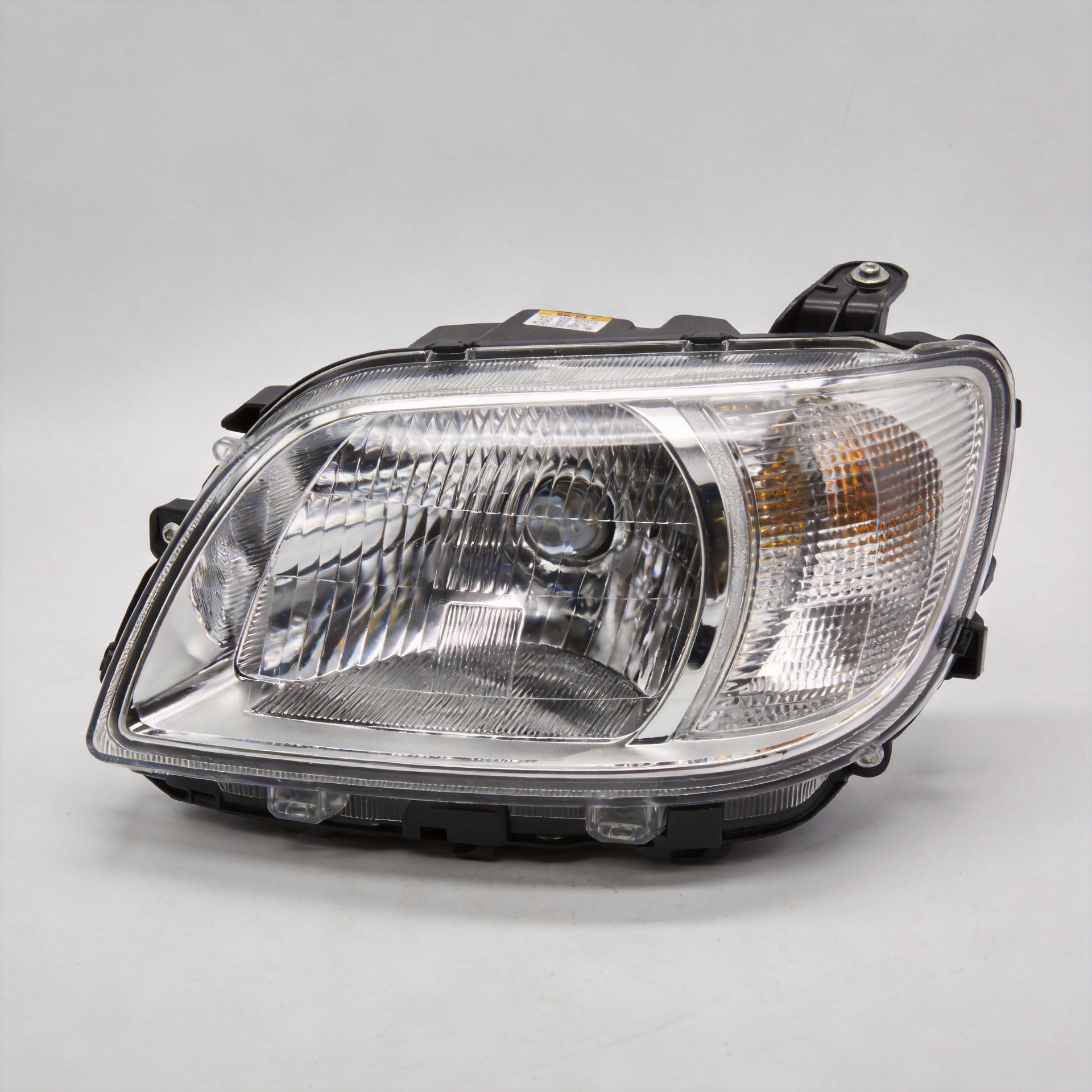
A distributor’s fitment workflow should capture the vehicle year, model, trim, original headlamp type, side-specific requirements, adaptive-lighting features, and diagnostic behavior. It should also distinguish a replacement bulb from a complete assembly. The F30 example in the current catalogue is a BMW 3 Series F30 LED headlight assembly for 2009–2014 halogen or xenon HID upgrade applications; that is a defined assembly application, not evidence that one bulb can suit every F30 configuration.
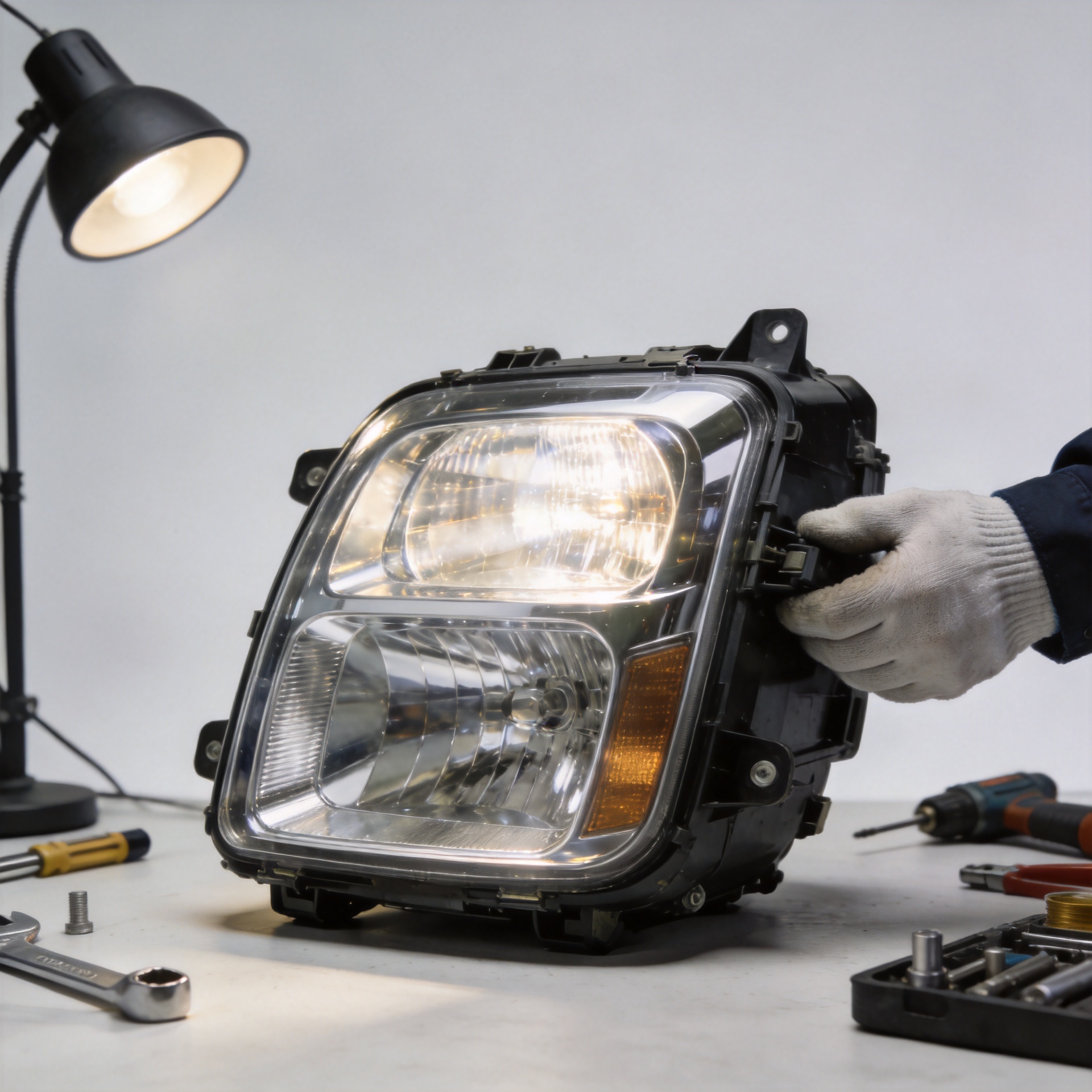
Before listing led headlights for cars as a conversion option, verify connector position, housing depth, dust-cap clearance, cooling-space requirements, polarity where relevant, and error-message behavior. For HID inventory, verify ballast part number, bulb family, igniter interface, and whether the original optic remains in good condition. Sample installation on representative vehicles is often less expensive than managing a broad return rate after launch.
Compliance and Beam Control Belong in the Sales Process
Road-use requirements vary by market and by the approved headlamp system. In the United States, NHTSA explains that headlamp compliance is tied to the applicable system and performance requirements; source type alone is not a compliance shortcut. In approval-driven markets, retrofit LED light sources may need testing under a defined procedure and a vehicle application list. The defensible distributor position is simple: sell the product according to its documented application and tell customers to verify local requirements before road use.
Do not promise that HID or LED is universally road legal, universally brighter, or promise to eliminate glare. Instead, ask whether the assembly produces a controlled beam, whether the light source is approved for that application, and whether the retailer has the documents needed for its destination market. This approach protects the channel while giving technically serious buyers a clearer reason to choose qualified hid lights for cars or a tested LED assembly.
How to Build a Lower-Risk Inventory Mix
- Separate product families: OEM-equivalent HID replacements, ballasts/igniters, complete LED assemblies, and limited conversion kits should have different product pages and warranty rules.
- Prioritize application data: publish fitment, exclusions, installation notes, and required adapters alongside each SKU.
- Use sample validation: check beam aim, warning lights, thermal clearance, and installation time on representative vehicles before bulk stocking.
- Keep technical documents ready: wiring instructions, specification sheets, and available certification documents help retailers answer questions consistently.
- Plan for service: carry the parts that commonly determine a successful repair—ballasts, drivers, seals, connectors, and mounting hardware—where the application supports them.
For private-label and OEM programs, ask suppliers to confirm the target headlamp architecture, packaging requirements, expected market, and the validation process before finalizing a specification. A supplier that can support samples, technical documentation, and batch-level quality checks gives distributors more control than a catalogue built only around headline output figures.
Choosing the Better Route for Each Customer
HID remains relevant when a vehicle already uses a compatible factory HID system and the buyer needs a correctly specified replacement. LED may be attractive when a complete, vehicle-specific assembly is available or where the product has been validated for the intended housing and market. Neither choice is automatically better across all vehicles.
The most useful recommendation for a distributor is therefore conditional: if the priority is restoring an original HID-equipped system, start with the correct bulb-and-ballast ecosystem. If the priority is a modernized appearance or new assembly, evaluate led headlights for cars as a complete application-specific package. In either case, fitment evidence, controlled beam performance, documentation, and after-sales support should decide the final SKU.
Final Takeaway
Successful headlight-upgrade programs do not rely on “HID versus LED” slogans. They match the technology to the original headlamp, the vehicle electronics, the destination market, and the retailer’s service capability. By organizing hid lights for cars and LED products around verified applications rather than generic bulb types, auto-parts distributors can reduce returns, improve installer confidence, and build a more durable lighting category.