EN
EN

How to Source Plug-and-Play Tail Lights for Vehicle-Specific Fitment
A plug-and-play claim can make a tail light assembly replacement sound simple: remove the damaged lamp, connect the new unit, and restore the rear of the vehicle. For a distributor, repair-network buyer, or vehicle-parts program manager, that claim needs a more disciplined definition. A replacement should match the intended vehicle application, connect without improvised wiring, and operate every applicable rear-lighting function correctly. If any one of those conditions is unclear, a low unit price can become a return, a rework job, or a stock problem.
For automotive LED tail lamp sourcing, the most dependable approach is to verify fitment before quoting, approve a functional sample, and set clear packing and batch controls. The steps below help buyers source an led tail light assembly for vehicle-specific fitment without assuming that similar housings or matching plugs are enough.
Define “plug-and-play” as a fitment specification, not a sales phrase
In procurement, plug-and-play should describe the approved vehicle application and connection condition. It does not automatically mean that one lamp will fit every trim, production year, market version, or wiring configuration. A buyer should give the supplier a vehicle identification basis before requesting a final quotation: make, model, model year range, body style, left- or right-hand position, market, and original-equipment part number when available.
Ask the supplier to return this information in a fitment sheet rather than only in chat messages. The sheet should identify the lamp side, connector type, mounting-point layout, functions included, and any exclusions. For example, a tail lamp that looks correct for one model year may not share the same harness, reverse-light arrangement, rear-fog configuration, or trim-level electronics as the next production revision.
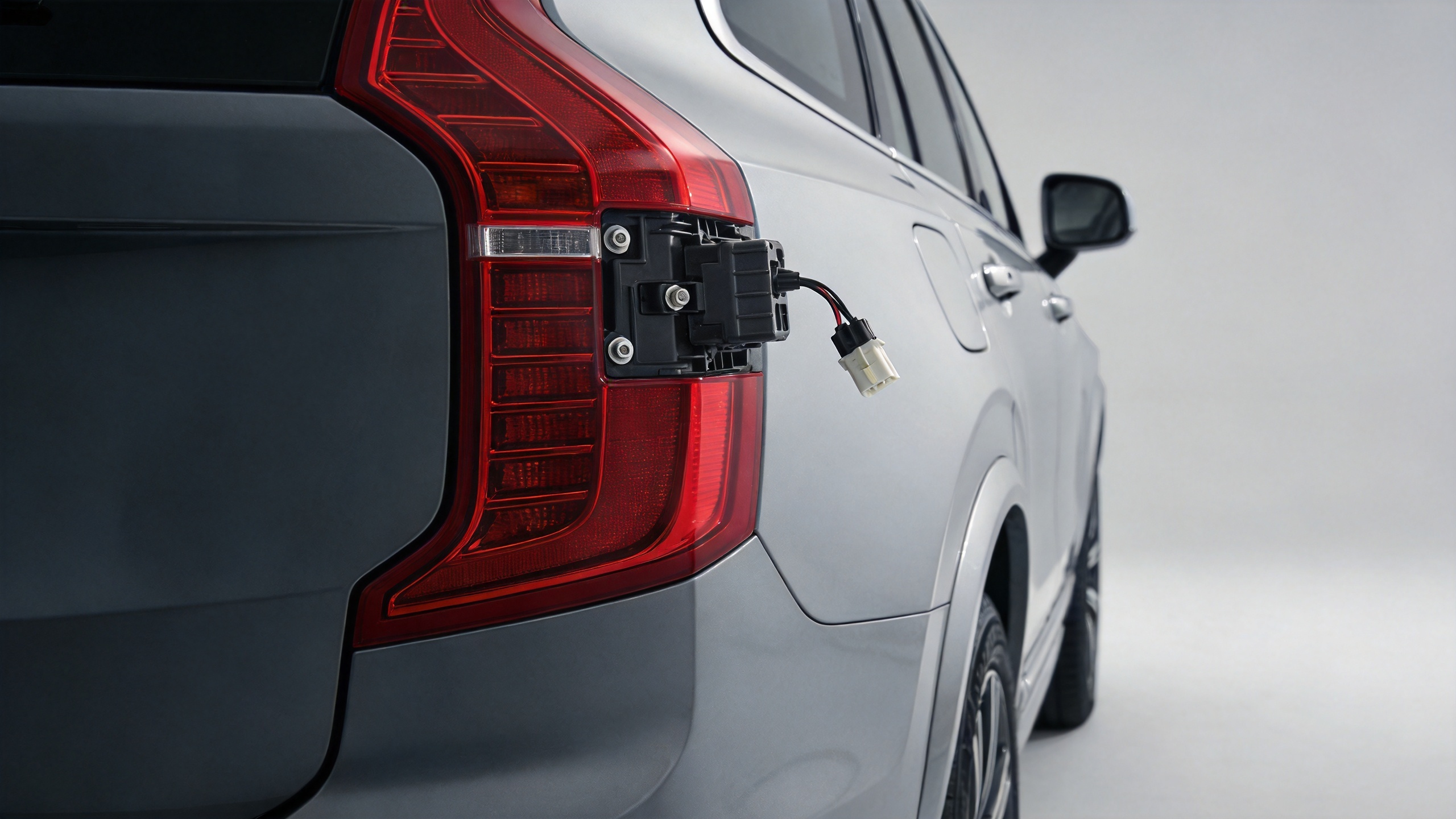
The real question is not simply, “Does the connector plug in?” More importantly: does the connector mapping support every function required by this exact vehicle? Designated pins can carry tail, stop, turn, reverse, parking, rear-fog, or other functions depending on the assembly. Confirming the housing outline without reviewing the function map is an avoidable sourcing gap.
Build a vehicle-specific data pack before sample approval
A good tail light assembly replacement program starts with comparable reference data. Send the supplier clear photos of the installed original lamp, the label or OE number, the rear connector, the mounting area, and the vehicle-side plug. If the program covers multiple applications, use a controlled spreadsheet with one line per vehicle configuration instead of grouping similar-looking models together.
| What to confirm | Why it matters | Evidence to request |
|---|---|---|
| Vehicle application | Prevents a fitment match based only on appearance | Make, model, year range, body style, market, OE reference |
| Mounting geometry | Ensures the lamp seats correctly against the body panel | Mounting-point photos, dimensions, sample trial fit |
| Connector and pinout | Helps avoid function swaps or extra wiring | Connector photos, pin assignment, vehicle-side confirmation |
| Light functions | Protects road-use and customer expectations | Function checklist and video from the sample test |
| Market requirements | Prevents assumptions about approval markings or installation rules | Destination-market requirement list and applicable documentation |
For markets using UNECE-based requirements, lighting installation and lamp-function approvals may be relevant. Treat this as a destination-market review point, not as a blanket claim that any replacement lamp is approved. The buyer should confirm applicable requirements with the relevant compliance process for the target vehicle and market.
Test the complete rear-lighting function set
A sample should be checked on a representative vehicle or validated fixture before bulk approval. Start with visual fit: panel gaps, sealing contact, fastener alignment, and whether the lamp sits flush without force. Then perform a function-by-function test. This is where an led tail light assembly moves from a catalog image to a usable replacement part.
- Tail/position light: verify steady illumination and left/right consistency.
- Stop lamp: verify correct activation and visible contrast from the tail-light mode.
- Turn signal: verify the intended side and flash behavior.
- Reverse lamp and rear fog lamp: test when those functions apply to the configuration.
- Warning/hazard mode: verify both sides operate as expected.
- Vehicle diagnostics: check for warning messages, hyperflash, or other compatibility issues where applicable.
It is tempting to make the test about brightness alone. More accurately, brightness is only one acceptance point; the usable result depends on function separation, optics, sealing, connector engagement, and vehicle compatibility. Record the test with a short video and a signed sample checklist. That record gives both buyer and supplier a shared approval baseline before production.
Evaluate the supplier beyond the sample unit
A single sample can fit well while later batches vary in lens color, housing finish, connector retention, or packaging protection. When sourcing a tail light assembly replacement, ask how the supplier keeps the approved sample aligned with production. Relevant questions include how applications are identified, how incoming components are checked, what functional testing occurs, and how lot information is retained.
For buyers who need a vehicle-specific example, YIAALUX lists a 2022–2023 BMW X3 G08 plug-and-play tail lamp assembly. Use the listing as a starting point for application discussion, then verify the exact vehicle configuration, connector, functions, and target-market requirements with the supplier before committing to an order.
For OEM or private-label projects, clarify the approval sample, artwork, labeling, service-part policy, and change-control process. A supplier may be able to discuss customized packaging or branding, but the buyer should document which elements are approved and which changes require a new sample review.
Use a tail light assembly replacement release matrix
For each SKU, turn the purchase-order review into a compact tail light assembly replacement matrix. The following labels are useful because each label ties a decision to evidence rather than a verbal promise:
- Tail light assembly replacement application: exact make, model, year, body style, market, and side.
- Tail light assembly replacement reference: OE number, original-lamp label, or controlled vehicle photos.
- Tail light assembly replacement connector: plug view, pin map, lock engagement, and polarity check.
- Tail light assembly replacement mounting: tabs, studs, sealing edge, panel seating, and fasteners.
- Tail light assembly replacement functions: tail, stop, turn, reverse, and rear fog where applicable.
- Tail light assembly replacement diagnostics: test result on the representative vehicle or fixture.
- Tail light assembly replacement appearance: lens color, housing finish, left/right match, and visible defects.
- Tail light assembly replacement packaging: individual protection, carton markings, quantity, and side identification.
Use the same matrix for the approval sample and the pre-shipment inspection. A tail light assembly replacement should not be released when its application line is open, its connector evidence is missing, or its functional video does not match the approved configuration. The matrix also helps a buyer compare quotations that use the same vehicle application but offer different verification depth.
Apply the same discipline to an led tail light assembly. An led tail light assembly needs the approved vehicle reference, a verified connector, and a complete function record. An led tail light assembly also needs packaging that protects lenses and mounting tabs. For a private-label program, an led tail light assembly release should record approved artwork, labels, and change-control requirements. If a supplier proposes a revised led tail light assembly, treat it as a reviewable change rather than assuming a similar appearance guarantees the same fit.
This procedure is not designed to slow buying. It moves fitment questions forward, when they are cheaper to resolve. A genuinely plug-and-play tail light assembly replacement is the result of matched vehicle data, verified functions, controlled production, and protected delivery—not just a familiar connector.
Final takeaway
Buy vehicle-specific tail lamps as an application-controlled tail light assembly replacement program. Verify vehicle data, pin assignment, mounting geometry, applicable functions, sample performance, packaging, and production consistency. With those checks in place, buyers can source a plug-and-play led tail light assembly with fewer installation surprises and a clearer basis for supplier accountability.