EN
EN

What Are Motorcycle Auxiliary Lights and Why Riders Need Them
Night riding exposes a hard truth most riders learn too late: your stock headlight was not designed for the kind of darkness that shows up on mountain passes, rain-soaked highways, or unlit off-road trails. During night rides and off-road runs, I've consistently watched experienced riders underestimate how severely limited stock lighting affects reaction time—especially on the kinds of corners where you need to spot hazards before they become emergencies. Underestimating that gap is one of the most common and avoidable safety errors in motorcycle riding.
That gap between what your factory headlight covers and what you actually need to ride safely is exactly the problem motorcycle aux lights solve. Whether you're a wholesaler sourcing for a distribution catalog, an OEM procurement team evaluating fitment compatibility, or a rider trying to understand what's actually worth buying, this guide explains what auxiliary lights are, the main types available, and why they matter across different riding situations.
What Are Motorcycle Auxiliary Lights?
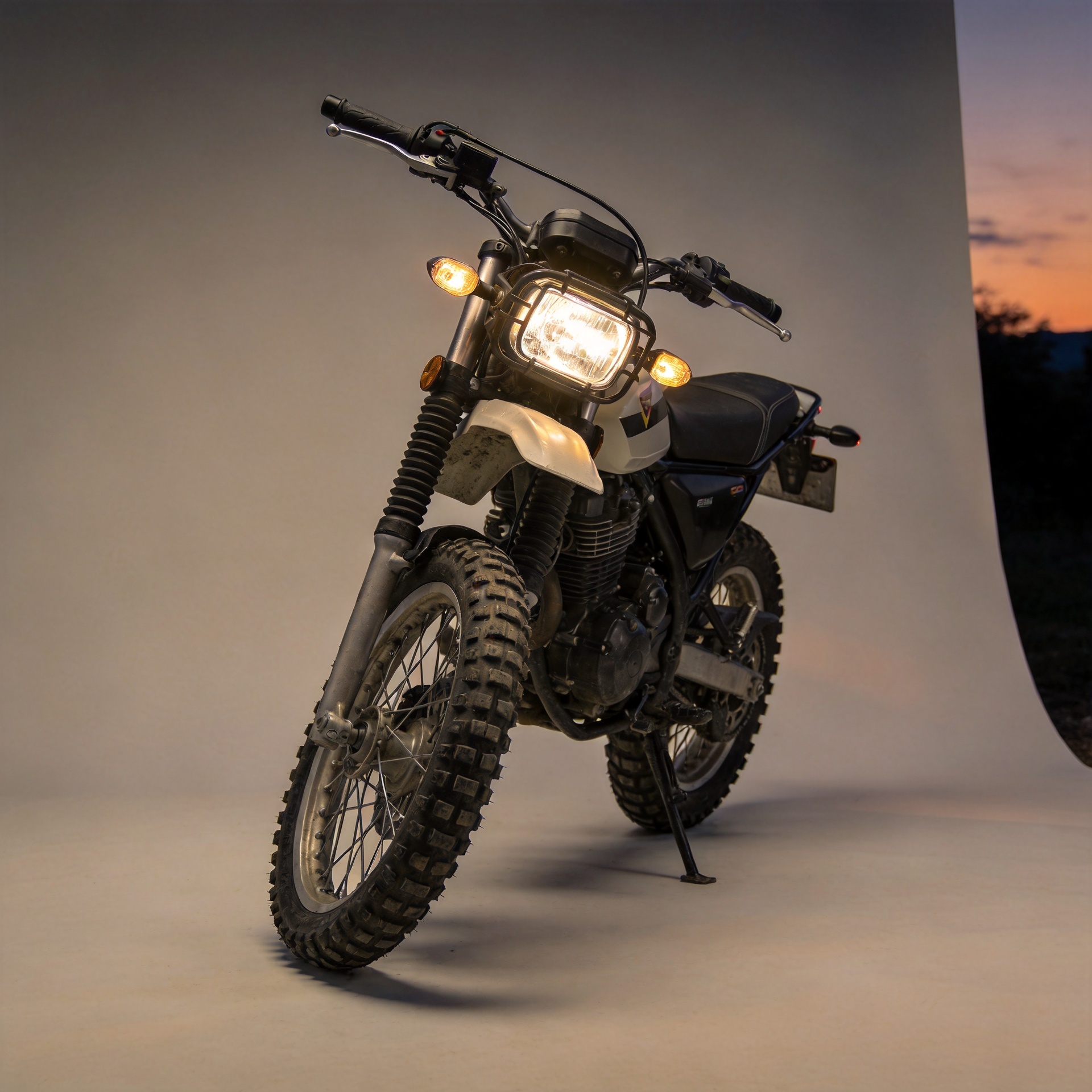
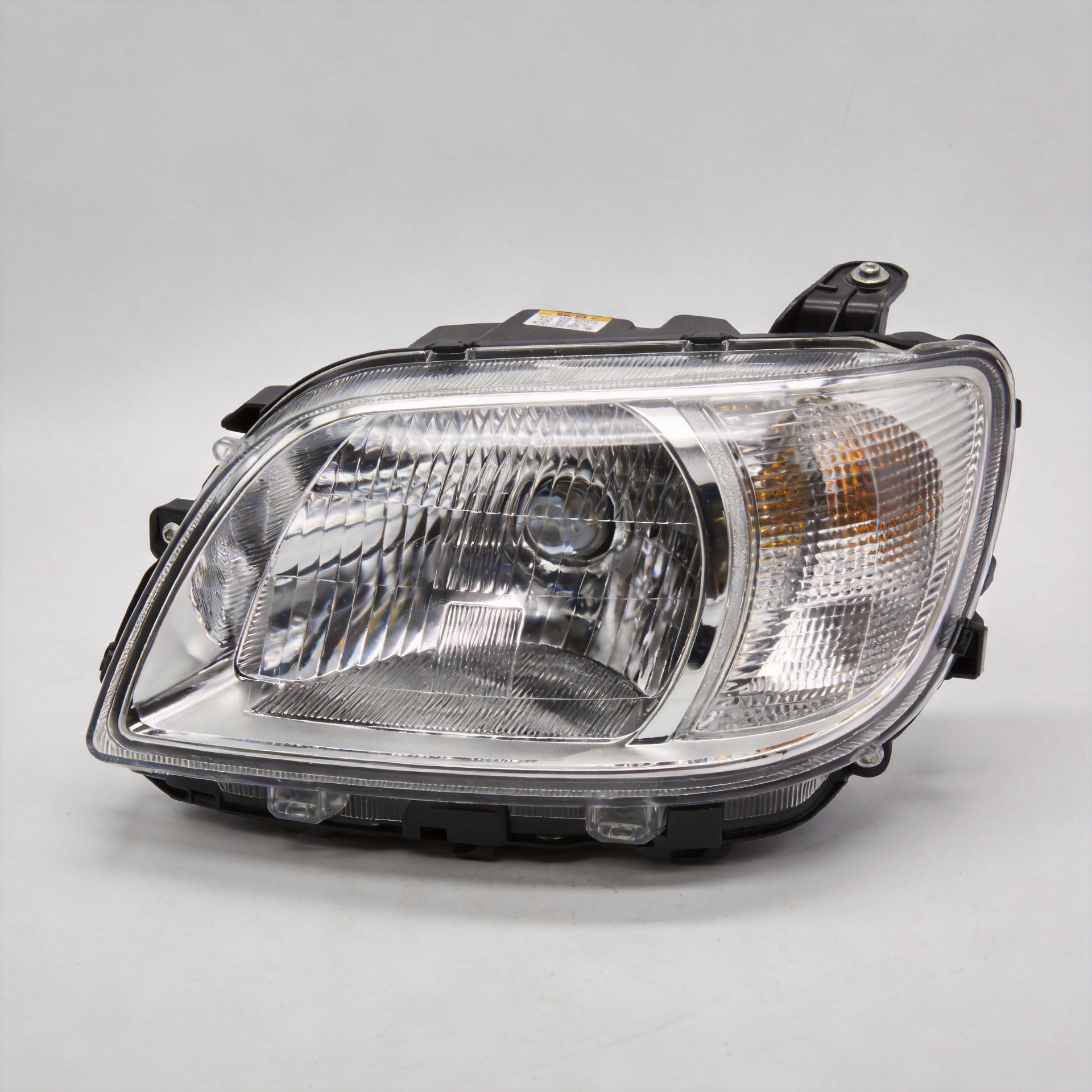
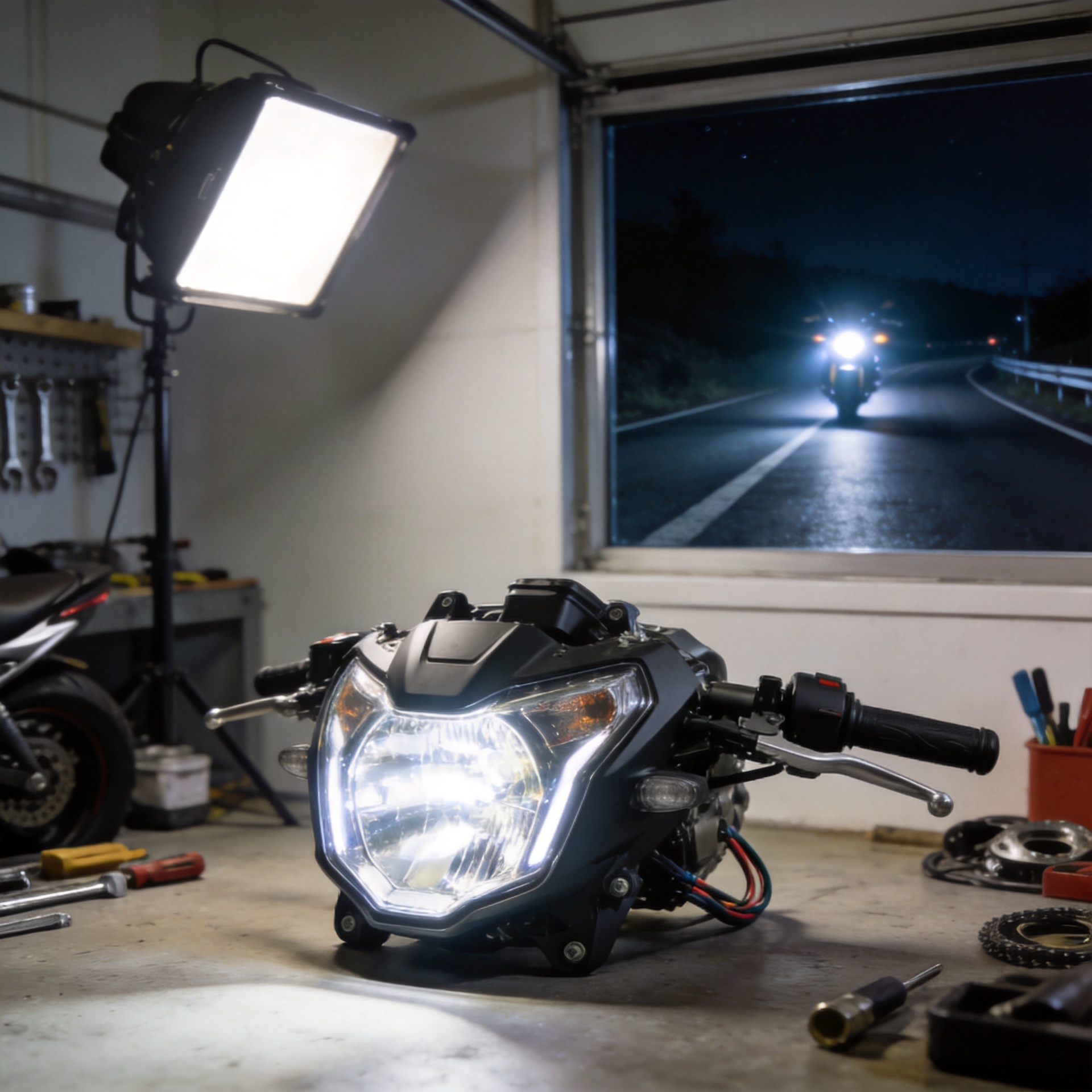
Motorcycle auxiliary lights are secondary lighting units mounted to the front of a motorcycle—typically on fork legs, handlebar crash bars, or the lower frame—to extend or supplement the stock headlight. They are not replacements for the main headlight. Instead, they work alongside it to close specific visibility gaps: low-angle fog penetration, wider lateral coverage, or longer-distance forward projection depending on the type selected.
Unlike the main headlight, which is fixed in beam function and legally constrained in output, aux lights for bikes are chosen to match a specific riding purpose. A set of spotlights optimized for highway touring will perform very differently from a set of fog lights built for wet-weather mountain riding. Getting that distinction right is what separates a useful upgrade from the wrong purchase.
The Three Main Types of Motorcycle Aux Lights
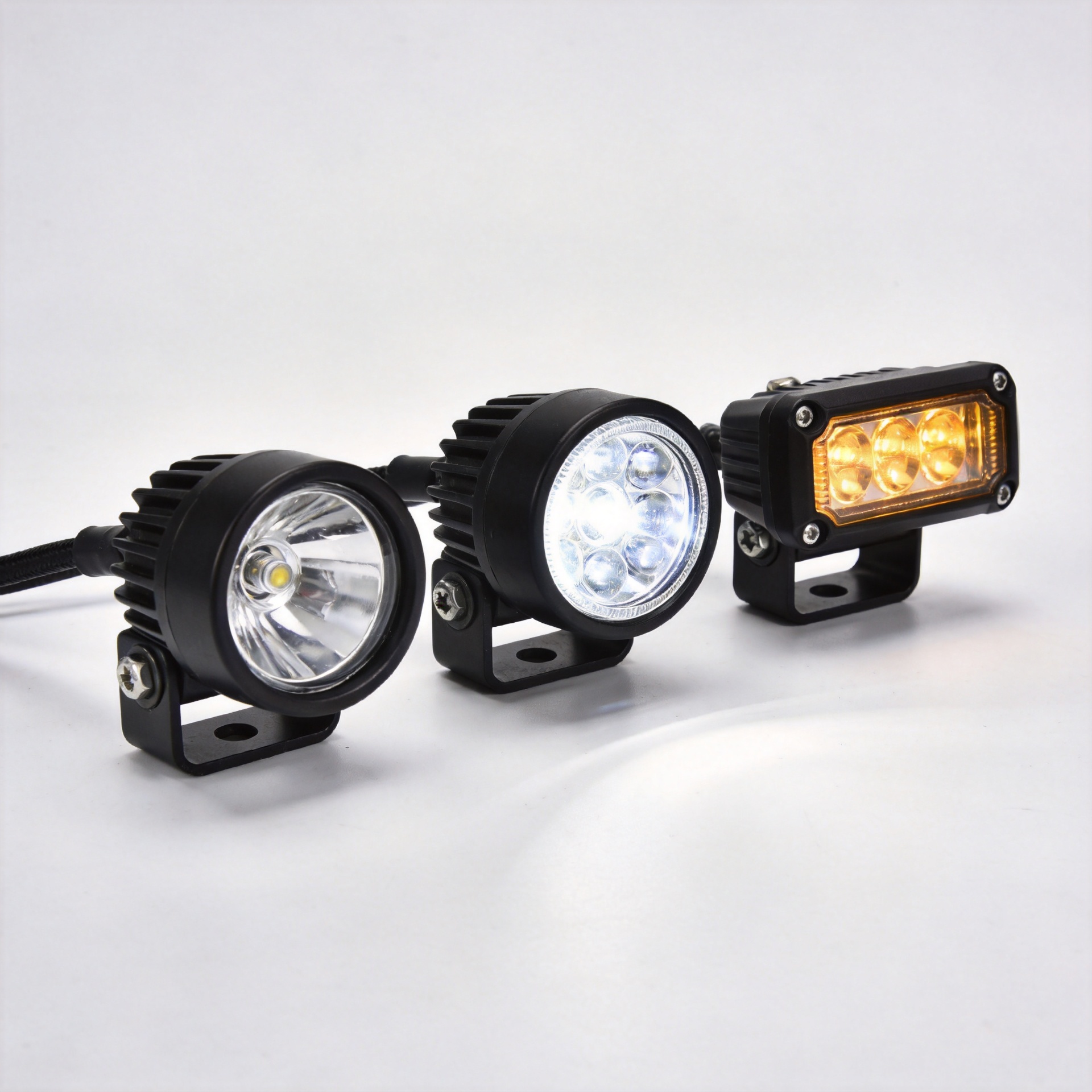
Think of aux light beam patterns like a flashlight's mode switch: flood mode covers wide but doesn't reach far; spot mode reaches far but creates side blind zones; and fog mode projects low and wide to illuminate beneath haze rather than reflecting it back. Here's how that maps to the three product categories you'll encounter:
- Spotlights (driving lights) – Produce a tight, long-distance beam optimized for forward projection. Well suited for open highway riding and ADV touring where seeing further ahead gives more reaction time. LED wattage typically runs from 50W to 150W per unit. These are the go-to choice when distance coverage matters more than width.
- Fog lights – Mounted lower than the main headlight and angled downward, these project a wide, low beam that cuts beneath fog, mist, rain, and airborne dust rather than reflecting it back at the rider. Essential for any market with frequent rain or early-morning mist. The 2025 Newest External Motorcycle 3.7" 100W Auxiliary Fog Lights High Low Beam combines high/low beam capability in a single unit, covering both fog penetration and general auxiliary use.
- DRL and auxiliary near-field lights (auxiliary headlights motorcycle) – Daytime running lights and wide near-field units that improve the motorcycle's visibility to oncoming traffic, rather than extending the rider's own view. Front-facing DRL units keep the bike conspicuous in daylight, twilight, rain, and full darkness. The 2025 Newest Motorcycle Accessories Hi/Lo Beam Amber DRL 3.15" 150W Auxiliary Lights Front Fog Lamp for BMW Motorcycles integrates an amber DRL with hi/lo beam switching, suited for both daytime conspicuity and night auxiliary use on touring platforms.
Why Riders Need Aux Lights: Three Real Scenarios
The value case for motorcycle aux lights runs deeper than "brighter is better." Their value depends entirely on the riding context—and choosing the wrong type for a given scenario can actually reduce safety rather than improve it.
Off-Road and Adventure Riding
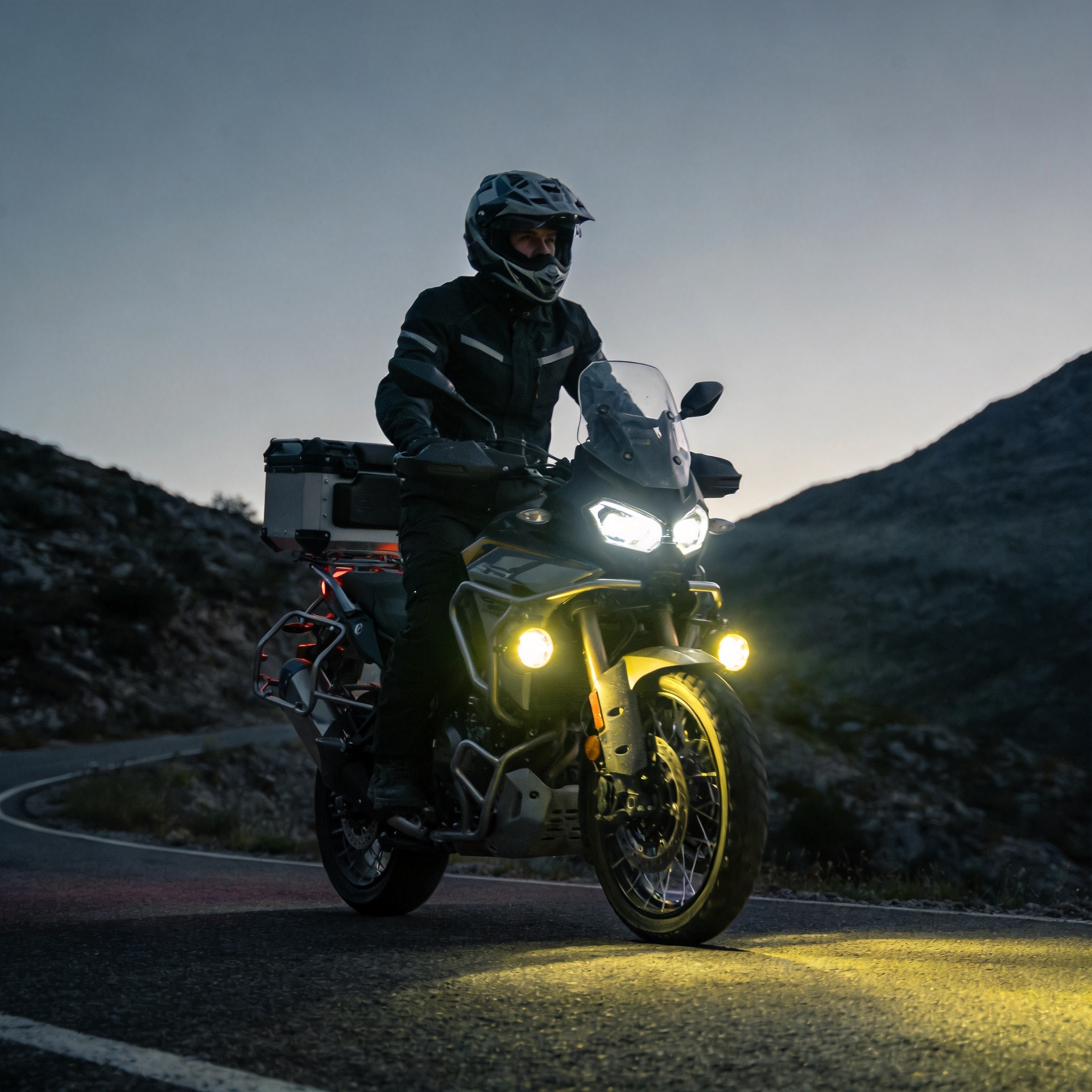
Here's the counter-intuitive part many riders miss: on tight wooded trails and switchbacks, a wide flood or fog configuration outperforms a spotlight. In those conditions, what you need is lateral coverage, not forward distance—because the hazard you need to see is at the corner entrance, not 200 meters straight ahead. Imagine this: you're on a mountain road at night with tight hairpins, and your aux lights are perfectly illuminating the straight section in front of you—but both sides of the next corner entrance are completely dark. That's a beam-pattern mismatch creating exactly the hazard you installed lights to prevent. For open desert and gravel ADV riding, however, spotlights mounted on crash bars extend forward reach where it counts most.
Night Highway and Long-Distance Touring
At highway speeds, a stock headlight's limited reach means hazards—broken road surfaces, animals crossing, sudden road debris—enter your visual field with far less time to react. Auxiliary lights with driving or spotlight beam patterns push that identification distance significantly further, giving riders the reaction window they need at speed. Front-facing aux lights also improve how visible the motorcycle is to vehicles approaching from the opposite direction, addressing both seeing and being seen in a single installation.
Urban and Wet-Weather Commuting
In city riding through rain or fog, the primary role of auxiliary headlights motorcycle commuters install shifts toward conspicuity rather than illumination—urban streetlights already handle road brightness. Front-facing DRL units with amber or white output measurably increase how visible the motorcycle is to drivers at intersections and in merging situations, especially in low-contrast weather conditions. For wet-climate markets in Europe and Southeast Asia, DRL-integrated auxiliary lights have become a standard fitment request across commuter and urban touring categories.
What Buyers Should Evaluate When Specifying Aux Lights
For wholesale buyers, distributors, and OEM procurement teams assessing aux lights for bikes across market catalogs, four technical specifications shape real-world performance across market conditions:
- IP rating – IP67 or IP68 is the baseline for reliable year-round exposure. IP65 is acceptable for covered mounting positions but insufficient for fork-leg or lower-frame mounting with direct water exposure.
- Beam pattern homologation – ECE R112, SAE J583, or equivalent certification for the target market. Strong photometric output without regional homologation creates compliance risk for distributing partners.
- Wattage and thermal management – LED units in the 50W–150W range require effective heat dissipation to sustain output on extended runs. Evaluate die-cast aluminum housing quality alongside rated wattage.
- Mounting compatibility – Fork diameter tolerances, crash bar attachment specs, and harness routing all affect installation time and cross-model fitment consistency across a product lineup.
YIAALUX manufactures its motorcycle aux lights range—including auxiliary headlights motorcycle wholesalers and OEM buyers source for ADV, touring, and commuter platforms—from its Danyang production facility in Jiangsu Province, positioned within one of China's primary automotive lighting manufacturing clusters. Products support OEM customization, mixed-model volume orders, and export certification for the European, North American, and Asian markets the company currently serves.