EN
Vespa Sprint DRL Headlight Features to Compare Before Upgrading
Upgrading a scooter headlight is not simply a search for the brightest motorcycle front light led. For a Vespa Sprint, the useful comparison starts with fitment, beam control, daytime visibility, and the quality of the electrical integration. A lamp that looks impressive on a product page can still be the wrong choice if its mounting points, connector layout, or low-beam cutoff do not suit the scooter and the roads where it will be used.
As a motorcycle-lighting technical adviser, I see one mistake repeatedly: buyers compare output claims before they confirm the beam pattern and installation conditions. That order should be reversed. A thoughtful upgrade can improve the front-end appearance and the rider’s ability to be seen; a poorly matched unit can create glare, wiring problems, or a headlight that needs more adjustment than expected.
Start With Vespa Sprint Fitment, Not the DRL Look
The first comparison point is vehicle compatibility. Check the model year and displacement of the Vespa Sprint, the headlight-shell dimensions, mounting tabs, rear clearance, connector type, and the position of any adjustment hardware. A motorcycle front light led assembly may be designed around a specific housing shape rather than being a universal replacement. “For Sprint” should mean more than a similar round face.
Ask for an installation drawing or clear rear-view photos before ordering. They should show where the driver module sits, how the harness exits the lamp, and whether the assembly requires an adapter, relay, or modification to the original wiring. For distributors and OEM-oriented buyers, sample fitting on the actual target scooter is the sensible final check; a clean-looking sample does not by itself prove batch-to-batch fit consistency.
- Confirm the exact Sprint application and original headlamp configuration.
- Compare outer diameter, depth behind the lens, brackets, and aiming adjustment range.
- Verify connector pinout, voltage range, fuse protection, and DRL switching method.
- Ask whether installation affects access to routine service parts or the steering movement.
Separate DRL Visibility From Night-Riding Illumination
A daytime running light is primarily a conspicuity feature: it helps other road users notice the scooter in daylight. It is not automatically evidence of a stronger low beam or a more useful high beam. When comparing a DRL-equipped motorcycle front light led, treat the DRL circuit, low beam, and high beam as three functions that deserve separate questions.
Look at the DRL’s position around the projector or lens, the uniformity of the illuminated ring or ambient element, and how it operates with the ignition and main beam. Then assess the road-lighting functions independently. Low beam should provide a controlled, wide, shorter-range pattern that lets the rider read the road without sending excessive light toward other traffic. High beam is for greater reach on dark, open roads when conditions permit. The exact legal requirements vary by market, so buyers should verify local rules and the documentation relevant to their destination rather than assume a DRL design is approved everywhere.
Compare the Projector Optics and Beam Pattern on a Wall
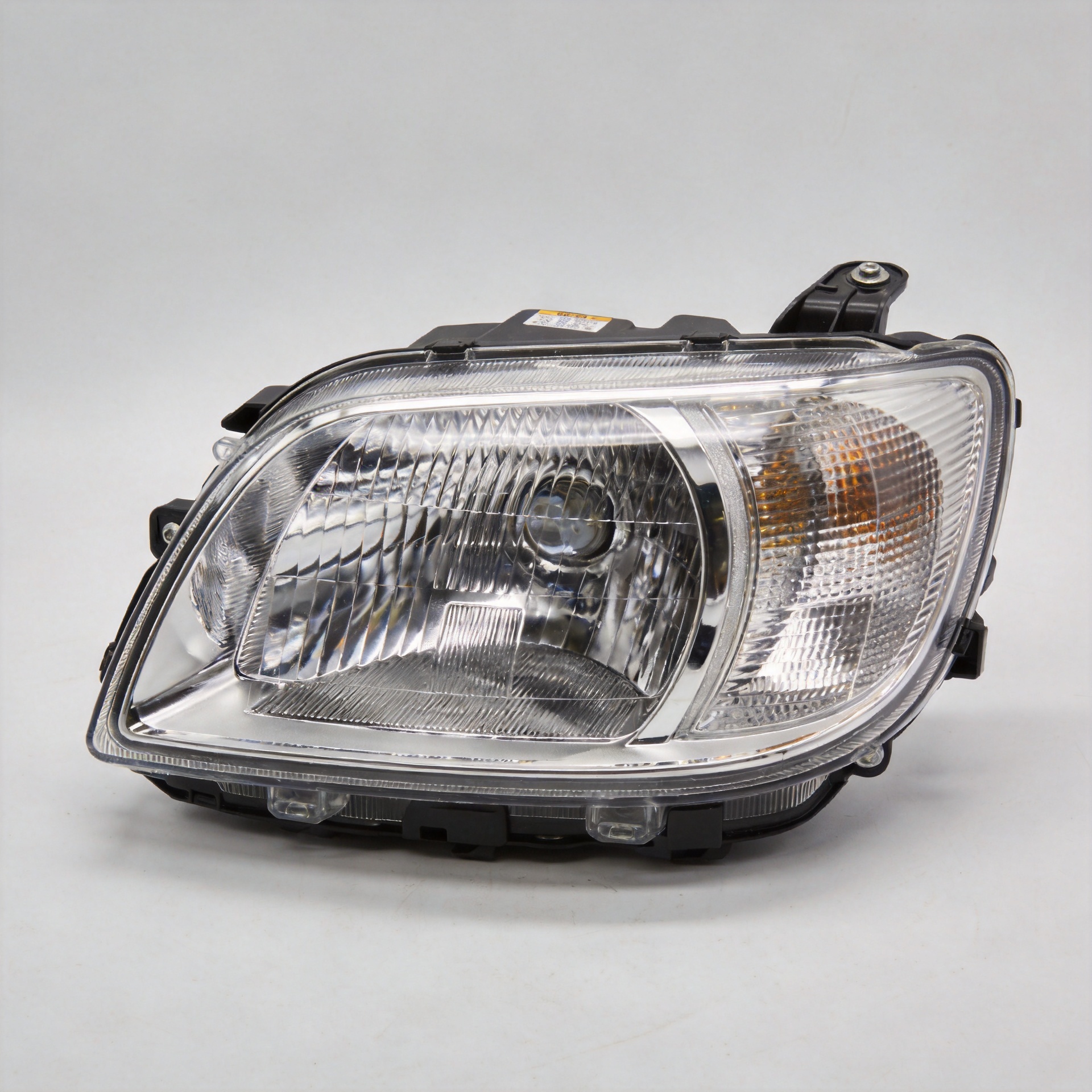
The projector is often the visual center of an upgraded headlamp, but the key question is what it does with the light. A projector led headlight bulb or projector-style module should produce a repeatable pattern with a sensible cutoff, useful width, and consistent transition between the bright area and the surrounding field. A bright center spot with weak side coverage can feel less useful on urban corners than a well-controlled spread.
Request low- and high-beam photos taken at a stated distance against a flat wall, plus photos or video after aiming on the scooter. Do not compare images captured with different camera exposure settings as if they were laboratory measurements. More importantly, ask how the beam is adjusted after installation. A lamp with good optics still needs an accessible, stable aiming point.
| Feature to compare | What to inspect | Why it matters |
|---|---|---|
| Low-beam cutoff | Shape, height, and left/right distribution after fitting | Helps balance forward visibility with glare control |
| High-beam reach | Distance illumination without a narrow tunnel effect | Useful on unlit roads where high beam is appropriate |
| Beam width | Coverage at lane edges and through typical turns | Supports practical awareness, not only center brightness |
| Aiming hardware | Adjustment access and vibration resistance | Determines whether the installed beam remains usable |
Inspect Thermal, Lens, and Weather-Protection Details
Brightness claims tell only part of the story. Heat management affects LED life and color stability, while lens sealing and rear-housing design influence how the lamp copes with rain, washing, road spray, and daily temperature changes. Ask how heat is moved away from the LEDs, whether the driver is integrated or external, and how the rear cover and cable entry are sealed.
Here is an important qualification: a stated ingress-protection rating describes a defined test condition, not a guarantee that every installation will remain sealed forever. Inspect gasket placement, harness strain relief, vents, and the quality of the connector seals. For a Vespa Sprint used in frequent rain or stored outdoors, these details are just as relevant as the appearance of the DRL.
Review Electrical Compatibility and Day-to-Day Behavior
Before choosing a motorcycle front light led, confirm how it behaves during startup, low/high-beam switching, and DRL operation. Ask whether the lamp has an integrated driver, what the current draw is at each mode, whether it is designed for the scooter’s charging system, and whether the DRL remains active in the intended configuration. Check for flicker, error indications, radio interference, or excess heat during a real test rather than relying on a brief bench demonstration.
For trade buyers, documentation matters too. Installation instructions, wiring diagrams, specification sheets, and any destination-market compliance documents should be available before a large order. Suppliers with OEM/ODM capability can be useful when a buyer needs branding, appearance, or harness changes, but the requested configuration should still be sample-tested and documented.
Use a Sample-Based Comparison Before Committing
A practical upgrade decision comes from a short checklist: fit the sample, aim the beam, test low/high/DRL modes, inspect the harness, and review documentation. Then decide whether the product suits the intended market and riding conditions. This approach turns a styling-led purchase into an evidence-led comparison.
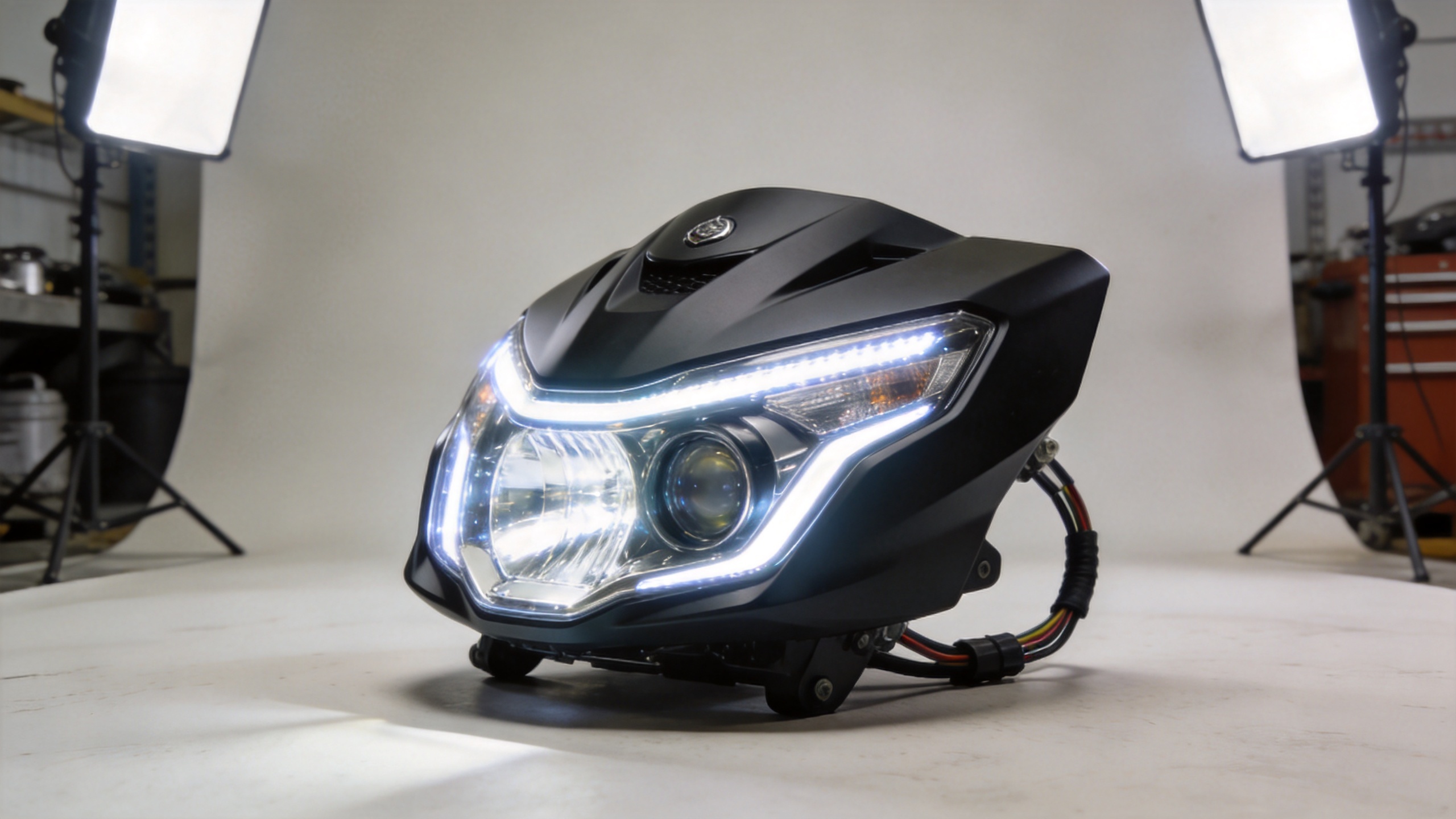
For a product option designed around this application, review the Vespa Sprint 150 projector LED headlight replacement with ambient DRL alongside the same checklist. Its product title indicates the intended scooter application and DRL/projector configuration; confirm final vehicle compatibility, specifications, installation requirements, and market documentation with the supplier before purchase.
Questions to Ask When Comparing a Motorcycle Front Light LED
Use the phrase motorcycle front light led as a category label, then turn it into specific questions. Is this motorcycle front light led built for the Vespa Sprint housing? Does the motorcycle front light led keep its beam aim after vibration? Can the motorcycle front light led be serviced without cutting the original harness? Those questions are more useful than a headline output number.
For every motorcycle front light led option, compare the low beam on the same wall and at the same mounting height. Compare the motorcycle front light led DRL with the main lamp switched on and off. Confirm whether the motorcycle front light led wiring includes a clear diagram. If the motorcycle front light led uses a projector led headlight bulb, ask for the replacement procedure and the heat-management layout. A projector led headlight bulb should be evaluated as part of its optical housing, not as an isolated brightness claim.
During sample review, run the motorcycle front light led through startup, DRL, low beam, and high beam. Check the motorcycle front light led after a vibration or road test, then inspect connectors and seals. A motorcycle front light led with a tidy lens but unstable aiming is not a completed upgrade. Likewise, a projector led headlight bulb that looks bright in a photograph may not deliver an even road pattern after installation.
For a repeatable procurement record, note the motorcycle front light led application, harness version, beam photos, adjustment method, and supplied documents. This makes it easier to compare one motorcycle front light led sample against another motorcycle front light led sample fairly. It also helps a distributor explain why a projector led headlight bulb configuration was selected for a particular market or scooter configuration.
Final Comparison Checklist
A suitable Vespa Sprint upgrade is not defined by a single brightness number or the most dramatic DRL ring. Compare confirmed fitment, beam pattern, DRL behavior, adjustability, thermal design, sealing, wiring, and documentation as one system. If the sample performs consistently after installation and can be aimed correctly, the upgrade is much more likely to deliver both a cleaner front-end look and a more dependable riding experience.