EN

Vespa Sprint 150 High and Low Beam LED Headlight Selection Guide
Choosing a led moto headlight for a Vespa Sprint 150 is less about finding the biggest brightness claim and more about confirming the complete lighting system. A useful upgrade has to deliver a controlled low beam, a purposeful high beam, a practical fit in the headlight housing, and documentation appropriate for the market where the scooter will be sold. For distributors, workshops, and private-label buyers, those checks also reduce the chance that a sample looks right while the production order creates installation or compliance problems.
Many buyers start by comparing output numbers. That is understandable, but it misses the point: the beam pattern determines how light is placed on the road. A headlight led for motorcycle applications should create a usable low-beam cutoff and a high beam that extends forward without compromising the rest of the lighting system. This guide focuses on the questions to ask before committing to a Vespa Sprint 150 replacement or upgrade.
Start with the Vespa Sprint 150 fitment baseline
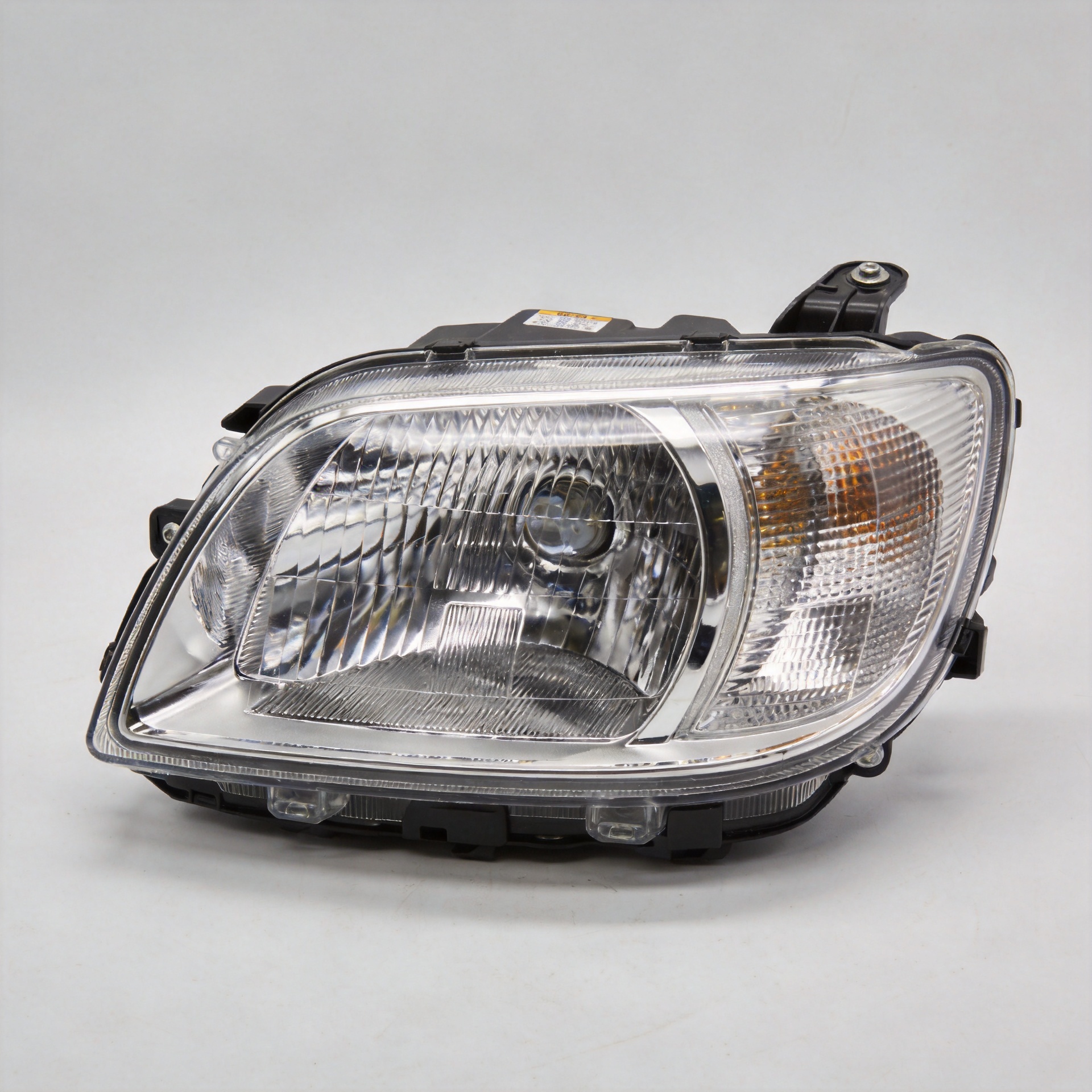
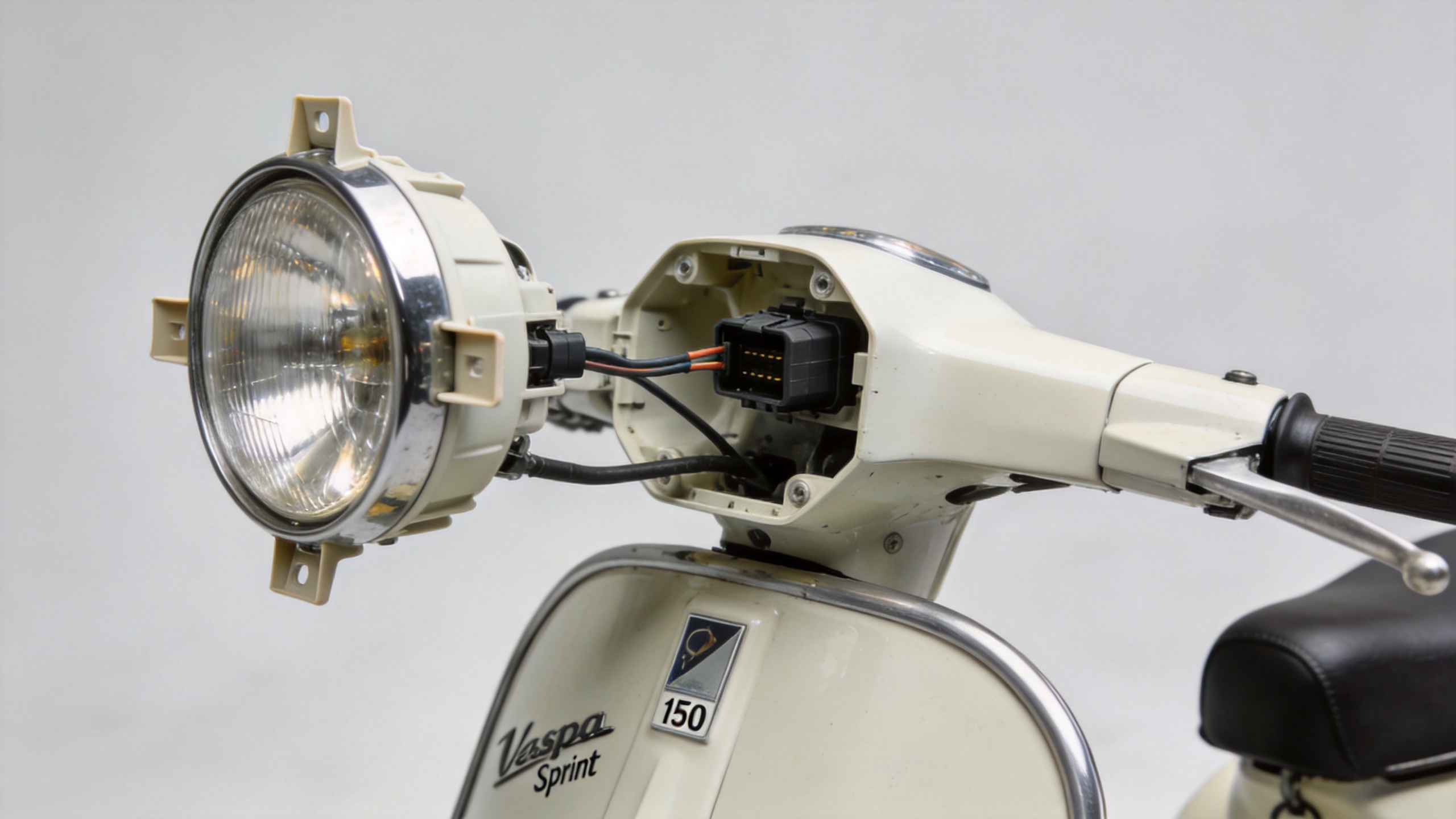
Fitment is the first gate, not the final detail. “Vespa Sprint 150” can cover different model years, trim configurations, regional equipment, and headlight assemblies. Ask the supplier to confirm the exact model-year range, housing dimensions, mounting points, connector type, pin assignment, and whether the scooter uses a separate DRL connection. A lamp that physically fits the opening may still need a different harness, bracket, seal, or switch interface.
For a led moto headlight purchase program, request clear photos of the rear housing, connector, mounting tabs, and installed position. Then compare them with the actual scooter or a verified reference sample. This is especially important when ordering for a retailer: a clean first sample does not by itself prove that later batches will maintain connector orientation and mounting tolerances.
- Record the scooter model year and market destination.
- Confirm the original headlight housing and connector configuration.
- Check clearance for heat sinks, drivers, and rear covers.
- Verify whether low beam, high beam, DRL, and position-light functions use separate circuits.
- Ask what installation hardware is included and what is optional.
Evaluate low beam and high beam as different jobs
A good headlight led for motorcycle use needs two distinct lighting behaviors. Low beam should place light across the near and middle road area while controlling upward light that can distract oncoming traffic. High beam is intended to extend the rider’s forward view when conditions permit. More raw output does not automatically improve either function; poor optics can create a bright foreground, dark distance, or glare outside the useful beam area.
When reviewing a led moto headlight, ask for beam-pattern images or test material that identifies low-beam and high-beam modes separately. Confirm how the beam is aimed after installation, because headlight height, suspension condition, load, and mounting angle all affect the final result. Do not rely on a generic “plug-and-play” claim as a substitute for an aim check.
| Selection point | Low beam question | High beam question |
|---|---|---|
| Road use | Is the cutoff controlled for normal traffic conditions? | Does the beam add useful forward distance when high beam is appropriate? |
| Optics | Is light distributed across the lane without excessive upward scatter? | Does the pattern extend rather than only brighten the area near the scooter? |
| Installation | Can the lamp be accurately aimed in the stock housing? | Does beam switching work with the scooter’s original controls? |
| Verification | What documentation applies to the intended sales market? | Are the relevant high-beam function and marking details available? |
Check electrical integration before quoting the project
Electrical compatibility should be discussed in plain terms: operating-voltage range, connector interface, current draw, driver location, heat management, and switching logic. A led moto headlight may have an integrated driver or an external one; either design can work, but the available space and routing path in the Vespa Sprint 150 assembly must be checked first. For any headlight led for motorcycle program, confirm that the supplier can provide the installation instructions and wiring information needed by the buyer’s workshop or technical team.
Pay particular attention to the low/high-beam changeover. The lamp should be evaluated with the original controls and the actual vehicle electrical system, not only on a bench. If a DRL or position-light function is part of the intended configuration, clarify its connection and operating behavior separately. It is safer to ask for a wiring diagram and a sample test than to infer compatibility from product photos.
Make market approval and batch consistency part of the decision
Lighting requirements differ across countries and regions. A supplier should not describe a product as approved for a target market unless they can provide the relevant, current evidence for that specific configuration. For a decision-stage purchase, ask which markings, test reports, or declarations are available; who issued them; and whether they apply to the exact lamp, beam functions, and destination market you plan to serve.
Batch consistency matters just as much. Buyers should compare more than appearance: examine the connector, lens alignment, mounting tabs, sealing details, switching response, and beam pattern across samples where possible. The practical lesson is simple: a good-looking sample is only the start. A supplier’s ability to keep the same fit and function through production is what protects a distributor’s returns and installation time.
A practical Vespa Sprint 150 LED headlight checklist
- Identify the scooter precisely: model year, market, current lamp assembly, and required functions.
- Validate mechanical fit: housing, tabs, depth, rear clearance, seals, and included hardware.
- Validate electrical fit: connectors, pins, switching logic, driver placement, and any DRL connection.
- Review the beam pattern: low beam for controlled road coverage; high beam for useful forward reach.
- Confirm compliance evidence: ask for documents relevant to the market instead of assuming a universal approval.
- Test a sample: install, aim, switch beams, and inspect the final setup on the intended scooter.
- Set a batch-control standard: define the photos, checks, and acceptance points to use before larger orders.
Supplier request sheet for your evaluation
Use this concise request sheet when comparing quotations. For each led moto headlight, record fitment status, connector details, low-beam evidence, high-beam evidence, and market-document status. A headlight led for motorcycle project is easier to review when every sample follows the same sheet.
- Led moto headlight: confirm the Vespa Sprint 150 model year.
- Led moto headlight: confirm mounting-tab geometry.
- Led moto headlight: confirm housing depth and rear clearance.
- Led moto headlight: confirm connector type and pinout.
- Led moto headlight: confirm low-beam switching behavior.
- Led moto headlight: confirm high-beam switching behavior.
- Led moto headlight: request a low-beam pattern image.
- Led moto headlight: request a high-beam pattern image.
- Led moto headlight: confirm aiming adjustment requirements.
- Led moto headlight: review heat-management clearance.
- Led moto headlight: request wiring instructions.
- Led moto headlight: verify the included installation hardware.
- Led moto headlight: request target-market documentation.
- Led moto headlight: inspect sample-to-sample consistency.
- Led moto headlight: define batch acceptance checks.
- Headlight led for motorcycle: keep approval claims tied to evidence.
- Headlight led for motorcycle: test the final installed aim.
- Headlight led for motorcycle: document the workshop installation result.
Where to begin with a model-specific option
If your technical team has already confirmed the required application, you can review the YIAALUX SPHL-ZE High beam lamp and low beam lamp LED Z headlight for Vespa Sprint 150 as a model-specific starting point. The product page should be used to begin a fitment conversation, not to replace the checks above. Request the current specification, installation details, sample availability, and market-specific documentation before committing to a purchase order.
In short, the right led moto headlight for a Vespa Sprint 150 is the one that aligns with the actual scooter, produces disciplined low- and high-beam behavior, and can be supported with the evidence your market requires. Treat fitment, optics, electrical integration, and batch verification as one decision—not four separate afterthoughts.