EN
Rear Fog Lights: Product Fitment Questions Buyers Should Ask
For a parts wholesaler or vehicle-program buyer, a rear fog light is not a generic red lamp that can be selected from a catalogue by appearance alone. It is a visibility component that must fit a defined vehicle, electrical architecture, rear-lamp layout, and destination-market requirement. A purchase order can look straightforward until the first sample reaches the workshop: the mounting points differ, the connector does not mate, the vehicle has no rear-fog switch output, or the lamp marking is unsuitable for the intended market.
This buyer-side checklist helps procurement teams turn “Does it fit?” into verifiable questions. It also distinguishes a rear fog light from other car fog lights: front lamps illuminate the road ahead, while a rear lamp is intended to make the vehicle easier for following traffic to see in severe low-visibility conditions. That functional difference affects position, brightness, wiring, and compliance review.
1. Which exact vehicle application is being quoted?
Start with a vehicle application sheet, not a vehicle brand name. Ask the supplier to state the make, model, model year range, body style, drive side where relevant, market version, and whether the part replaces an original rear fog light or adds a new function. A BMW X5 from one production period can have different lamp assemblies, trims, connectors, or market equipment. “Fits BMW X5” is not enough evidence for a buyer to release a purchase order.
- What are the OEM reference numbers and the supplier’s cross-reference method?
- Does the quoted rear fog light fit the left, right, or both sides?
- Is it for a bumper-mounted lamp, tail-lamp assembly, or a separate retrofit unit?
- What production years and body variants are excluded?
- Can the supplier provide dimensional drawings, mounting-point photos, and a sample-fit record?
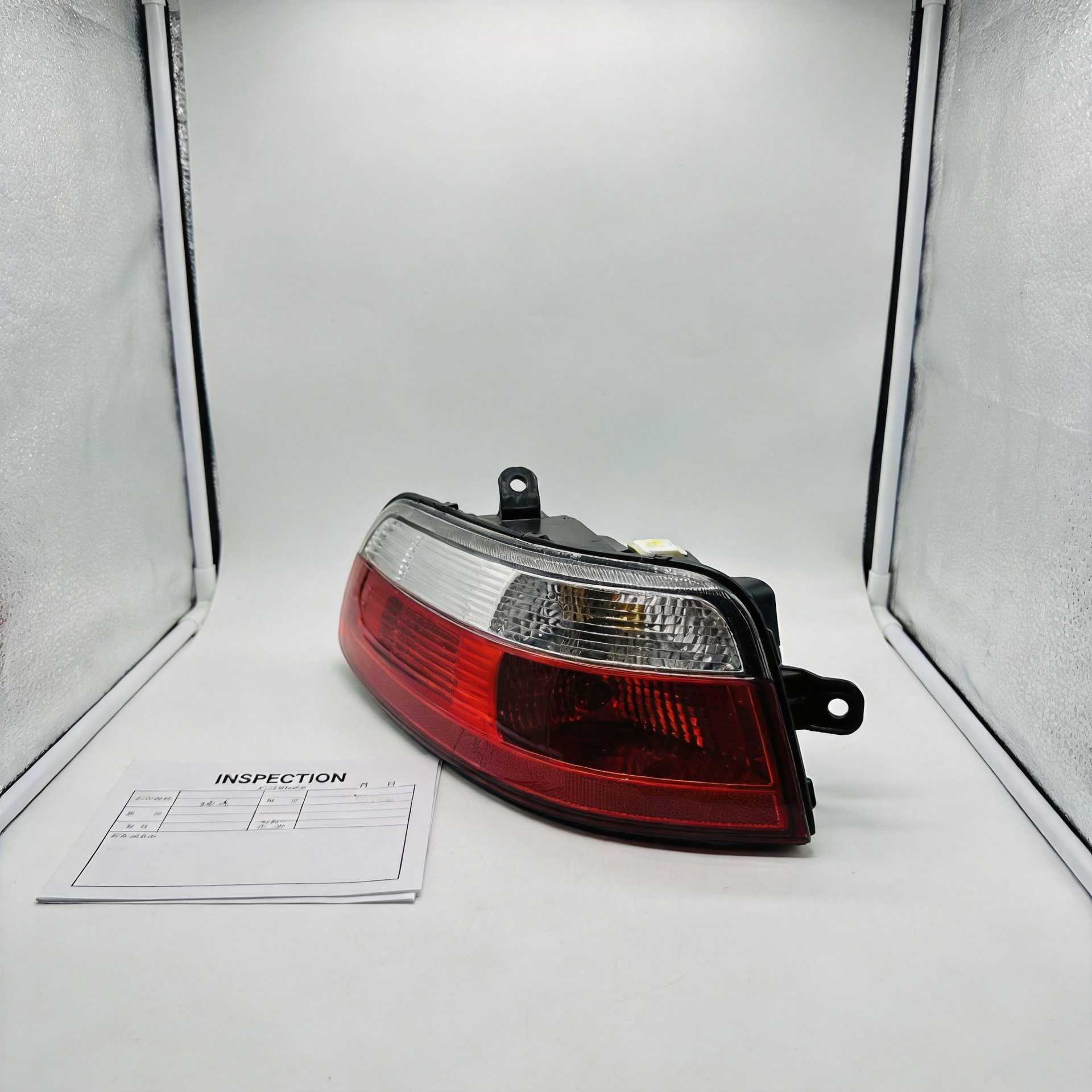
For example, buyers evaluating a 2014–2018 BMW X5 F15 LED tail lamp assembly should request confirmation of the exact lamp position and rear-fog configuration before treating the assembly as a direct replacement. The product title alone should not be used as proof of feature parity.
2. Does the mounting interface match the vehicle, not just the lamp shape?
Photos can conceal the details that cause costly returns. Ask for the drawing dimensions, stud or clip locations, housing depth, gasket profile, drainage provisions, and clearance behind the bumper or body panel. If the vehicle uses a lamp carrier, determine whether the carrier, fasteners, seals, and trim pieces are included or reused.
A useful receiving-inspection step is to compare the sample against an approved master part at three points: the visible lens outline, the mounting geometry, and the rear clearance envelope. This keeps a rear fog light project from becoming a cosmetic match with an installation problem.
3. What must be true electrically for the rear fog light to operate?
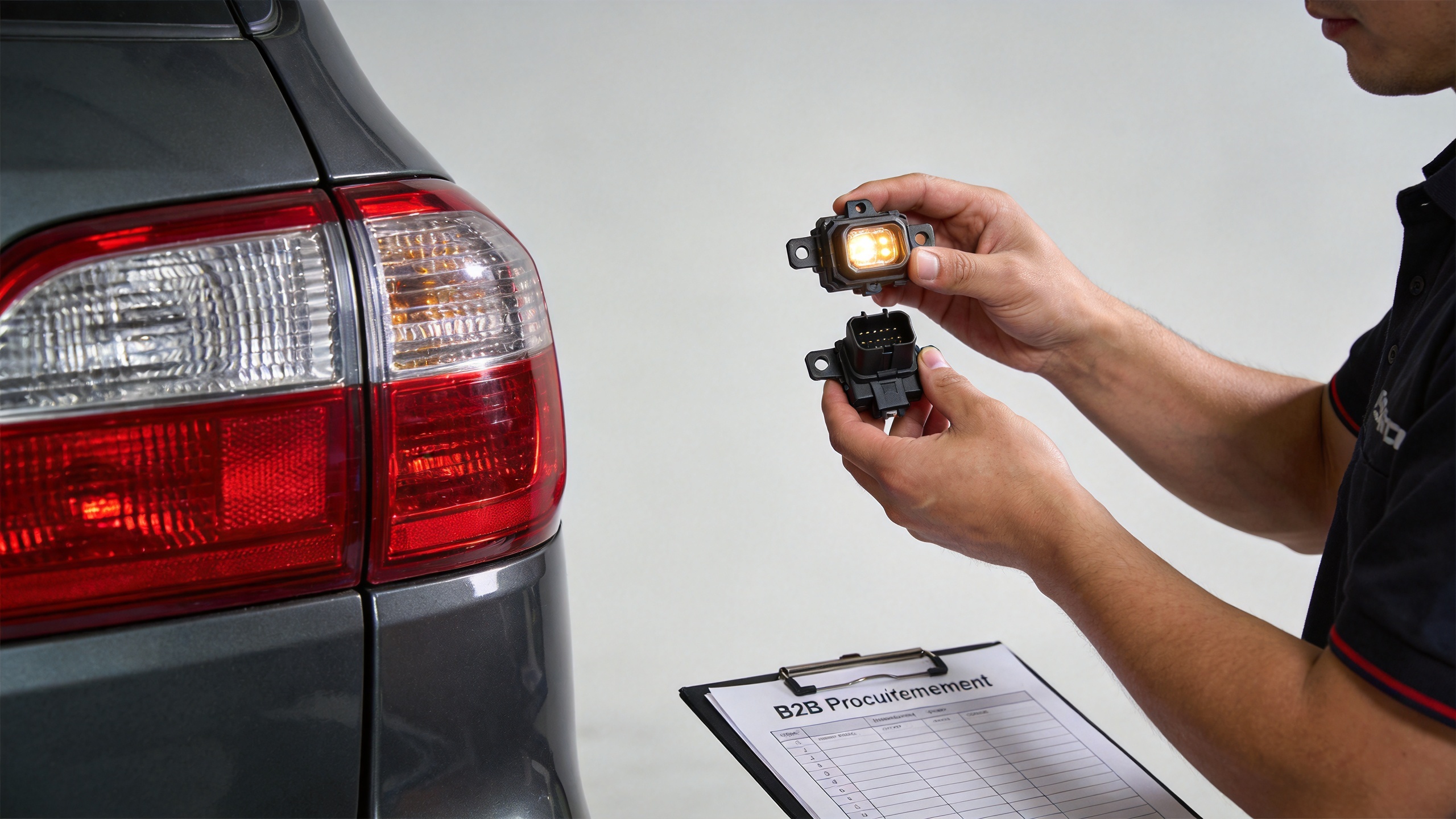
Electrical fitment deserves its own approval gate. Procurement should obtain the connector type, pin count, pinout, voltage range, rated power, polarity requirements, wire gauge, harness length, and grounding method. Ask whether the lamp is LED or filament-based and whether any load simulation, relay, resistor, adapter, or control module is required.
Many vehicles do not provide a ready-to-use rear-fog circuit in every market version. Therefore, a “plug and play” statement should be tested against the destination vehicle’s actual harness and switch logic. For modern vehicles, ask whether the installation creates bulb-out warnings, diagnostic faults, moisture-related connector issues, or network communication concerns. A wiring diagram is more useful than a generic compatibility claim.
4. Is the requested function compatible with the rear lighting layout?
A rear fog light sits among tail, brake, reverse, indicator, and reflector functions. Buyers should verify lens color, illuminated area, location, symmetry, separation from other signals, and the way the function is activated. A lamp intended for one rear-lamp architecture may conflict with another even when the outer housing looks similar.
| Question | Why it matters |
|---|---|
| Is rear fog a separate function or combined with another lamp? | It affects the required circuit, lens section, and replacement part selection. |
| Which side or sides illuminate? | Market versions and vehicle designs may differ. |
| What switch and tell-tale arrangement is required? | The driver must be able to control and identify the function correctly. |
| Does the sample maintain other rear signals? | Brake, turn, reverse, and reflector performance must not be compromised. |
5. Which approvals and market documents should be verified?
Compliance should be discussed as a document-review task, not a logo on a lens. UNECE Regulation No. 38 is a recognized framework containing uniform approval provisions for rear fog lamps for power-driven vehicles and trailers. However, a lamp-level approval does not automatically establish that a finished installation is lawful for every vehicle and market. Buyers should verify the current requirements with the applicable authority or qualified compliance partner.
Request clear photos of the marking, test and approval documentation where applicable, revision control, and the supplier’s statement of which market and vehicle configuration the evidence covers. For private-label programs, also define who controls artwork, part numbering, traceability, packaging labels, and change notification.
6. What sample and quality plan supports a scalable order?
Before volume release, approve a sample on the target vehicle or a controlled fixture. Record fitment photos, installation time, connector engagement, function test, condensation observations, and packaging condition. Define the inspection points for lens appearance, housing fit, mounting hardware, connector orientation, and function check. For distributors handling mixed car fog lights portfolios, clear carton labels and application data reduce warehouse and customer-service errors.
YIAALUX serves automotive lighting buyers with vehicle-lighting products and OEM/ODM-oriented sourcing support. The most productive supplier conversation is still a specific one: share the vehicle list, market, target function, and sample criteria early, then ask the supplier to confirm what is documented, what needs a sample check, and what cannot be assumed.
Final buyer checklist
Do not approve a rear fog light based on a photo, an informal vehicle list, or a universal-fit label. Confirm the exact application, mounting interface, electrical connection, rear-lamp function, regulatory evidence, and sample-validation plan. Those six checks make sourcing more predictable, protect your downstream customers, and help distinguish an acceptable-looking part from a product that is genuinely ready for the intended vehicle program.