EN
EN
Motorbike Fog Lights vs. Auxiliary Spotlights: Which Is Right for Your Riding Style?
After years of evaluating motorcycle auxiliary lighting systems, from comparing motorbike fog lights against auxiliary spotlights to reviewing beam compliance specs and helping OEM buyers match lighting configurations to their target markets, one question comes up repeatedly: "Should I run motorbike fog lights or spotlights on my bike?" The honest answer: it depends on where and how you ride, not which option produces more lumens.
Many riders focus on brightness alone when choosing between fog and spot lighting. Once you understand how beam angle shapes the actual field of view, the distinction between motorbike fog lights and motorbike spotlights becomes far more useful. This guide covers four variables: beam pattern, weather conditions, installation complexity, and riding style. These help you match the right product to your actual riding environment.
Beam Angle and Projection Distance: The Core Difference
The most important factor when comparing motorbike fog lights and auxiliary spotlights isn't wattage — it's beam angle.
- Motorbike fog lights use a wide, low beam pattern, typically greater than 60 degrees. This broad spread improves near-field visibility in poor-weather conditions, reducing glare by keeping the beam below the reflective layer in fog or rain. A quality bike fog led light operates on exactly this principle: wide spread, low mounting, maximum road surface coverage.
- Motorbike spotlights project a narrow, focused beam, usually between 10 and 30 degrees. This concentrated pattern pushes light farther down the road, making auxiliary spotlights effective for long-distance illumination on unlit highways or dark trails where reaction time depends on seeing obstacles early.
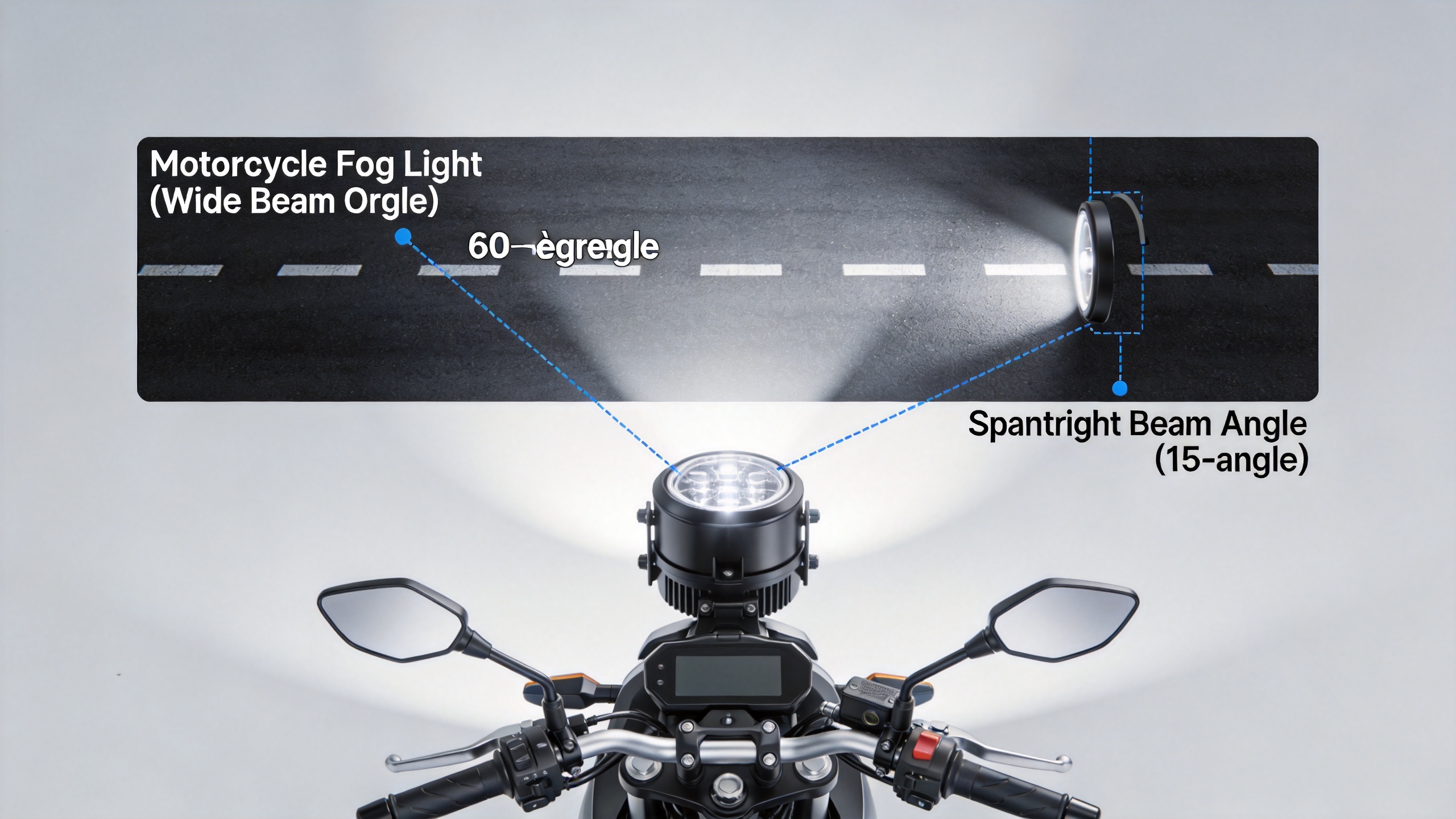
If you ride primarily in mist, rain, or heavy fog, motorbike fog lights illuminate the road immediately ahead without reflecting back into your eyes. If you cover distance on dark rural roads, motorbike spotlights give you the critical extra seconds to react to hazards at range.
Weather Conditions: When Each Option Wins
Weather determines lighting priority more than any single technical spec. Choosing between motorbike fog lights and auxiliary spotlights often comes down to the conditions you ride in most frequently.
Fog lights excel in:
- Dense fog and heavy rain: the wide, low beam of motorbike fog lights cuts below the light-scattering layer, keeping visibility stable and glare manageable
- Dusty off-road conditions where near-field illumination prevents losing the trail surface in low-visibility environments
- Urban commuting in wet conditions, where road-edge coverage matters more than forward distance
Motorbike spotlights excel in:
- Clear-night touring where you need to extend your effective sight line well beyond the main headlight, a task where auxiliary spotlights significantly outperform fog configurations
- High-speed highway riding where extended forward visibility directly affects hazard reaction time
- Off-road adventure at moderate speed, where seeing trail features ahead allows you to pick your line in advance
One factor frequently overlooked: IP ratings are only part of the waterproofing story. IP67-rated lights handle short-term water ingress; IP68 units tolerate more sustained submersion. For riders who regularly ride in heavy rain, IP67 is a reasonable minimum for both motorbike fog lights and bike fog led light setups. Seal integrity over time — especially around wiring connectors — matters as much as the initial rating for long-term durability.
Installation Complexity and Mounting Position
Installation requirements differ between motorbike fog lights and auxiliary spotlights not just in difficulty, but in where on the bike they mount, which in turn affects beam performance.
Fog lights mount low — on fork legs or the lower fairing section. Lower mounting keeps the beam below the eyeline of oncoming riders and reduces glare scatter in foggy conditions. Motorbike fog lights in lower fork positions are more exposed to trail debris on off-road bikes, and some systems require frame-specific brackets.
Auxiliary spotlights typically mount higher, usually on crash bars, handlebars, or auxiliary rails. This gives a better angle for long-range projection. Quality spotlight units include 10G vibration ratings, which matter for both trail and highway applications.
For street motorcycles, motorbike fog lights on purpose-built lower fairing mounts are generally straightforward to install. On adventure and touring bikes with crash bars already fitted, auxiliary spotlights tend to be the easier mounting option. Many manufacturers offer bike-specific brackets that fit cleanly without requiring drilling or frame modification.
Matching the Light Type to Your Riding Style
Once the technical differences between motorbike fog lights and motorbike spotlights are clear, the selection logic becomes more direct:
Off-Road and Adventure Riding
For trail, gravel, or mixed-terrain riding, running both types often makes sense: motorbike spotlights for forward trail visibility and fog lights for low, wide coverage when conditions get dusty or wet. If you can only run one, high-speed trail riding favors spotlights; slow technical terrain favors motorbike fog lights and wider beam coverage.
Highway and Long-Distance Touring
For sustained highway riding on well-maintained roads, motorbike spotlights are the clearer choice. The additional forward throw extends your effective sight distance at speed. Units offering Hi/Lo beam switching provide useful adaptability, letting you dial back from spotlight behavior toward a wider pattern when conditions change mid-journey.
Commuting and Urban Riding
For urban or suburban commuting, especially in regions with frequent rain or seasonal fog, quality motorbike fog lights give you better near-field coverage in conditions that matter most on a daily basis. The wide beam helps pick up pedestrians, road markings, and intersection hazards at the edges of your field of view where narrow-beam spotlights provide little coverage.
Product Selection: Two Options Worth Considering
Whether sourcing motorbike fog lights or spotlights for resale or your own bike, the following YIAALUX units offer a useful reference point for this segment:
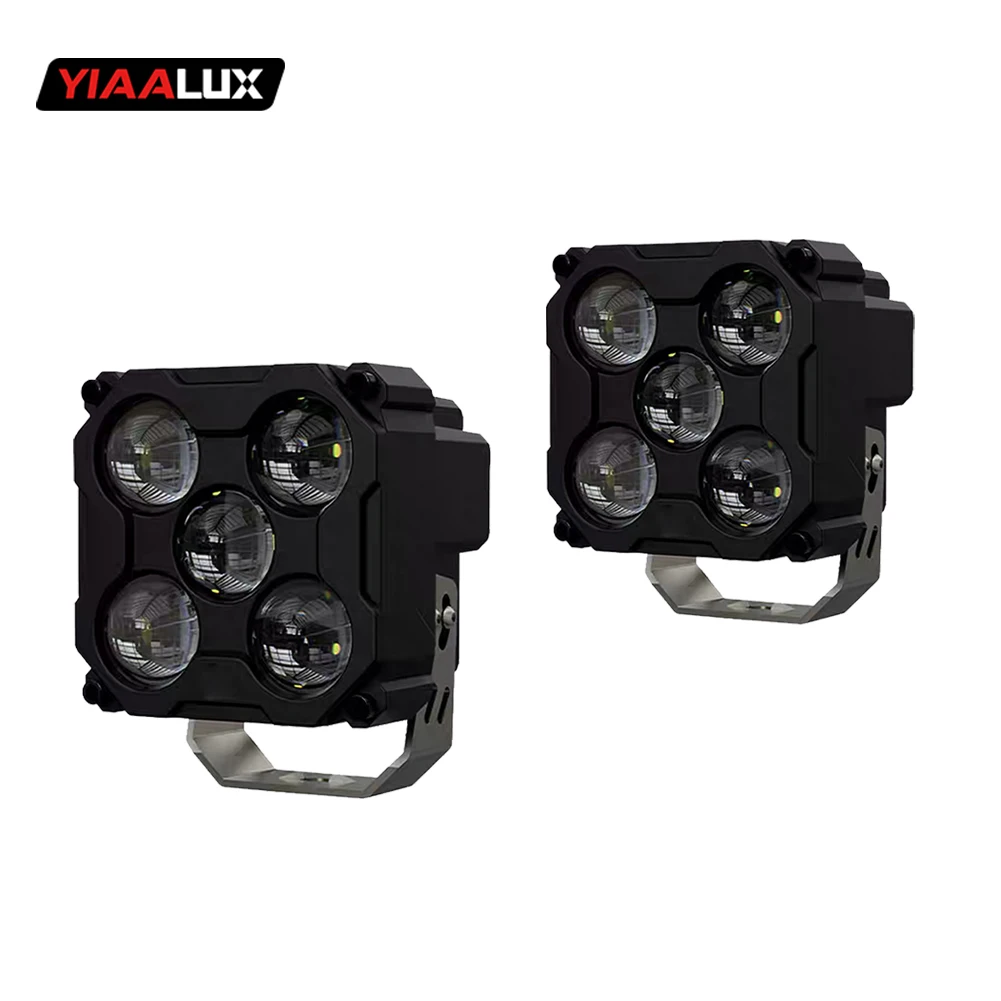
The YIAALUX 150W Hi/Lo Beam Auxiliary Fog Lamp with Amber DRL combines motorbike fog lights functionality with Hi/Lo beam switching in a compact 3.15-inch unit. The amber DRL output adds daytime visibility — a practical feature on highways where being seen matters as much as what you can see. Mounting compatibility includes BMW-style configurations with well-established auxiliary lighting bracket options.
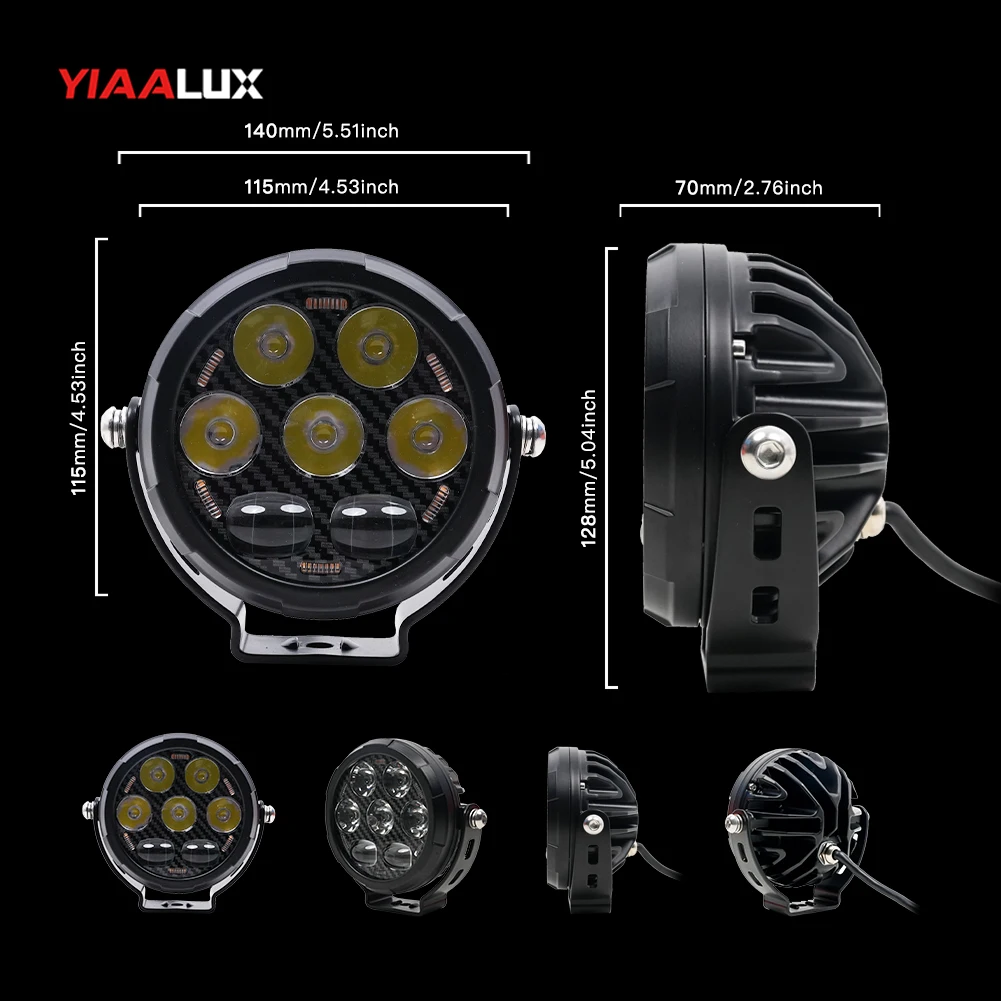
For buyers evaluating a dual-mode option, the YIAALUX 80W Dual-Color Motorcycle Spotlight with DRL bridges both categories. White output covers clear-night spotlight performance; amber mode addresses motorbike fog lights and rain conditions, covering both functions without requiring separate light assemblies. The 12V system is broadly compatible across mid-size and large-displacement motorcycles.
A Practical Buying Checklist
Before finalizing a selection of motorbike fog lights, spotlights, or a combined lighting setup, review these criteria:
- Beam angle: Near-field poor-weather coverage needs motorbike fog lights (60°+ beam); long-distance clear-night illumination needs motorbike spotlights (10-30° beam).
- Mounting compatibility: Existing crash bars or auxiliary rails suit spotlights; fairing-level mounts suit fog lights.
- IP rating: IP67 minimum for regular outdoor use; IP68 for sustained wet or extreme-temperature conditions.
- Switchable output: For riders crossing multiple environments, a switchable unit reduces the need to run separate fog lights and spotlights.
- Regulatory compliance: Verify SAE compliance for North American markets, ECE for European markets. Fog lights and driving lights fall under different compliance categories.
Motorbike fog lights and auxiliary spotlights solve different visibility problems. If your riding conditions are consistent, a single well-matched unit covers the need. If your riding spans multiple environments, a dual-mode setup or running motorbike fog lights alongside spotlights gives you the range to handle varying conditions.