EN
EN
LED Headlight Assembly vs LED Bulb Conversion Kit: Which Fits Your Product Range?
Automotive lighting distributors and OEM buyers quickly learn that car LED headlights are not one interchangeable product family. A vehicle-specific LED headlight assembly and an LED bulb conversion kit solve different catalog, fitment, and installation problems. Carrying the right mix starts with understanding where each format creates value—and where it creates avoidable support work.
This is a category-planning comparison. Instead of asking which option is universally “better,” the useful question is: which product format fits the vehicle coverage, market requirements, price tier, and service capability of your customers?
Start with the Product Architecture
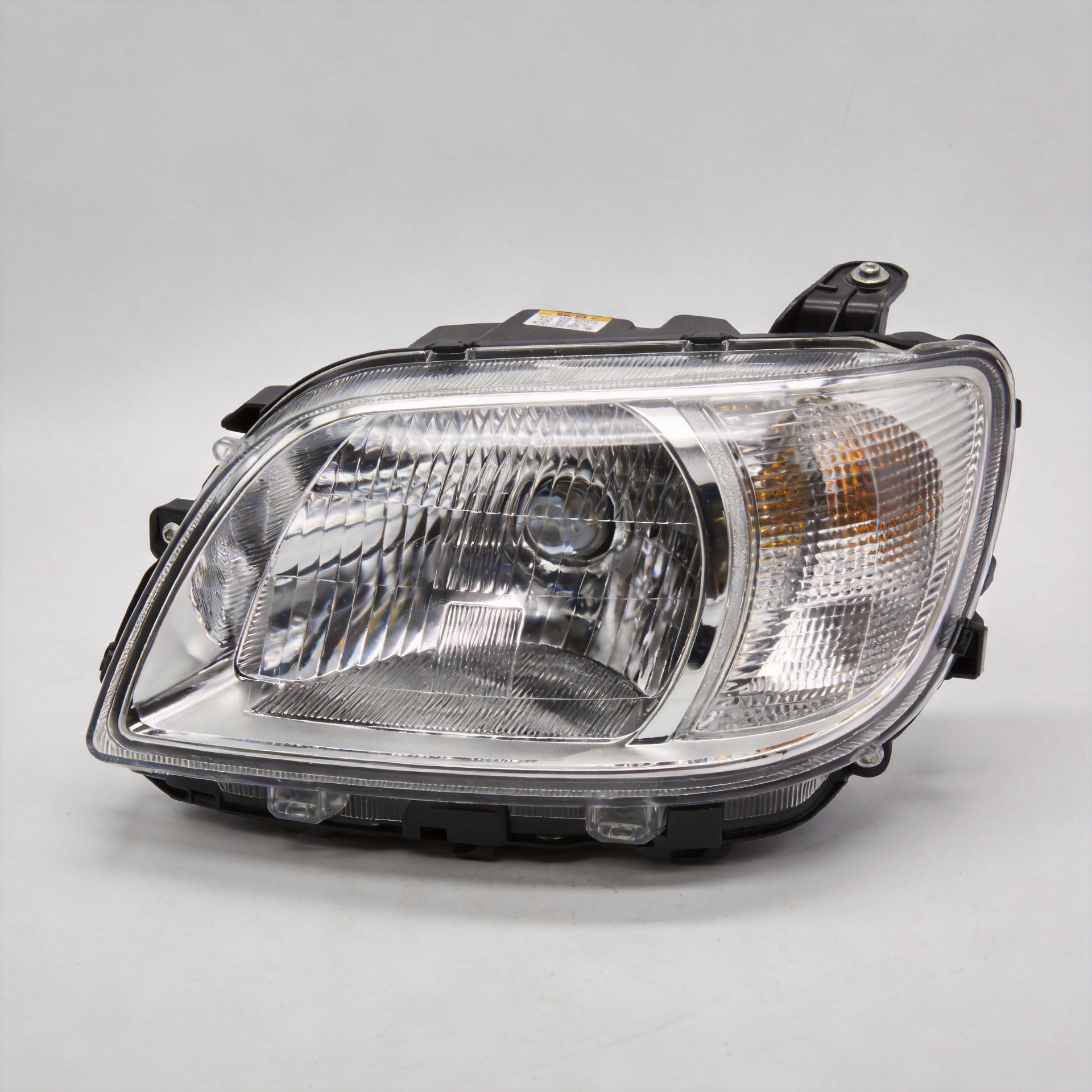
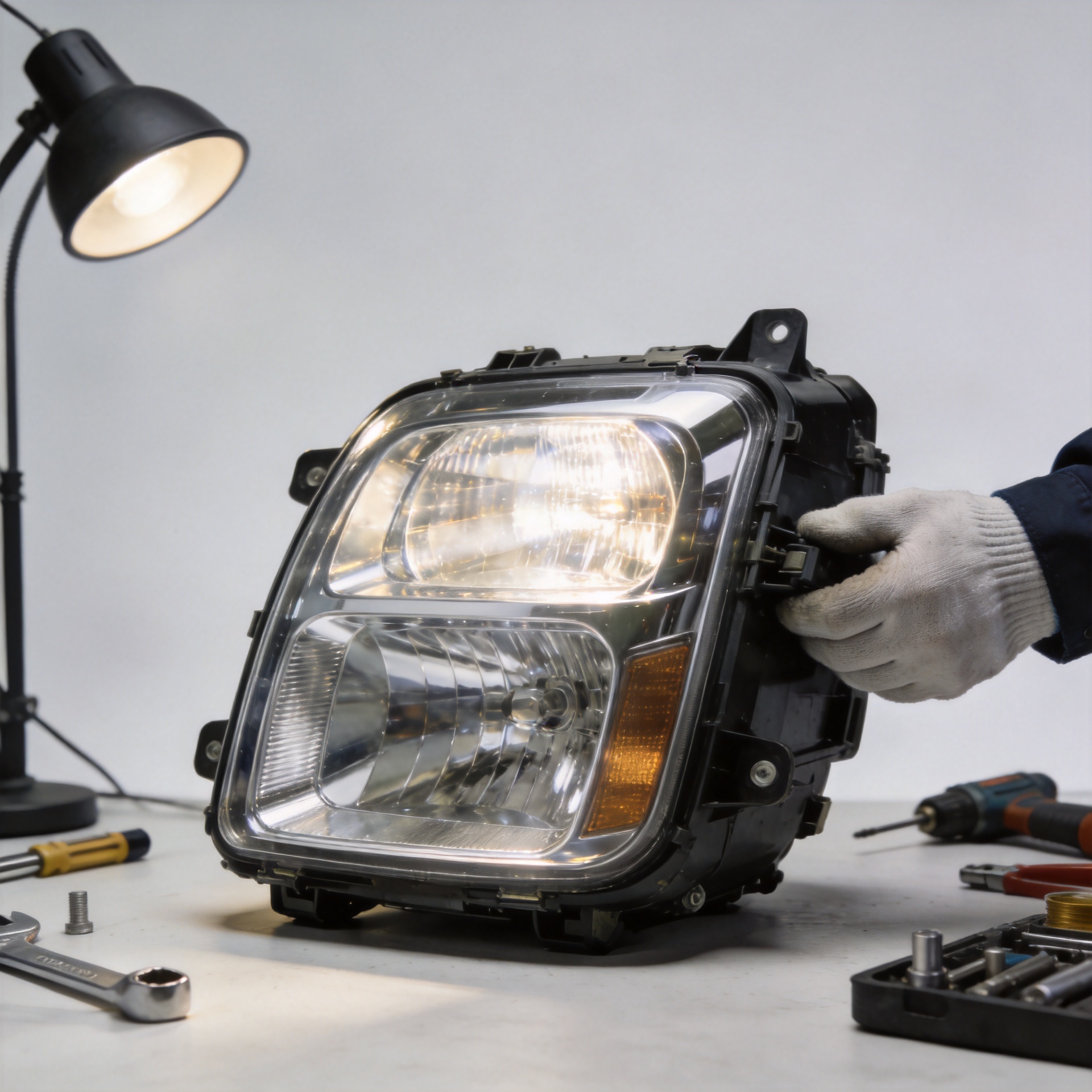
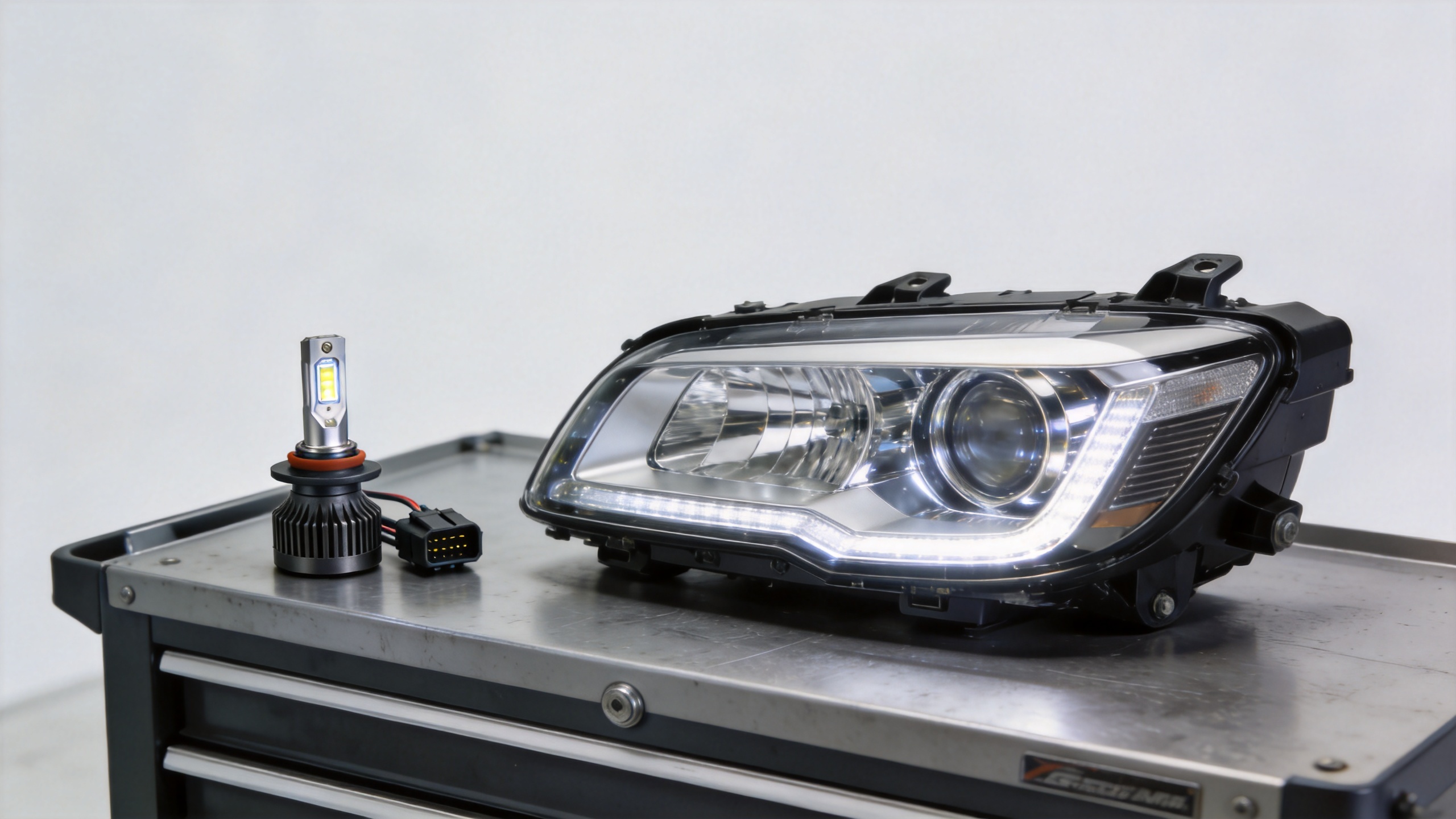
A complete LED headlight assembly replaces the exterior lighting unit as an optical system. It normally combines the housing, lens, reflectors or projectors, light sources, mounting points, and styling elements in one vehicle-specific SKU. An LED bulb conversion kit, by contrast, replaces a compatible light source in an existing headlamp housing and typically relies on the original housing, socket, dust cap clearance, and electrical system remaining suitable.
The distinction matters because headlamp performance is not only a brightness question. In the United States, NHTSA explains that FMVSS No. 108 evaluates headlamp performance at the complete-headlamp level, including photometry and chromaticity requirements. For buyers serving North America, this makes market-specific compliance review, documentation, and application guidance part of the product decision—not an afterthought.
When LED Headlight Assemblies Strengthen the Range
Assemblies are usually the better choice when your customers need a visible exterior refresh, a vehicle-specific replacement, or a controlled upgrade package for a defined application list. They can support a premium assortment because the buyer receives a complete component rather than only a new light source.
- Fitment-led selling: Vehicle, model-year, and market versions can be organized into precise application groups.
- Higher visual differentiation: Lens design, projector layout, daytime-running-light signatures, and housing finishes can help separate a private-label range.
- Clearer replacement proposition: The SKU can address damaged, aged, or styling-outdated headlamps as well as lighting upgrades.
- More controlled optical package: Because the housing and light source are considered together, the supplier can present the product as a system rather than make isolated bulb-output claims.
The trade-off is SKU complexity. Assemblies require tighter vehicle mapping, more storage volume, higher freight sensitivity, and a more disciplined process for left-hand-drive versus right-hand-drive applications. Returns are also more expensive when a buyer orders the wrong version.
For example, a distributor focused on Toyota SUV applications may evaluate a 3 Lens Car LED Headlight for Toyota Highlander 2018–2021 as a vehicle-specific assembly category. The product title and confirmed application give the catalog team a concrete fitment starting point; final market, certification, and installation requirements should still be checked for the target sales region.
Where LED Bulb Conversion Kits Earn Their Place
Bulb kits are generally easier to scale across a broad aftermarket catalog. One bulb-base format may cover many vehicle applications, so the assortment can offer a lower entry price, faster replenishment, and more compact stocking than complete assemblies. This is why conversion kits often work well for wholesalers serving repair shops, accessory retailers, and customers who want a modest upgrade without changing the full front-end appearance.
However, a bulb-kit range needs disciplined fitment content. Heat-sink space, fan clearance, connector design, CANbus behavior, beam pattern, dust-cover fit, and the original housing condition can all affect the end result. The term hid lights for cars may also appear in customer searches, but a lighting catalog should not blur HID, halogen, and LED applications. Clear technology labels and application notes reduce support tickets and make cross-selling more credible.
For U.S.-bound products, the regulatory discussion deserves particular care. NHTSA’s cited interpretation notes specific requirements for replaceable light sources and indicates that no LED replaceable light source had been listed in the discussed framework at the time of that interpretation. That is not a substitute for legal advice in every market, but it is a practical signal to avoid blanket “road legal” claims and to validate each market before publishing conversion-kit claims.
Compare the Formats as a Product-Line Decision
| Planning factor | LED headlight assembly | LED bulb conversion kit |
|---|---|---|
| SKU logic | Vehicle- and model-year-specific | Bulb-base and electrical-fitment-led |
| Inventory profile | More bulky SKUs; narrower application groups | Compact stock; wider potential vehicle coverage |
| Customer value | Replacement plus exterior styling and system-level upgrade | Accessible lighting refresh with lower initial cost |
| Key support risk | Wrong vehicle version, mounting, or regional specification | Clearance, beam pattern, electronics, and housing compatibility |
| Merchandising approach | Application pages, before/after styling, vehicle galleries | Bulb-base filters, fitment tools, installation notes, comparison packs |
Build a Two-Tier Assortment Instead of Choosing One Format
For many distributors, the answer is not assembly or kit. In practice, each format has a different job in the range. Use assemblies to anchor high-value vehicle platforms where appearance, replacement demand, and application certainty justify deeper SKU investment. Use conversion kits to provide broad coverage, price-entry options, and fast-moving accessory lines.
- Identify the 10–20 vehicle applications that create repeat demand or differentiate your customer base.
- Assign assemblies to applications where styling, damaged-unit replacement, or complete-system presentation drives the sale.
- Map bulb kits by base type and add explicit notes for clearance, electronics, and market restrictions.
- Create a compliance review gate before using DOT, SAE, E-mark, road-use, or similar claims in product content.
- Track return reasons separately for assemblies and kits; the pattern will show whether fitment data, packaging, or installation guidance needs improvement.
Catalog Controls That Make Car LED Headlights Easier to Sell
A reliable car LED headlights program needs more than product photos. Create one application record for every car LED headlights SKU, then require the same fitment, connector, market, and packaging fields before it goes live. This makes car LED headlights easier for sales teams to quote and for buyers to compare.
For assemblies, tag car LED headlights by vehicle platform, model year, steering configuration, and replacement side. For bulb kits, tag car LED headlights by bulb base, heat-sink envelope, driver location, and electrical notes. These fields keep car LED headlights filters useful instead of decorative.
- Use a fitment matrix for car LED headlights rather than a generic vehicle list.
- Separate replacement assemblies from conversion car LED headlights in navigation and quotations.
- Show included parts for car LED headlights so installers can identify missing adapters early.
- Keep destination-market claims attached to the exact car LED headlights SKU and document version.
- Record carton size and damage handling for bulky car LED headlights assemblies.
- Give compact car LED headlights kits their own replenishment and margin targets.
- Use return codes that distinguish fitment, wiring, and expectation issues for car LED headlights.
- Provide installation notes before a customer orders car LED headlights, not after a return request.
Sales content should also match the format. Assembly pages for car LED headlights benefit from vehicle images and part-number cross-references. Kit pages for car LED headlights benefit from base-type selectors, clearance drawings, and clear warnings about original-housing compatibility.
As the assortment grows, use quarterly reviews to identify which car LED headlights generate repeat orders, which car LED headlights trigger support tickets, and which applications deserve a deeper assembly offer. This approach turns car LED headlights from a broad search term into an operationally manageable category.
Questions to Ask a Supplier Before You List Car LED Headlights
Whether you source assemblies, bulb kits, or both, ask for the information that makes the item sellable after it reaches the warehouse. Confirm vehicle application and market version, connector and mounting details, packaging dimensions, included components, installation documentation, available test or certification documents, warranty handling, and private-label options. For assemblies, ask how the application is differentiated by model year and steering configuration. For kits, ask how thermal management and fitment limitations are communicated.
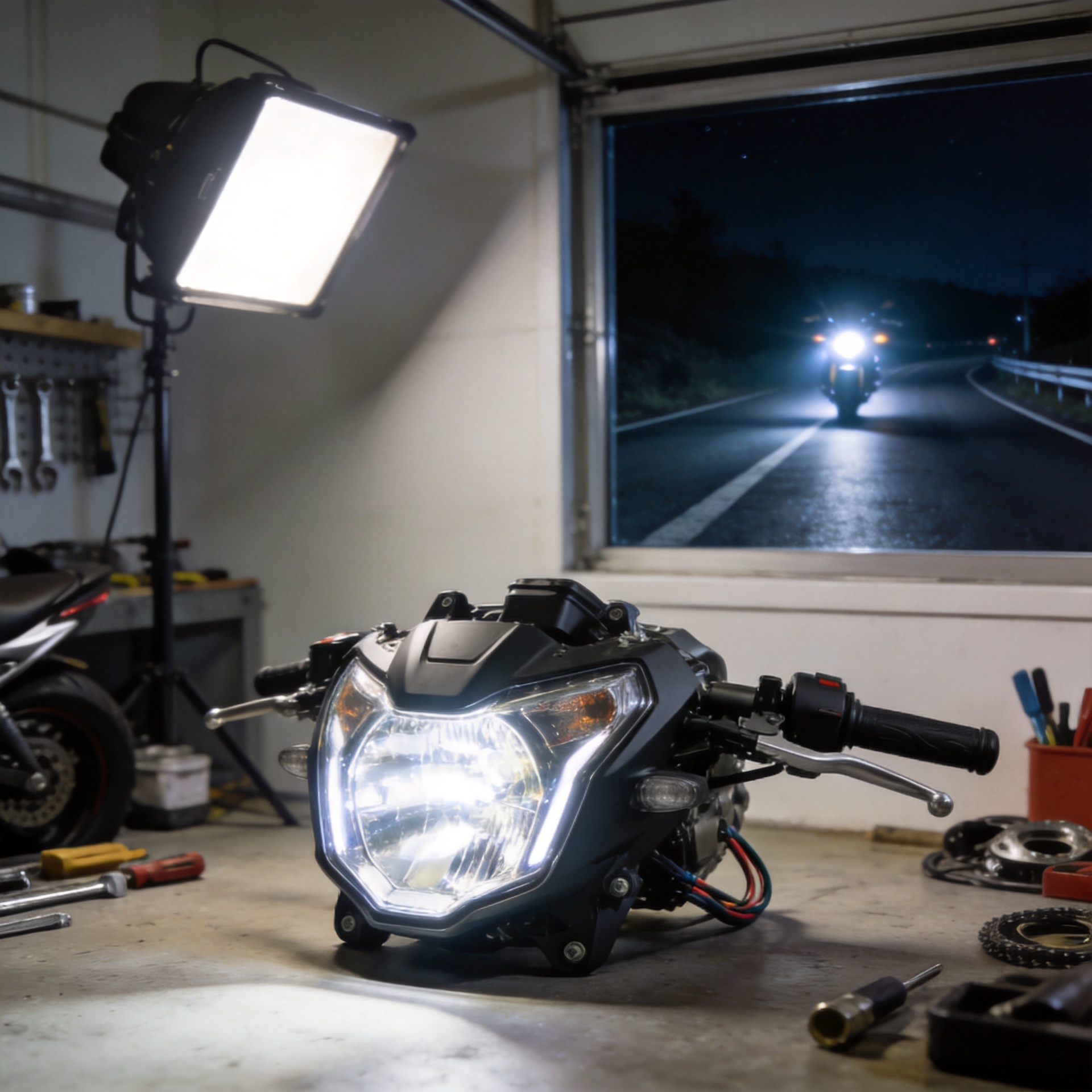
A supplier with coverage across automotive and motorcycle lighting can be particularly useful for wholesalers building related categories, but every claim should remain tied to the actual item and destination market. Category breadth helps purchasing efficiency; precise item data protects the customer experience.
The Bottom Line for Your Product Range
Choose LED headlight assemblies when your strategy depends on vehicle-specific replacement, design differentiation, and a premium system-level offer. Choose LED bulb conversion kits when you need compact inventory, broad fitment potential, and a lower-price upgrade path. The strongest car LED headlights range often pairs both: assemblies for targeted, higher-value platforms and kits for scalable aftermarket coverage.
Make fitment accuracy, market compliance review, and post-sale installation support the deciding criteria. Those factors will do more for repeat orders than headline lumen claims alone.