EN

How Vespa Sprint LED Headlights Improve Night Riding Visibility
A night ride can feel very different when the road ahead is evenly illuminated rather than punctuated by dark patches and distracting reflections. For Vespa Sprint owners, an LED motorcycle headlight upgrade is not simply a styling change. Done with the right lamp, fitment, and aim, it can make lane edges, road texture, signs, and approaching hazards easier to interpret while preserving considerate visibility for other road users.
From a motorcycle-lighting consultant’s perspective, the useful question is not “Is the new lamp brighter?” It is whether the LED motorcycle headlight puts usable light where a rider needs it. That distinction matters on city streets, unlit suburban roads, and wet commutes alike. This article explains what changes with a Vespa Sprint LED upgrade, what to check before fitting one, and how to set it up for day-to-day riding.
Why the stock-light experience can feel limited at night
Riders usually notice lighting limits in ordinary situations: entering a poorly lit turn, spotting a rough surface after rain, or trying to read a sign before the next junction. A motorcycle headlamp has to do more than produce a bright-looking point at the front of the scooter. Its beam needs to create a useful spread across the near field, enough reach for the rider’s speed, and a controlled upper edge that does not send stray light into other people’s eyes.
This is why an LED motorcycle headlight should be judged by beam control as well as apparent output. A broad but poorly aimed pattern may make the immediate area look white while leaving the important distance area vague. Conversely, a controlled pattern can make contrast and road definition easier to read without relying on exaggerated claims about brightness.
How an LED motorcycle headlight can improve usable visibility
On a compatible Vespa Sprint, a well-matched LED motorcycle headlight can improve the rider’s visual experience in several practical ways:
- More deliberate light placement: A controlled low-beam pattern helps illuminate the lane ahead and its edges instead of scattering light upward.
- Clearer contrast: A consistent white LED beam can make painted lines, reflective signs, pothole edges, and surface changes easier to distinguish in familiar riding conditions.
- Better visual continuity: Even coverage from near field toward the distance reduces the abrupt bright-and-dark zones that can make a rider hesitate before a corner.
- Daytime conspicuity as a secondary benefit: A clean, functioning front lamp can also help the scooter stand out to other traffic, although it does not replace defensive riding.
The key word is usable. The right LED motorcycle headlight does not guarantee that every obstacle will be visible sooner in every condition. Speed, weather, visor condition, road geometry, and correct lamp aim still determine how much time a rider has to react.
Beam pattern matters more than a “brighter” claim
It is easy to focus on a headline brightness figure, but a rider experiences the beam as a pattern on the road. Look for an upgrade that is designed for the correct motorcycle application and housing geometry. The low beam should give a defined, controlled area of illumination; the high beam should add meaningful distance without becoming a substitute for proper speed management.
Glare is the other side of the equation. A misaligned LED motorcycle headlight, an incompatible lamp, or a poorly controlled optical design can direct too much light upward. That can distract oncoming traffic and may cause other drivers to react unpredictably. After installation, check the beam against a wall and then verify it on a quiet road. If other road users repeatedly flash their high beams, treat that as a prompt to inspect alignment rather than proof that the new lamp is powerful.
What to check for Vespa Sprint compatibility
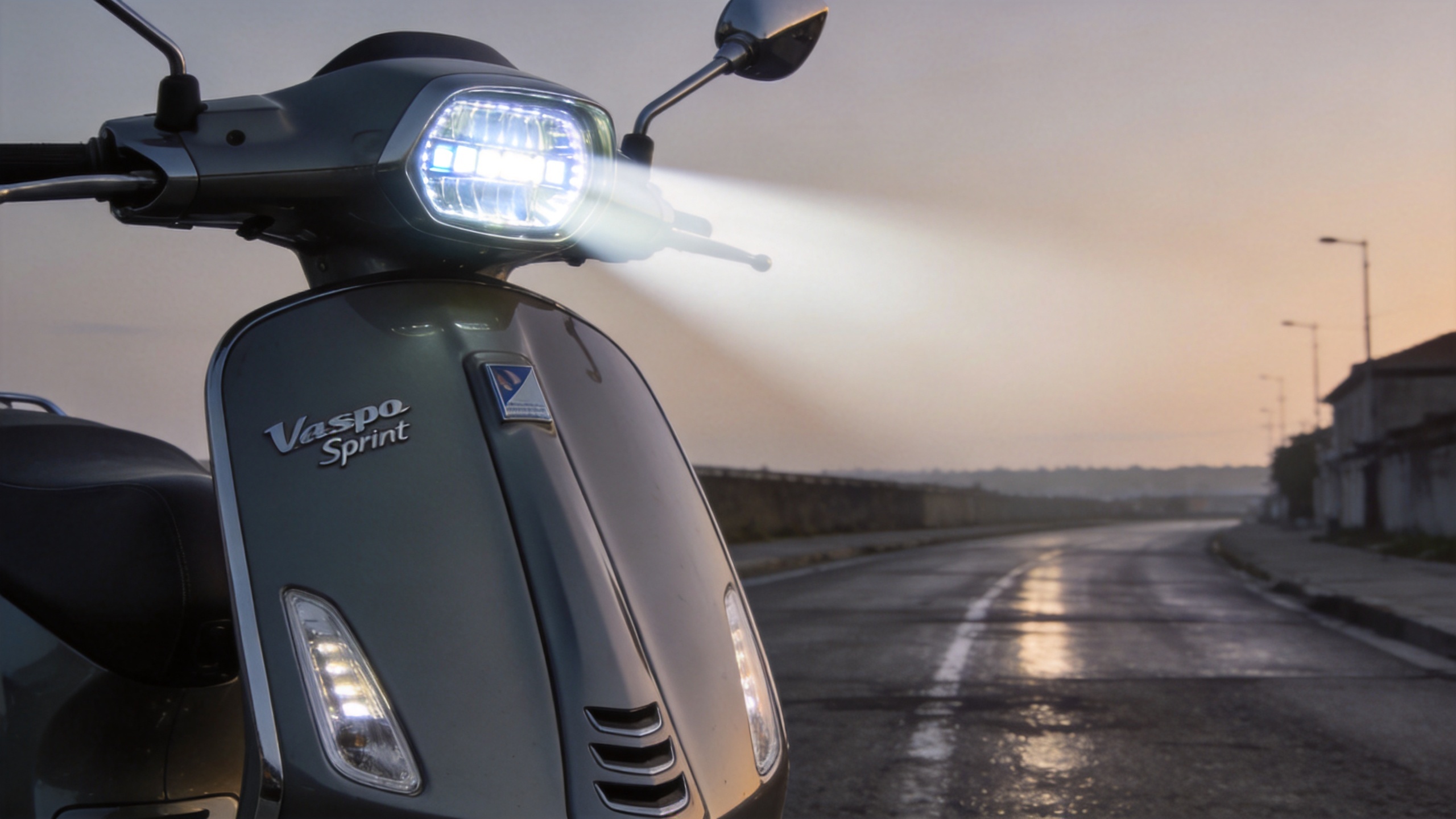
Compatibility is a safety and reliability check, not a minor shopping detail. Before choosing an LED motorcycle headlight, confirm the model year, headlight housing format, mounting points, connector arrangement, and electrical compatibility for the specific Vespa Sprint. Do not assume that a generic motorcycle front light led product will fit just because the outer shape appears similar.
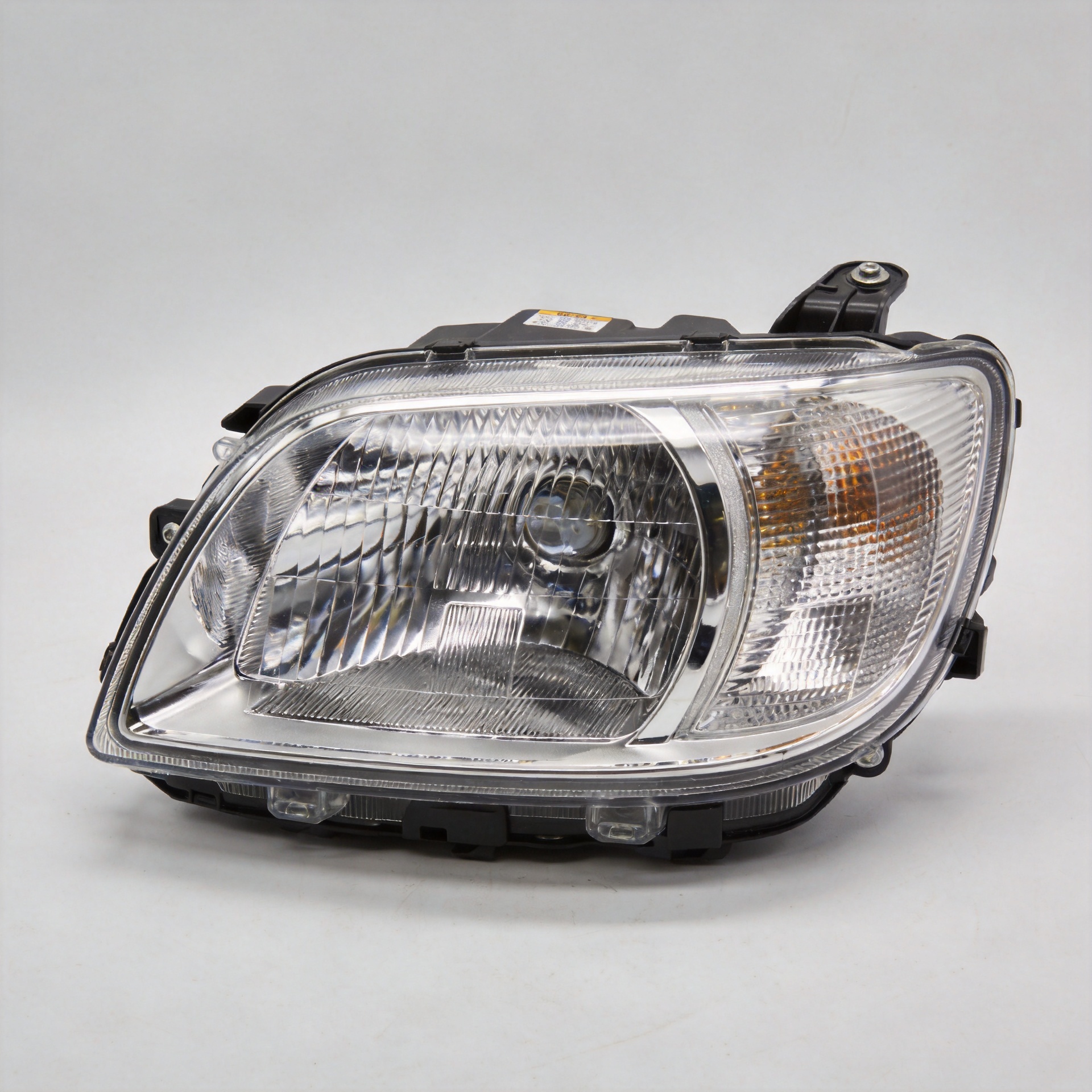
For riders looking for a model-specific option, the SPHL-101 LED 101 Front Headlight for Vespa Sprint 50 125 150 Motorcycle Lighting System is a confirmed product-page reference for fitment research. Review the current product information and compare it with the scooter before ordering or installing. The product title confirms the stated Vespa Sprint application; it should not be read as a substitute for checking the actual vehicle and local requirements.
Installation details that protect night-riding results
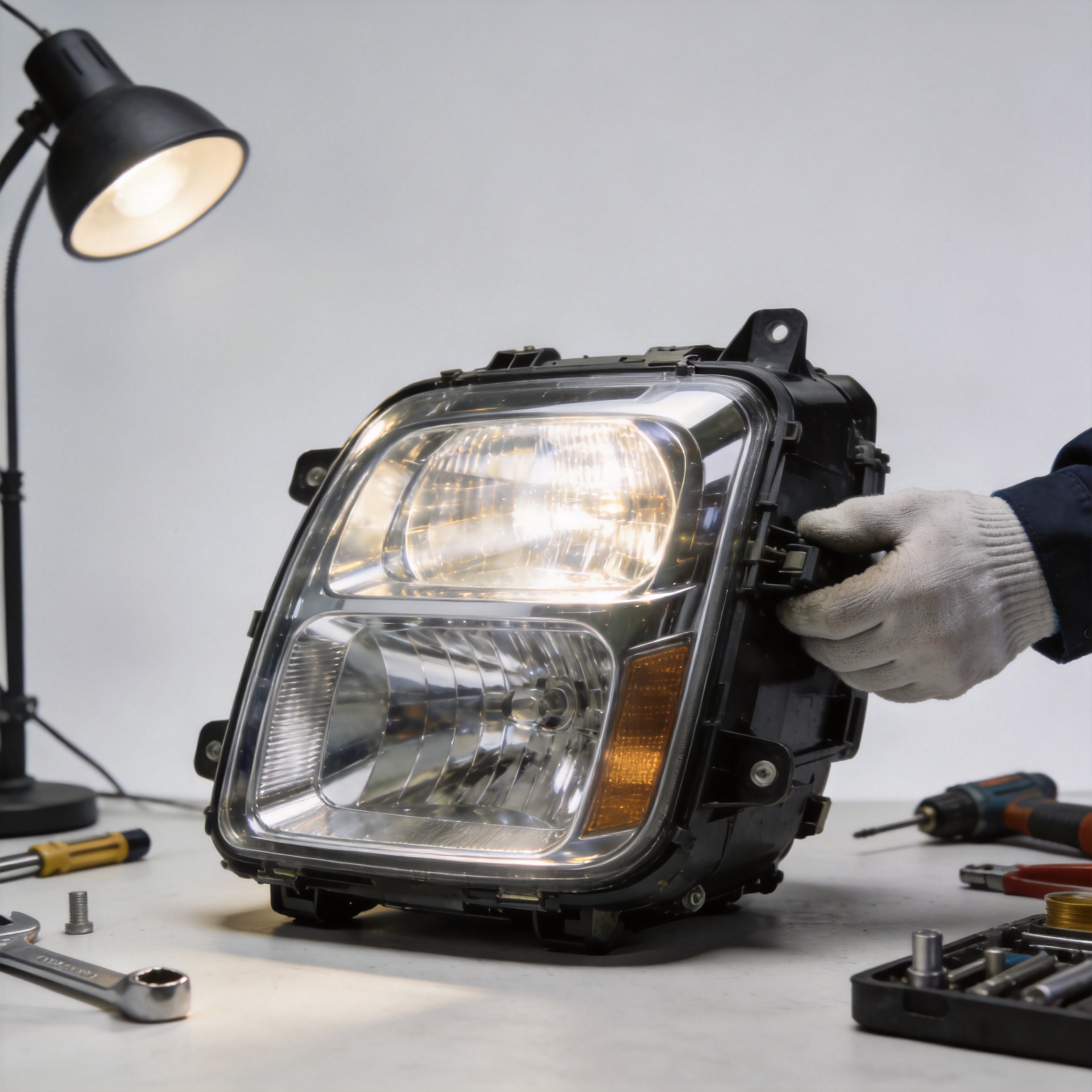
Even a compatible LED motorcycle headlight can underperform when installation is rushed. Work with a clean, dry connector area, inspect wiring condition, and ensure the lamp is seated correctly in the housing. Avoid pinching wires behind the assembly, and check that seals and covers are properly restored after the work. These basic steps help protect the lighting system from vibration and moisture exposure during regular use.
Once fitted, carry out an aim check. Park on level ground, keep the scooter upright as specified by the vehicle guidance, and use a wall as a reference to compare the beam height before and after the change. Make only small adjustments. The goal is a useful road pattern, not the highest possible beam. A short test ride on a familiar route can reveal whether the low beam reaches naturally through normal turns and whether the high beam adds distance without causing distracting reflections.
Daily riding scenarios where the upgrade is most noticeable
In urban riding, a properly set LED motorcycle headlight can make the transition between street-lit and dim sections less abrupt. On suburban roads, it may help a rider pick out lane boundaries and surface changes earlier. In wet conditions, it can support road reading when reflections make painted markings harder to judge. These are visibility-support benefits, not a reason to over-ride conditions. Reduce speed when rain, fog, a dirty visor, or unfamiliar roads reduce available contrast.
For riders who frequently commute after dark, the most valuable improvement is often reduced uncertainty: the beam is predictable, the forward scene is easier to scan, and the scooter’s lighting setup receives more deliberate attention. That is a better benchmark than chasing a dramatic “before and after” appearance in photos.
A practical pre-ride checklist after an LED upgrade
- Switch on the low beam and confirm an even pattern with no obvious flicker.
- Check that high and low beam functions operate as intended.
- Inspect the lens and surrounding housing for secure fitment.
- Verify beam aim after carrying a passenger, luggage, or other changes that alter scooter attitude.
- Keep the lens and visor clean; an LED motorcycle headlight cannot overcome a dirty optical surface.
- Follow local road-use and lighting requirements before riding on public roads.
Choose the upgrade around control, fitment, and real riding needs
A Vespa Sprint lighting upgrade is most worthwhile when it solves a real night-riding concern: limited confidence on unlit streets, inconsistent road coverage, or a need to replace an aging front-light assembly. A suitable LED motorcycle headlight choice is not automatically the one with the boldest brightness message. It is the one that fits the scooter correctly, creates a controlled beam, supports reliable daily use, and is aimed carefully after installation.
Start with the Vespa Sprint’s exact configuration, compare confirmed fitment information, and give the final setup the same attention as the purchase. With those checks in place, a motorcycle front light led upgrade can become a practical part of safer, more comfortable night riding.