EN

How to Choose IP68 Motorcycle Auxiliary Lights for Off-Road Use
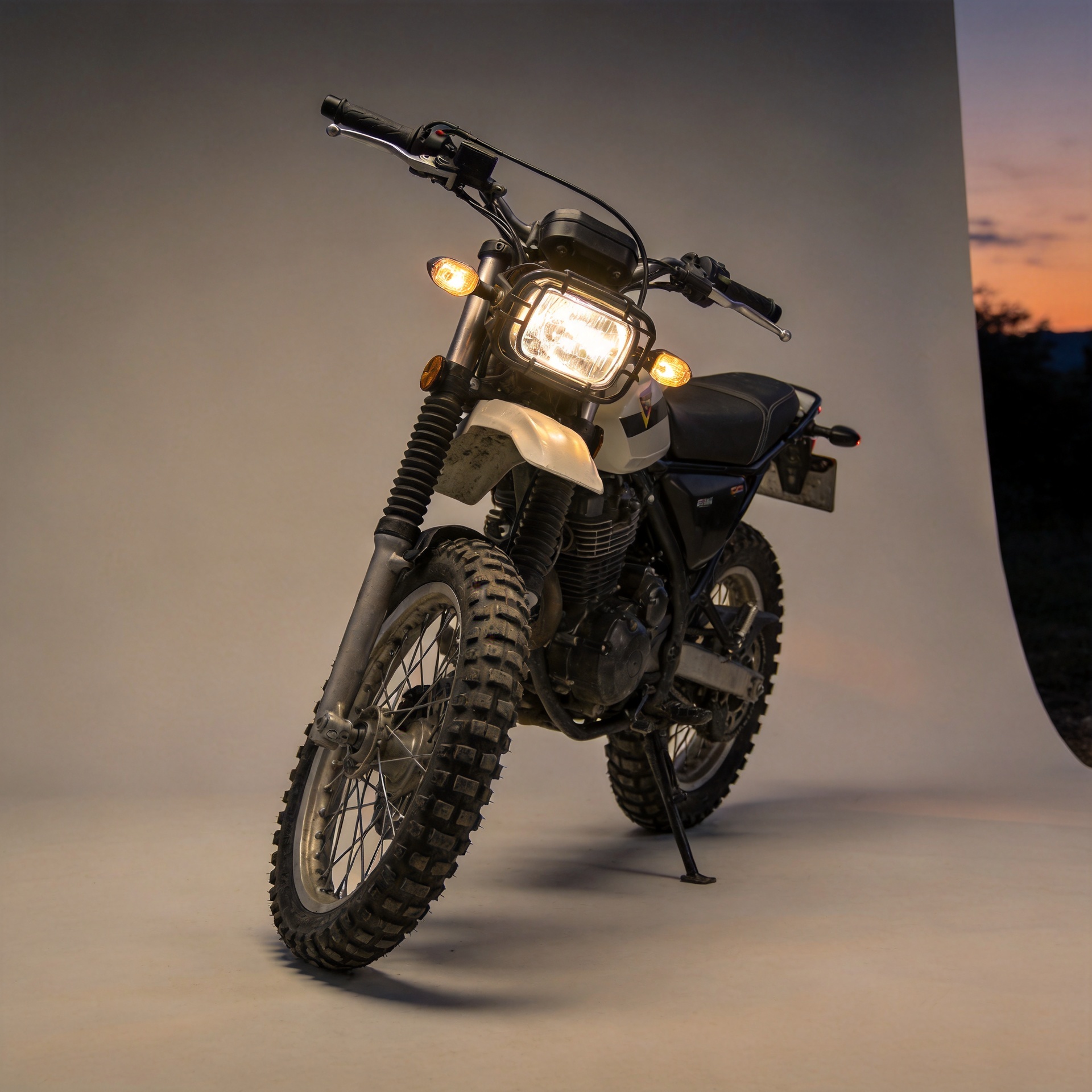
For off-road riding, a daytime running lamp is not simply a styling accessory. It needs to remain visible in dust, rain, vibration and changing terrain while complementing—not replacing—the motorcycle’s main headlight. The right IP68 auxiliary light choice starts with the route, the motorcycle’s electrical system and the beam you need at realistic riding speeds.
As a lighting-selection rule, compare the complete system rather than one headline number. A claimed IP68 rating, a high wattage figure, or a sharp-looking housing alone does not tell you whether an auxiliary lamp will stay aligned after rough trails or deliver useful light through mist and spray.
Start by Separating a Daytime Running Lamp From a Driving or Fog Light
A daytime running lamp is intended to make the motorcycle easier for other road users to notice in daylight. It is not automatically the only tool for extending night-time sight distance. For trail riding, buyers often need a layered setup: a daytime running lamp for conspicuity, a wide low beam for near-field terrain, and a more focused driving beam for distance where conditions and local rules allow it.
Before comparing products, write down the situations that matter: slow rocky tracks, forest trails with rapid light changes, wet commutes to the trailhead, or open dirt roads. This makes it easier to decide whether a compact running-light function, a dual-color fog function, or a spot/flood combination is most useful. A dual-color lamp can be practical when white light is preferred for general visibility and a warmer mode is reserved for rain, dust or fog, but the beam pattern and aiming still matter more than the color switch itself.
Read an IP68 Claim as a System Question
IP ratings are defined under IEC 60529 to describe enclosure resistance to solid particles and liquids. For an IP68 motorcycle lamp, the “6” indicates dust-tight protection; the “8” indicates protection for immersion under conditions specified by the manufacturer. Those conditions are important: IP68 does not mean every lamp has been tested to the same depth, duration, cable condition or temperature cycle.
Ask the supplier for the rated test conditions and inspect the parts that can defeat the rating in field use. The lens-to-housing seal, rear cap, wire exit, connector, driver enclosure and mounting fasteners all deserve attention. An IP68 daytime running lamp with an unsealed connector or poorly supported cable can still suffer from corrosion, flicker or water entry after repeated washing and mud exposure.
- Confirm whether the stated IP68 test applies to the complete lamp assembly.
- Check that the cable gland and connector are protected from direct spray and abrasion.
- Look for a robust housing, sealed lens interface and corrosion-resistant hardware.
- Ask how the lamp is expected to be mounted so the cable does not carry vibration load.
Match the Beam Pattern to Terrain, Not Just Claimed Brightness
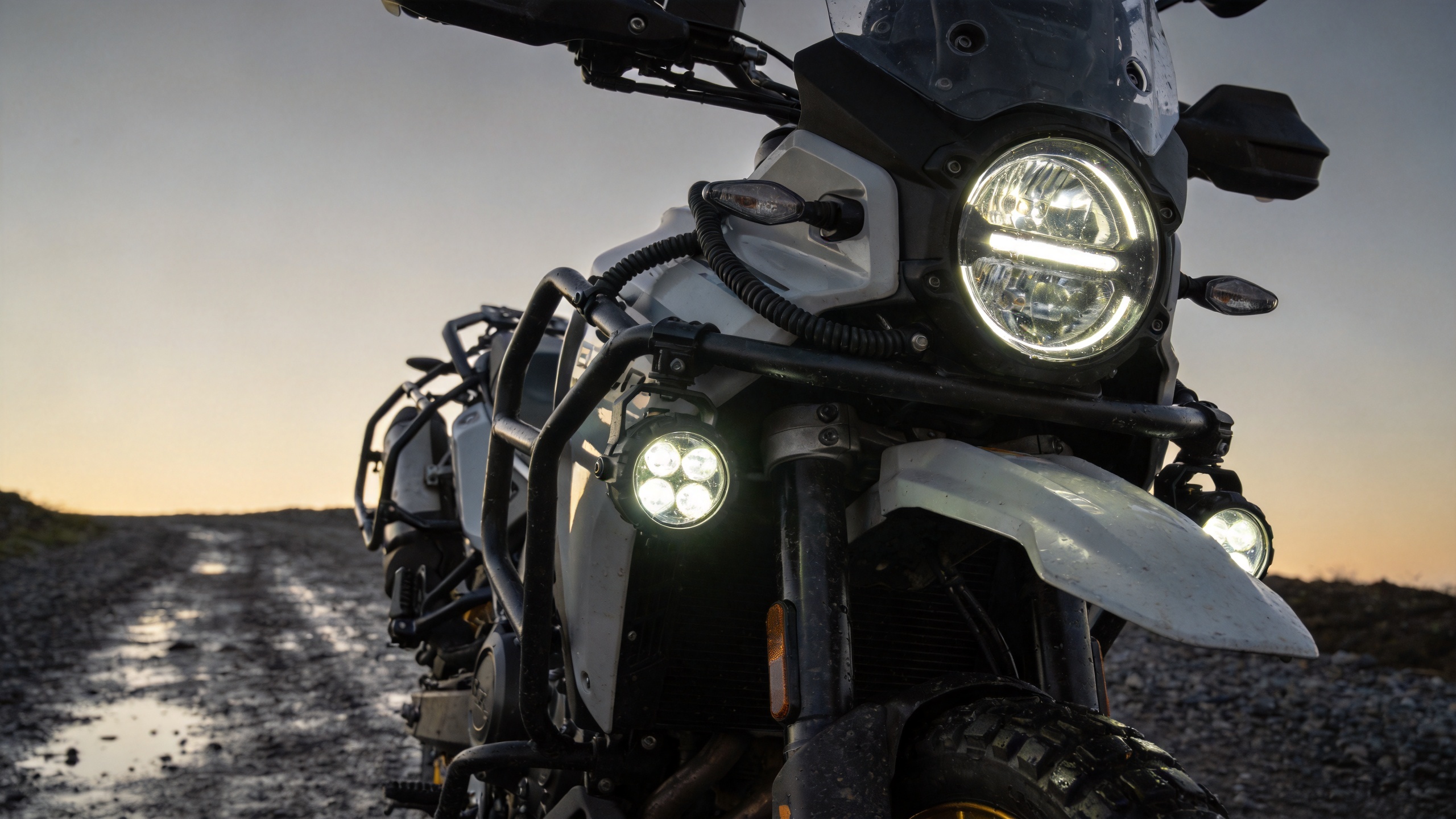
Off-road light is useful only when it places illumination where the rider can use it. A flood or broad fog-style beam helps reveal ruts, rocks and trail edges at lower speeds. A spot or driving pattern reaches farther down a fast, open track. A combination pattern can work well when a rider needs both near-field awareness and a longer visual reference, but it must be aimed carefully to avoid glare.
Use a simple decision table when comparing an IP68 daytime running lamp with auxiliary functions:
| Riding condition | Useful priority | What to check |
|---|---|---|
| Slow technical trail | Wide, even foreground coverage | Beam spread, low mounting position, controlled hot spots |
| Open dirt road | Distance and forward reference | Focused beam, stable aim, switching control |
| Rain, dust or mist | Contrast without excessive backscatter | Low/wide pattern, color mode if available, sealed connections |
| Daytime mixed traffic | Conspicuity | Dedicated daytime running lamp mode and compliant aiming |
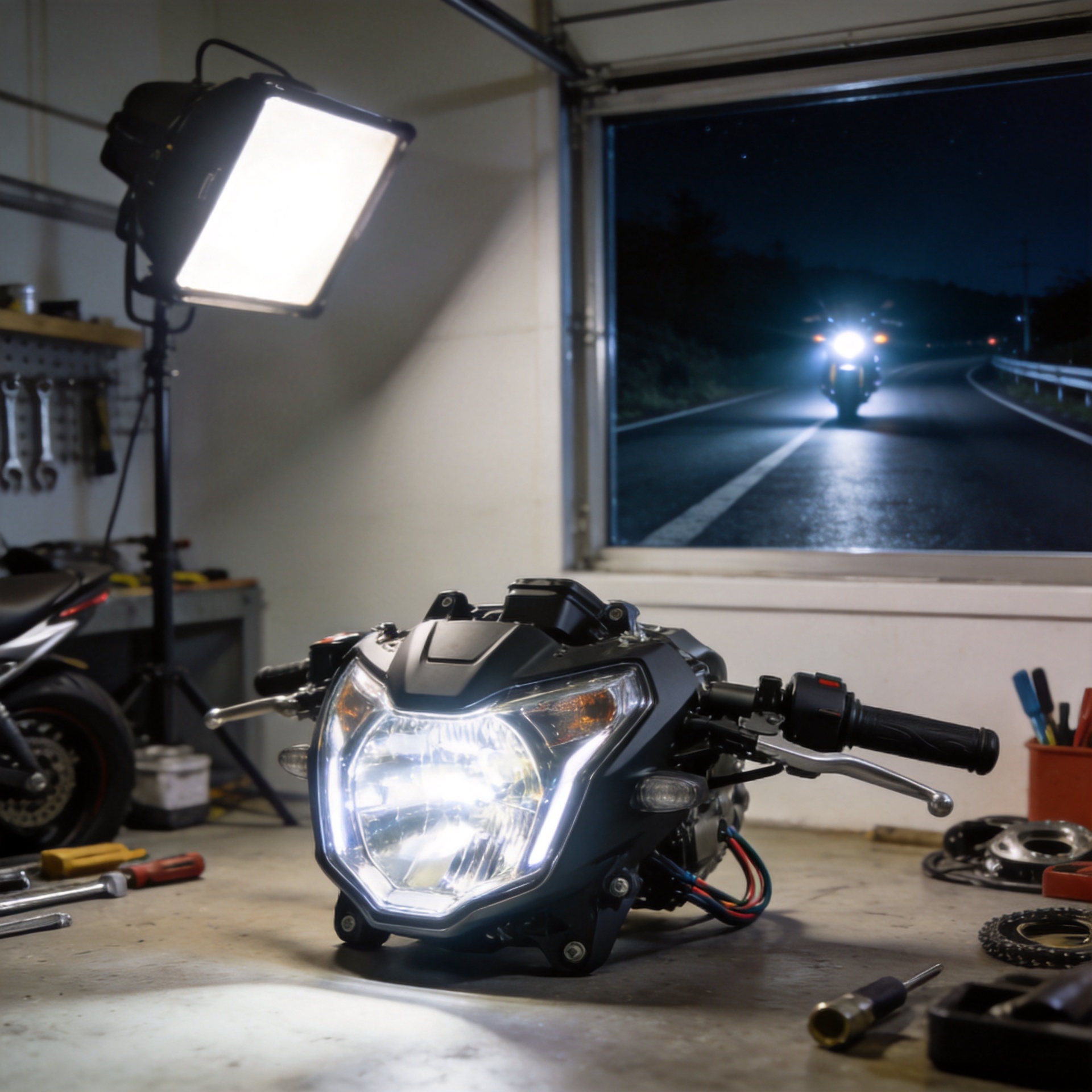
Do not test a lamp only against a wall in a garage. Install it, load the suspension as it will be ridden, and check the beam on a safe surface. The usable result should be a stable, controlled pattern—not a bright patch that hides terrain contrast.
Make Vibration, Mounting and Wiring Part of the Purchase Decision
Off-road vibration can loosen brackets and gradually change aim. Choose a mount that fits the motorcycle’s crash bar, fork area or other approved structure without forcing the lamp to sit on a thin, flexible tab. Use the supplied hardware as intended, route the cable with enough slack for steering and suspension movement, and protect it from sharp edges, tire contact and exhaust heat.
Electrical compatibility is equally important. Confirm voltage range, switching method, fuse protection and whether a relay or controller is required. A daytime running lamp should be wired so that its operation does not unexpectedly drain the battery or interfere with the motorcycle’s existing lighting logic. For motorcycles with sophisticated electronics, professional installation can be the sensible option.
Compare Product Details Without Assuming Unlisted Specifications
For buyers who need a compact option, review the product page for the 60W Dual Lens Motorcycle LED Spotlight White Auxiliary Fog Light Projector Driving Lamp for Moto E-bike AYV IP68. Its listed title identifies it as an IP68 dual-lens motorcycle auxiliary lighting option; confirm the current installation instructions, beam configuration and electrical details with the supplier before specifying it.
Another relevant comparison point is the 12V 80W Motorcycle Spotlight Double LED Car Light with DRL. Because its product title includes DRL and dual-color functions, it may suit buyers comparing a daytime running lamp function with auxiliary fog-light use. Confirm vehicle fitment, wiring requirements and applicable local requirements rather than relying on the title alone.
Use This Final Off-Road Checklist
- Define whether the main need is a daytime running lamp, a fog beam, a driving beam, or a controlled combination.
- Request the IP68 test conditions and inspect connectors, cable exits and seals.
- Choose a beam pattern that fits your normal speed and terrain.
- Verify the bracket, cable routing, fuse and switching plan before ordering.
- Aim the lamps after installation and recheck fasteners after initial rough riding.
A suitable off-road IP68 auxiliary light delivers relevant beam control, withstands the intended environment and integrates safely with the motorcycle. Treat the daytime running lamp function as one part of that system, and use supplier documentation to verify every specification that affects your installation.