EN
How to Choose Car Daytime Running Lights for Your Product Range
For a distributor or vehicle-parts buyer, choosing motorbike daytime running lights is not simply a question of adding the brightest item to a catalog. A workable range has to match vehicle platforms, installation methods, target-market expectations, and the way customers actually buy replacement or upgrade lighting. The same discipline applies when a range also includes car daytime running lights: fitment and function must lead, while styling follows.
A useful starting point is to separate visibility lamps from headlamps, fog lamps, and turn signals. A daytime running lamp is intended to make a vehicle more conspicuous in daylight; it is not automatically a substitute for every other front-lighting function. That distinction helps a buyer avoid an assortment that looks broad on paper but creates installation, compliance, or returns problems later.
Start With the Vehicle Segments You Intend to Serve
Before comparing housings or LED layouts, map the vehicle segments your customers request most often. For cars, this may mean model-specific headlamp assemblies, bumper-integrated DRL modules, grille-mounted formats, or universal replacement solutions. For motorcycles, motorbike daytime running lights may be integrated with a headlamp, supplied as compact auxiliary units, or combined with a signal function. These are different product families, so they should not share one generic specification sheet.
Fitment is the first gate. Check the vehicle year range, left- or right-hand-drive variant where relevant, mounting points, lens shape, connector type, available installation space, and whether the lamp is intended as an original-style replacement or an aftermarket upgrade. If a product line serves multiple markets, capture the target market and vehicle use case in the SKU brief as well. A compact universal lamp may suit an accessory channel, while a model-specific assembly is often easier for installers and parts wholesalers to position.
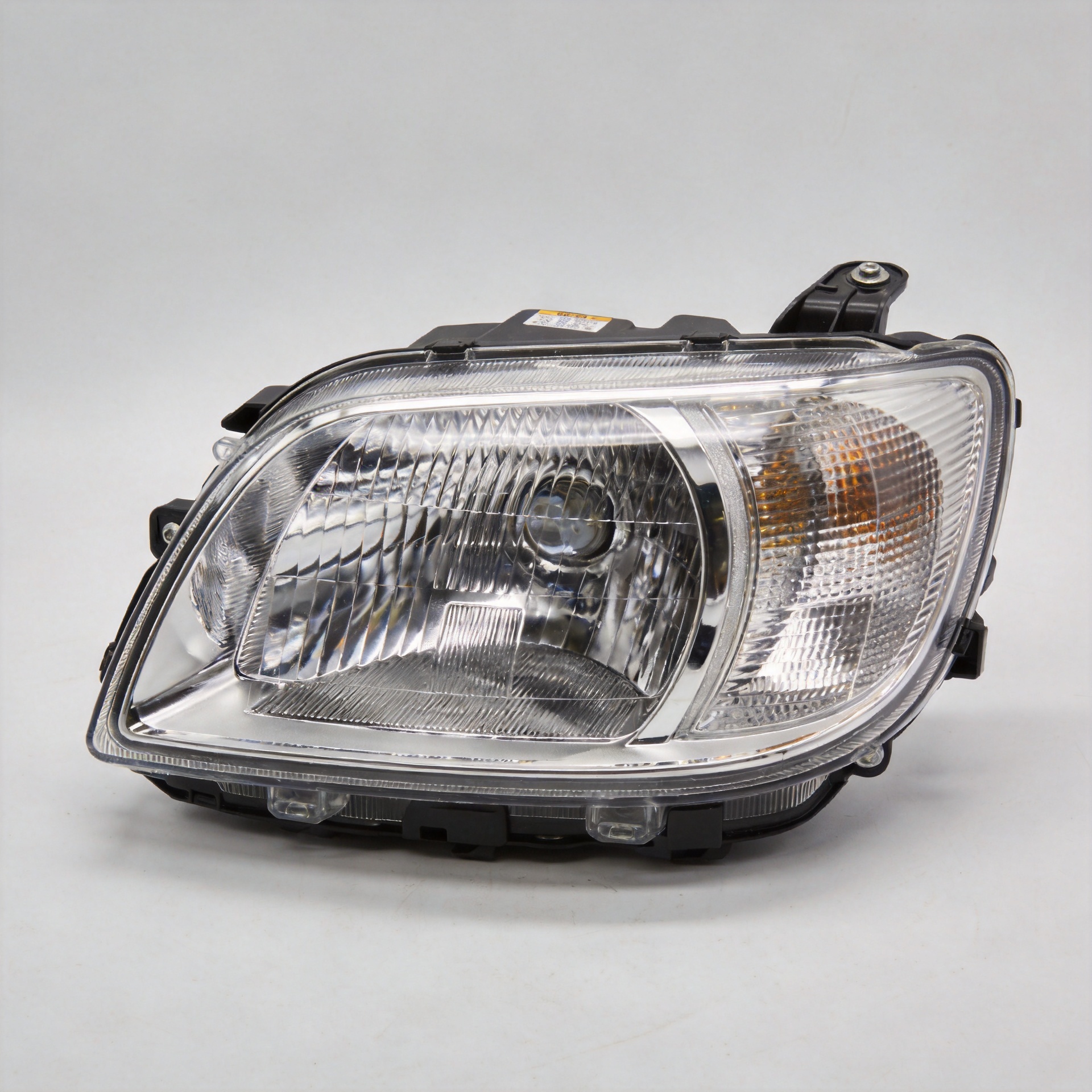
For example, a catalog can include a verified vehicle-specific item such as BMW E46 LED headlamps with DRL and turn-signal functions. The product title establishes its fitment and functional category; buyers should still request the applicable drawings, connection details, and approval documentation before assigning it to a market-specific program.
Choose the Integration Format Before Comparing Appearance
The integration format affects sourcing cost, installation effort, stock depth, and the buyer’s perceived value. Build the range around clear choices rather than mixing formats without a purpose.
| Format | Best fit for the range | Key screening questions |
|---|---|---|
| Integrated headlamp or lamp assembly | Model-specific replacement and upgrade programs | Does the housing fit the vehicle, and how are DRL, low beam, and signal circuits separated? |
| Standalone DRL module or strip | Accessory retailers and flexible aftermarket projects | Where does it mount, how is it sealed, and what wiring protection is included? |
| DRL plus turn-signal function | Catalogs seeking a compact multifunction offer | Are the switching logic, colors, and wiring instructions appropriate for the intended vehicle and market? |
| Motorcycle-integrated solution | Motorcycle dealers, wholesalers, and OEM-related programs | Is the unit designed for the target motorcycle platform rather than adapted from a car application? |
Many buyers focus on the LED count first. More importantly, confirm how the lamp communicates its function. A clean product range states whether the item is a DRL, a turn signal, a headlamp assembly, or a combination unit, and explains the intended wiring logic. When motorbike daytime running lights are sold alongside automotive DRLs, separate their fitment guides and installation instructions. This reduces the chance that an installer treats a visually similar lamp as electrically interchangeable.
Build a Function Matrix, Not a Collection of Similar-Looking Lamps
At the consideration stage, a function matrix is more useful than a long list of styles. Define a small number of product tiers and make the difference between them visible to sales teams and end buyers. One tier may cover basic daytime conspicuity. Another may combine DRL and turn signaling. A third may be a complete replacement headlamp assembly for a defined vehicle platform.
For each tier, document the operating voltage, connector and harness requirements, mounting method, heat-management design, ingress-protection claim if supplied, switchback behavior where relevant, and serviceability. Avoid filling the catalog with unverified specifications. If an output, protection rating, or approval claim is not supported by supplier documentation, label it for verification rather than turning it into sales copy.
This is also where the product-line perspective matters. A distributor may benefit from a core assortment with dependable, repeatable fitment plus a smaller set of visual-upgrade products. An OEM-oriented buyer may instead prioritize interface consistency, design validation, and documentation. Neither approach is universally better; it depends on channel, volume, and after-sales capability.
Screen Compliance and Market Readiness Early
Compliance should be a pre-selection gate, not a final marketing task. Requirements vary by market, vehicle class, and lamp function. For ECE-oriented programs, buyers commonly review the applicable daytime-running-lamp approval and installation requirements together, including marking and placement. Search references on UNECE R87 often describe a daylight intensity range, but that is not a substitute for current regulation review, complete test evidence, or confirmation that a specific lamp is approved for a specific use.
In practice, ask for evidence that matches the product and target market. Confirm the exact part number, the relevant markings, test reports where available, installation conditions, and whether a combined DRL/turn-signal function changes the compliance review. Do not assume that a lamp acceptable in one application can be marketed identically in another. The same caution applies to motorcycle daylight running lights, where local rules and integration practices can differ from car applications.
Use Samples to Test Installation and Range Logic
Sample evaluation should test more than illumination. Install a representative unit on the intended platform or with the intended harness. Review connector engagement, mounting access, water-path protection, cable routing, thermal behavior after operation, function switching, and visual integration with the vehicle. If the product is model-specific, confirm the vehicle year and body configuration before judging fit.
Ask the team handling returns and technical questions to participate. Their feedback often exposes the gaps that a specification comparison misses: a difficult bracket, an ambiguous wire label, a missing adapter, or an item that is hard to explain as a replacement versus an upgrade. Those findings help decide whether a SKU deserves a permanent position in the line.
A Practical Selection Checklist for Buyers
- Define the vehicle category, model coverage, and intended sales channel.
- Choose the integration format: assembly, standalone module, strip, or multifunction unit.
- Record the exact DRL, signal, and headlamp functions instead of relying on product photos.
- Verify fitment, mounting, connector, voltage, and wiring requirements with samples or technical documents.
- Review target-market approval, marking, and installation requirements before listing compliance claims.
- Keep automotive DRLs and motorbike daytime running lights in distinct fitment and documentation tracks.
- Start with a focused core range, then expand only after sales and after-sales evidence supports it.
Catalog Naming and Cross-Category Control
Use an exact, controlled description in your catalog: motorbike daytime running lights for motorcycle-specific units, and automotive DRL wording for car-specific units. That distinction matters when a sales team compares motorbike daytime running lights with car assemblies. Labeling motorbike daytime running lights by platform prevents a motorcycle search from being fulfilled with a car part. A clear filter for motorbike daytime running lights should include make, model, year, mounting location, connector, and intended function.
For the same reason, keep motorcycle daylight running lights separate from vehicle-specific car DRL assemblies in navigation and quotations. Buyers evaluating motorcycle daylight running lights often need a different fitment and wiring review.
This catalog discipline also improves range analysis. Compare motorbike daytime running lights within a motorcycle family first, then compare automotive DRL products within their own vehicle families. Do not use a shared image alone to classify motorbike daytime running lights.
For stock planning, create separate replenishment reports for motorbike daytime running lights and car DRL assemblies. Returns for motorbike daytime running lights often reveal a fitment or wiring-information gap rather than a demand problem.
Before quoting, repeat the vehicle category, fitment, and function for motorbike daytime running lights. This keeps catalog language consistent and helps the buyer understand what is being evaluated.
Make the Range Easier to Buy and Support
The strongest DRL range is not necessarily the one with the most SKUs. It is the one in which every item has a clear vehicle fit, function, documentation path, and reason to exist. For automotive and motorcycle lighting buyers, that approach makes pricing conversations more credible and gives installers fewer surprises. Start with the vehicle, choose the integration method, verify functional and market readiness, and let the final assortment reflect real sourcing and support capacity.