EN

How LED Driving Lights Support Adventure Motorcycle Riding
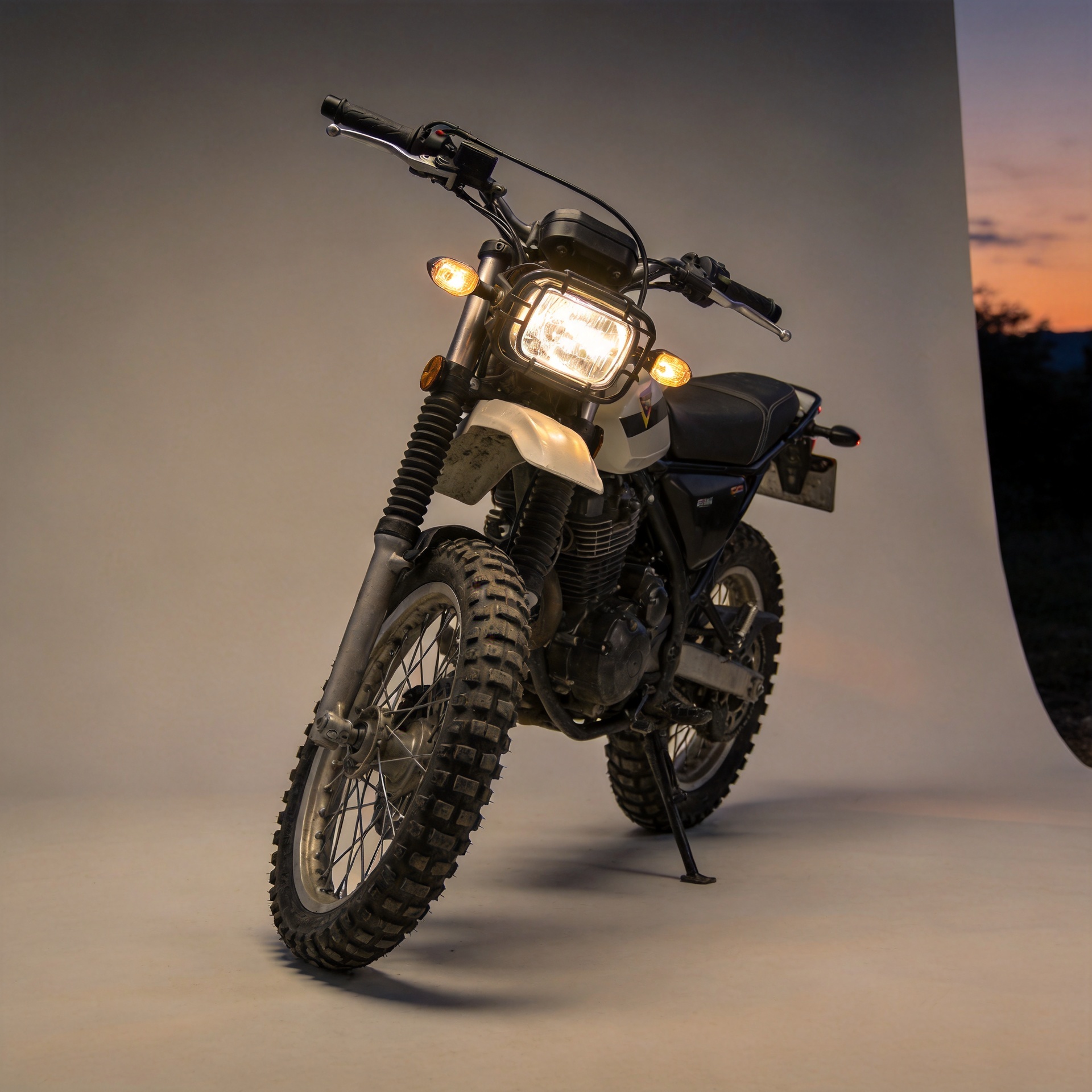
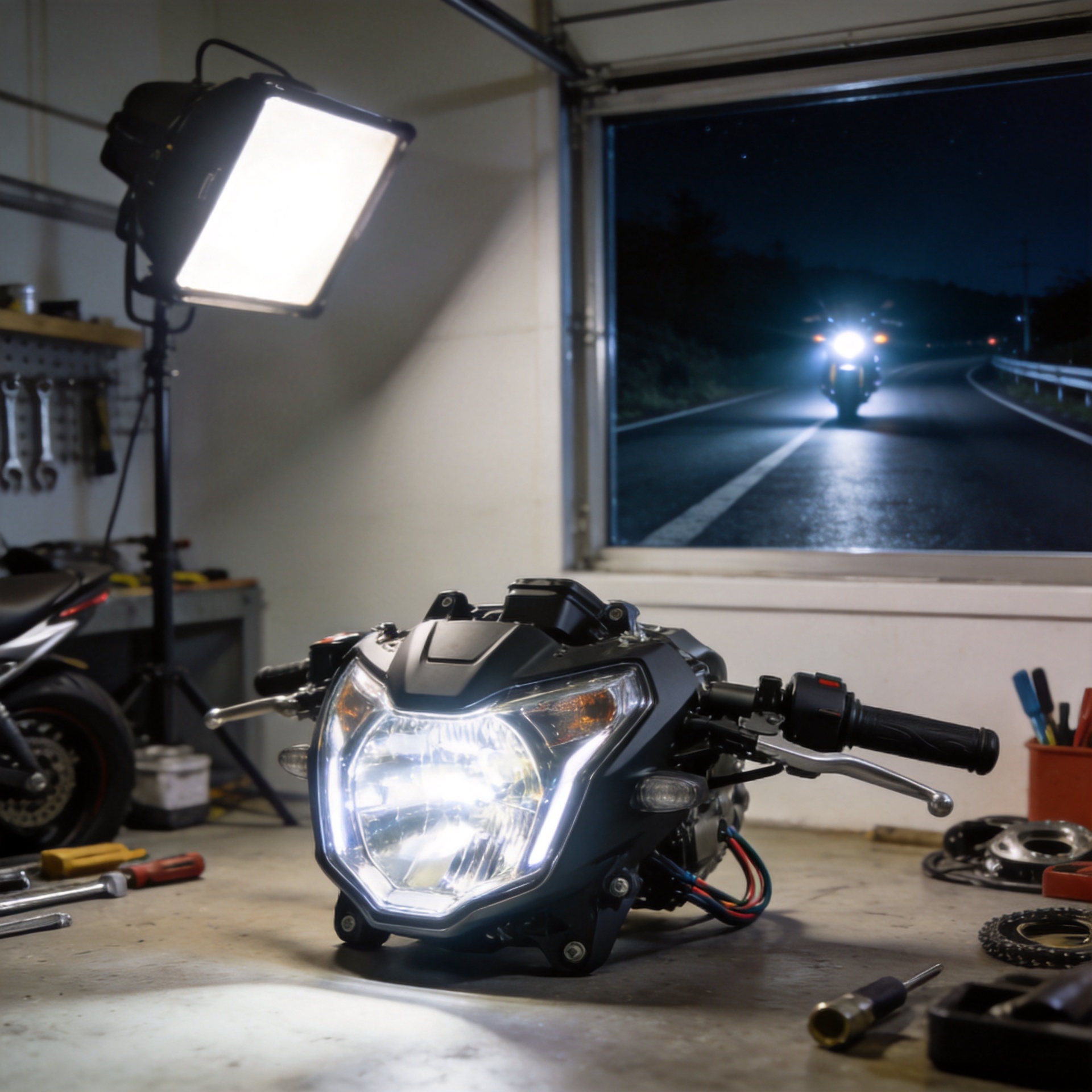
Adventure riding changes quickly after sunset. A paved transfer can turn into a broken forest road, a tight mountain bend, or a wet campsite approach with little warning. In those conditions, motorcycle driving lights led setups can extend useful vision beyond the stock headlamp—when the beam pattern, mounting position, and aim match the ride. The point is not to make every surface look brighter. It is to make the next decision easier to see.
For BMW GS riders, this matters because one trip may combine highway speed, gravel, rain, and slow technical sections. A well-planned motorcycle driving lights led system supports the headlight instead of competing with it. It can add width at low speed, reach at higher speed, or a more usable foreground in poor weather.
Why adventure riding creates different lighting needs
On a familiar road, stock lighting may be enough for a moderate pace. Adventure routes are less predictable. Surface changes, loose edges, wildlife, washouts, and unmarked turns all demand earlier visual information. That is why motorcycle driving lights led choices should begin with the riding environment, not with the largest lumen claim on a product listing.
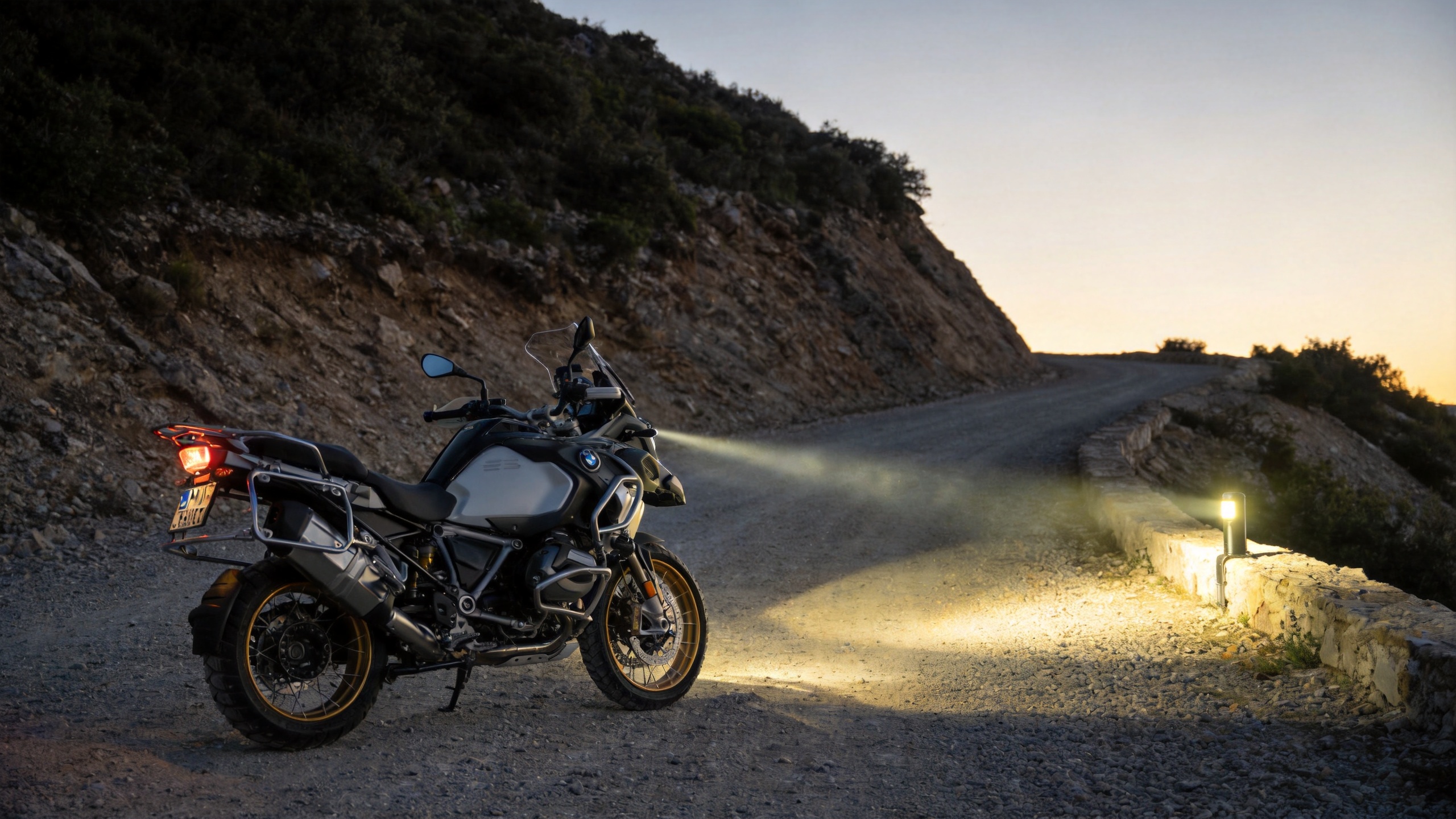
Many riders first focus on brightness. A better question is: where does the light land? A narrow driving beam helps reveal distance on an open road; a wide flood pattern can show the edge of a trail and the entrance to a turn. In other words, motorcycle driving lights led units are most useful when their optical role is clear.
Match the beam pattern to speed and terrain
At lower speeds on gravel, switchbacks, and campside tracks, lateral coverage is valuable. A wide, controlled beam can help a rider read rut lines and see movement near the route edge. For this use, motorcycle driving lights led equipment should complement the headlight’s near-field coverage rather than create a bright wall immediately in front of the wheel.
At higher road speeds, distance becomes more important. A more focused auxiliary driving beam can give extra time to identify the line of the road, an obstacle, or a change in surface. However, motorcycle driving lights led products designed for distance need careful aiming: more reach is not a reason to send glare toward other road users.
Weather adds another layer. In fog, rain, or airborne dust, reflected light can reduce contrast. Color temperature, beam cutoff, and downward aim therefore matter as much as output. If your rides are mostly dry, open-road nights, the priority may differ from a rider who frequently crosses wet mountain roads. This is one reason there is no single universally suitable motorcycle driving lights led configuration.
Build a lighting system, not a single bright spot
The stock headlamp, auxiliary lamps, mount location, and electrical installation work together. An auxiliary lamp mounted low on a crash bar can create a different foreground and side-road view than one mounted higher near the fairing. Before choosing motorcycle driving lights led hardware, assess how the existing headlight already performs on the bike.
A practical planning sequence is simple:
- List the routes you actually ride: paved night transfers, gravel, forest roads, or mixed weather.
- Identify the gap in the stock beam: width, distance, near-field clarity, or conspicuity.
- Select a beam pattern to fill that gap rather than duplicating it.
- Confirm bracket clearance, steering travel, cable routing, and switch access for your specific motorcycle.
- Test and re-aim the motorcycle driving lights led system on a safe, dark route.
Compatibility is more than whether a bracket physically fits. Suspension movement, crash-bar diameter, fairing clearance, and service access all affect a final installation. Even a model-specific listing should be checked against the actual year, trim, and accessories on the motorcycle.
Installation decisions that protect useful light
A stable mount is fundamental on an adventure motorcycle. Repeated vibration on corrugated roads can loosen hardware or alter aim. Use appropriate fasteners and follow the motorcycle and lighting supplier’s installation guidance. After the first few rides, inspect the mounts, cable protection, and connectors again. A motorcycle driving lights led kit that stays aligned is more valuable than one that looks impressive only in the garage.
Electrical planning deserves the same attention. Route wiring away from hot parts, sharp edges, and steering pinch points. Use the supplied relay, fuse, and switching approach where applicable, and make weather sealing part of the job rather than an afterthought. If you are not comfortable assessing the motorcycle’s electrical system, ask a qualified installer to help.
Aiming is the final safety step. Park on level ground, follow the lamp maker’s aiming guidance, and make small adjustments after a real-world test. Driving lights are commonly intended to supplement high beams, not to dazzle traffic. Road-use rules, permitted quantities, switch requirements, and approval markings vary by market, so verify the rules that apply where you ride before using any motorcycle driving lights led setup on public roads.
What to check before buying for a BMW GS
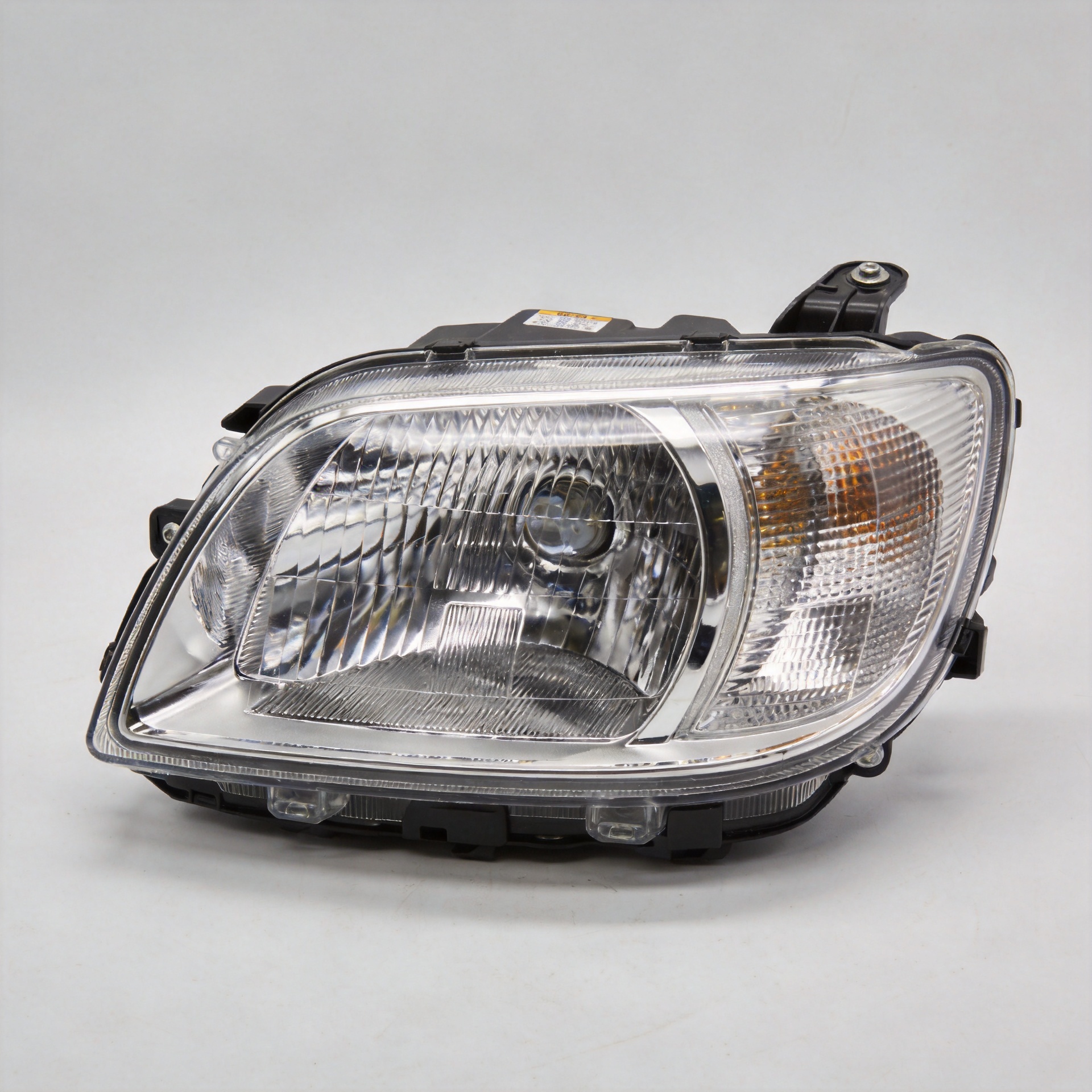
For a GS-focused build, start with fitment rather than assumptions. Confirm the intended mounting point, available space around the beak and crash bars, cable length, and the relationship between the new lamps and existing accessories. For example, this LED driving headlight for BMW F800GS, F700GS, and F650GS should be reviewed against the exact motorcycle and intended installation before purchase.
Also ask for the information that affects the real installation: the beam type, mounting hardware included, wiring requirements, applicable approval documentation, and the recommended use case. A responsible motorcycle driving lights led decision is based on confirmed product information, not inferred performance.
A simple decision guide for better night riding
| Ride condition | Lighting priority | Planning focus |
|---|---|---|
| Slow gravel and technical trails | Controlled width | Edge visibility, secure mounting, low-glare aim |
| Open night transfers | Forward reach | Distance beam, high-beam integration, public-road compliance |
| Rain, fog, or dust | Contrast management | Controlled output, weather sealing, careful aim |
| Mixed adventure touring | Balanced coverage | Complementary beams and easy adjustment |
The right motorcycle driving lights led arrangement is the one that helps you see the next useful piece of terrain without overwhelming your own vision or anyone else’s. Start with real routes, choose light for the missing part of the stock beam, verify fitment, and treat installation and aiming as part of the product decision. That approach gives an adventure bike lighting that supports the ride instead of simply adding more glare.