EN

Choosing LED Driving Lights for BMW GS Adventure Use
BMW GS travel is rarely limited to a clean, well-lit road. A route can move from rain-dark pavement to a forest track, then end with a late motorway transfer. That is why motorcycle driving lights led choices deserve more than a brightness comparison. The right setup gives the rider useful reach, useful side definition, and a beam that can be managed responsibly around other traffic.
This guide takes a practical, selection-first view of motorcycle driving lights led for BMW GS adventure use. It focuses on purpose, mounting, electrical planning, and fitment checks before a rider commits to a kit.
Start with the job your motorcycle driving lights led must do
Not every auxiliary lamp should be expected to solve every visibility problem. Before comparing motorcycle driving lights led, decide when the GS needs help. A wide, controlled beam is useful for noticing road edges, animals, ruts, and surface changes at moderate speed. A long-range driving beam is more useful when a rider needs earlier recognition down an open road. A conspicuity-oriented setup is about helping other road users notice the motorcycle in daytime or poor weather.
For mixed adventure travel, many riders get better results from complementary beam roles than from simply choosing the highest-output pair of motorcycle driving lights led. Think about the road surface, normal speed, weather, luggage load, and how often the bike will meet oncoming traffic. A lamp that looks impressive in a garage can still be tiring if its beam creates foreground glare or is difficult to aim.
Choose beam pattern before chasing output
When comparing motorcycle driving lights led, beam control matters as much as claimed output. A driving pattern concentrates light farther ahead. A fog or wide pattern spreads useful illumination closer to the motorcycle and across the shoulders. Neither is automatically better: the decision depends on the riding environment.
| Riding condition | Useful priority | What to check |
|---|---|---|
| Night highway transfers | Longer forward reach | A controlled driving beam and a stable mounting point |
| Wet, slow, or dusty routes | Near-field and edge definition | A wide pattern that does not overwhelm the foreground |
| Daytime traffic | Conspicuity | Legal aiming, switching, and local road-use requirements |
| Mixed ADV travel | Adaptability | Separate switching or dimming strategy for changing conditions |
A good motorcycle driving lights led decision also includes heat management, vibration resistance, sealed connectors, and a bracket that will not rotate after repeated washboard sections. These are practical reliability questions, not optional extras.
BMW GS mounting: protect clearance and adjustability
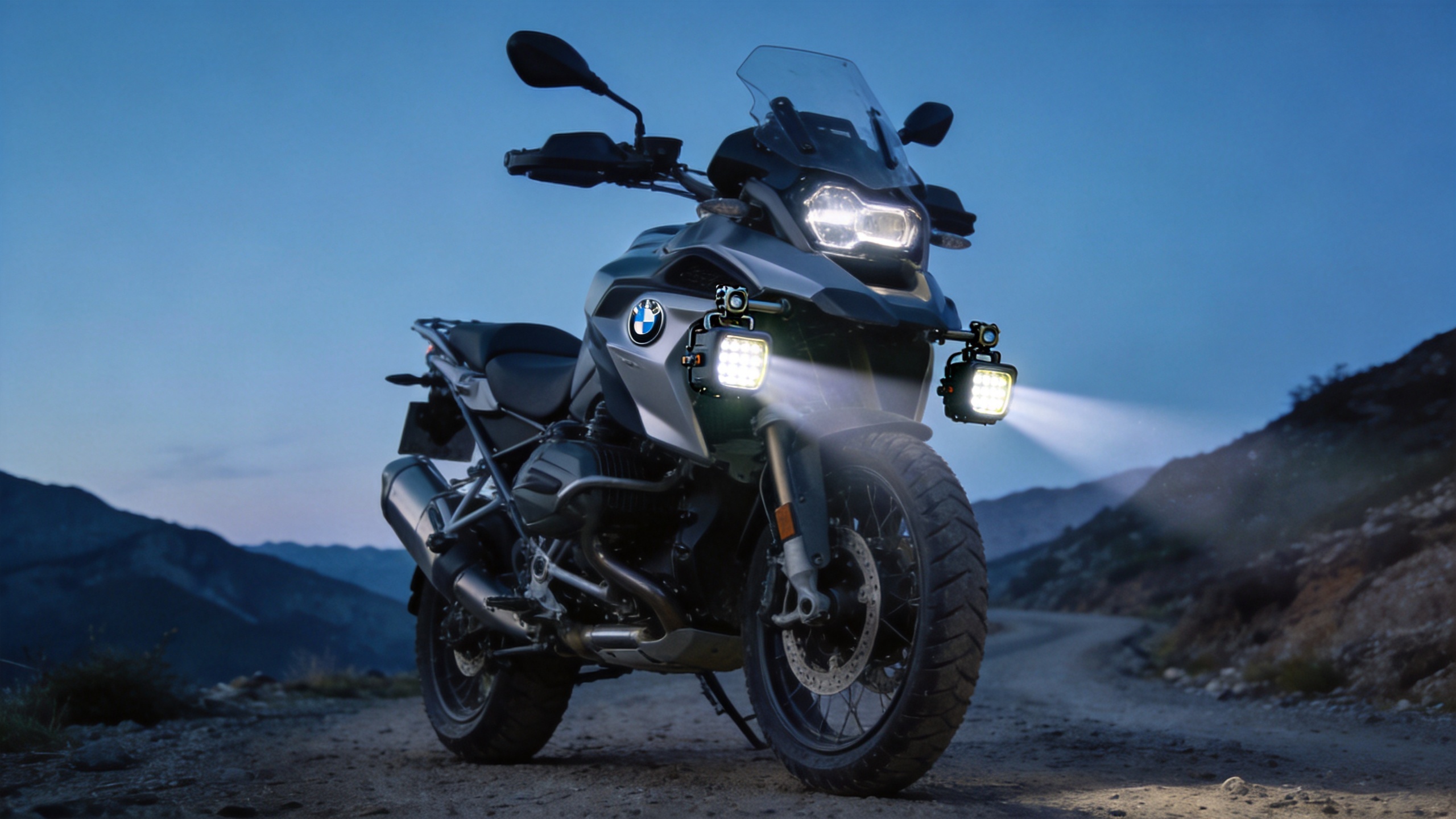
BMW GS models offer several possible locations for motorcycle driving lights led, including crash-bar areas, dedicated brackets, and locations near the front structure. The right location keeps lamps clear of fork travel, beak panels, brake lines, and the steering sweep. It should also leave room for normal service access and avoid creating a vulnerable projection in a low-speed fall.
Before tightening anything, turn the bars lock to lock and compress or inspect the suspension travel available to the model. Check that the lamps do not block the headlamp, indicators, airflow paths, or the rider’s view of the front wheel. A robust bracket matters because vibration can change the aim of motorcycle driving lights led gradually, even when no single fastener appears loose.
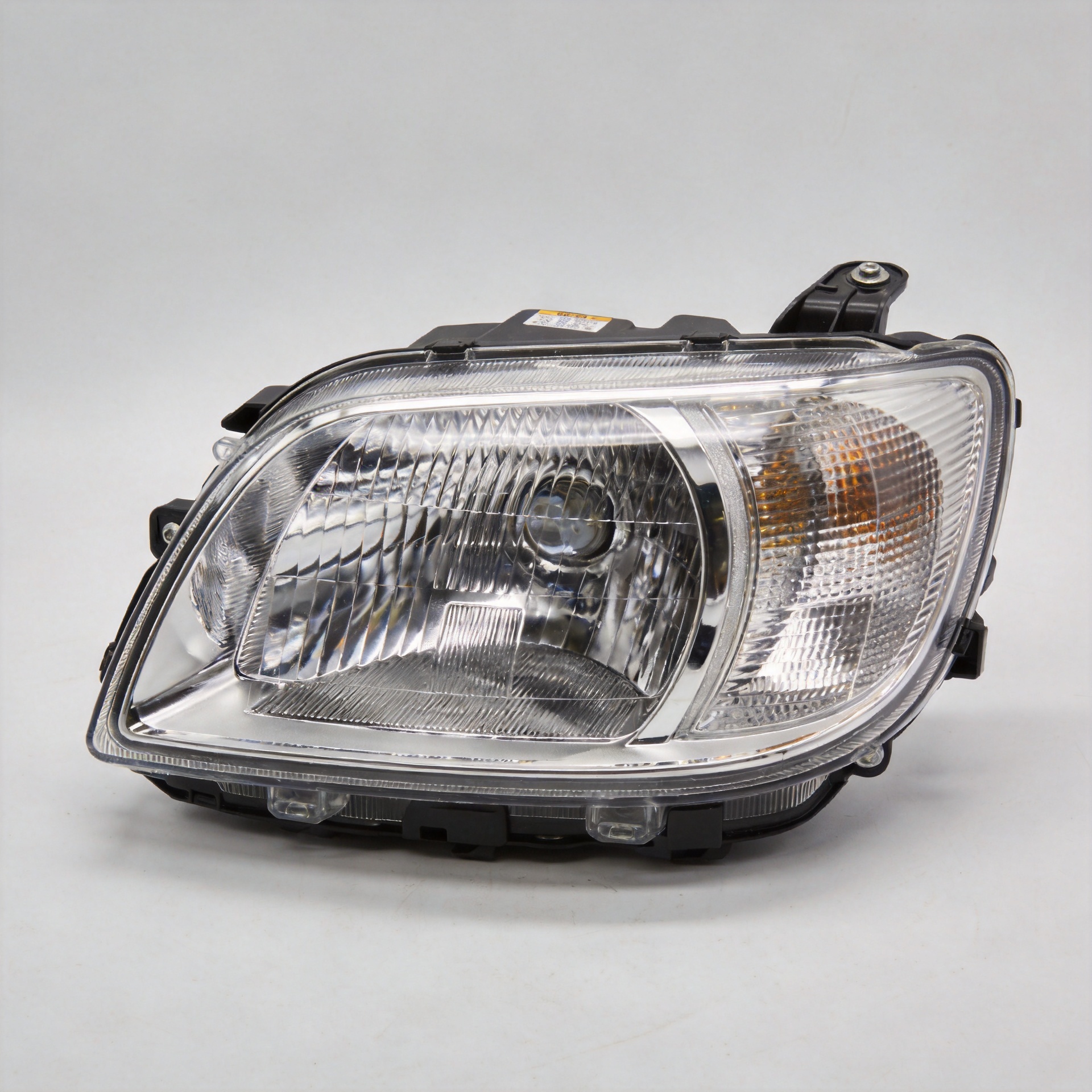
Fitment must be model-specific. The CMS product record available for this article identifies an E-mark certified LED driving headlight for BMW F800GS, F700GS, and F650GS. Riders working with those named models can review the BMW F800GS, F700GS, and F650GS LED driving light product for its stated application. That reference should not be treated as confirmation of fitment for every other GS generation; verify the exact motorcycle, bracket, and wiring arrangement before purchase.
Plan electrical integration before installation
A dependable motorcycle driving lights led installation normally starts with a fused harness, sound connectors, and a switching method suited to the motorcycle. BMW GS electrical systems vary by generation, and modern models can use CAN-bus-managed circuits. Avoid assuming that an original lighting wire is a suitable high-current feed just because it is nearby.
Use the lamp manufacturer’s installation instructions and, where appropriate, a qualified installer who understands the specific GS electrical architecture. A relay, compatible controller, or dedicated accessory circuit can help keep the added load managed separately. Route wiring away from hot exhaust parts, sharp edges, moving suspension components, and steering pinch points. Leave enough slack for full steering movement, then secure the harness so it cannot rub through over time.
Switching is part of the safety plan. Riders should be able to dim or disable motorcycle driving lights led quickly when traffic, weather, or local rules require it. After installation, aim the lights on level ground, test the low-speed steering sweep, and recheck fasteners after the first rough ride.
Check road-use markings and local rules
Road legality depends on the market, beam function, installation position, aiming, and how the lamps are switched. In markets using UNECE lighting rules, markings associated with the lamp and its intended function matter; E-mark information can be relevant, while local requirements still control the final installation. Do not treat a certification reference as a universal permission to run any motorcycle driving lights led configuration on public roads.
Review the applicable rules where the motorcycle is registered and ridden. Confirm permitted quantity, mounting height, beam color, use with high or low beam, and any cover or switching requirements. This keeps a visibility upgrade from becoming a distraction at an inspection or border crossing.
A practical motorcycle driving lights led checklist
- Define the primary role: distance, width, conspicuity, or a balanced combination.
- Choose a controlled beam pattern rather than comparing output claims alone.
- Confirm the exact BMW GS model and bracket compatibility.
- Check full steering, suspension, cable, and panel clearance.
- Use a fused, weather-resistant harness and an appropriate switching method.
- Verify the marking, aiming requirements, and local road rules.
- Re-aim and re-torque the motorcycle driving lights led after early use on rough ground.
Make the final choice around the journey
The right motorcycle driving lights led setup for a BMW GS is not necessarily the biggest or brightest option. It is the one whose beam pattern, mounting, wiring, controls, and legal use match the rider’s real routes. For adventure travel, a carefully aimed, securely mounted system often delivers more confidence than excess output.
Use the checklist to narrow options, verify model-specific fitment, and install the lights with the same care given to tires, brakes, and luggage. That approach makes motorcycle driving lights led a useful part of an all-weather GS travel setup rather than an accessory chosen only for appearance.