EN
EN

BMW Motorcycle Spot Lights: Procurement Checklist for Adventure Models
Buying led spotlights for motorcycles for BMW GS-style adventure fleets is not a matter of choosing the brightest-looking pair in a catalog. A buyer has to confirm fitment, beam control, electrical integration, mounting hardware, and packaging before a purchase order is released. For wholesalers and vehicle-program buyers, this checklist turns the usual product comparison into an acceptance process that can be used with suppliers and incoming inspection teams.
The goal is simple: select motorcycle auxiliary lights that support the intended riding environment without creating avoidable rework at installation. Treat every “universal” claim as a starting point for verification, especially when the intended application is an adventure motorcycle with crash bars, beak panels, hand guards, luggage racks, or aftermarket protection parts.
1. Start with the BMW Adventure Fitment File
Before discussing beam pattern or price, create a fitment file for the exact motorcycle family and model year. BMW GS and adventure-platform motorcycles may share a visual style while using different front structures, crash-bar diameters, accessory brackets, and available mounting clearances. Ask the supplier to identify what the kit includes and what it does not include.
- Motorcycle model, production year, and trim level to be evaluated.
- Mounting location: crash bar, fork leg, fairing support, or dedicated accessory bracket.
- Bracket diameter range, hole pattern, fastener size, and adjustment range.
- Clearance through full steering lock and full suspension travel.
- Compatibility with existing guards, windscreens, luggage systems, and front-mounted electronics.
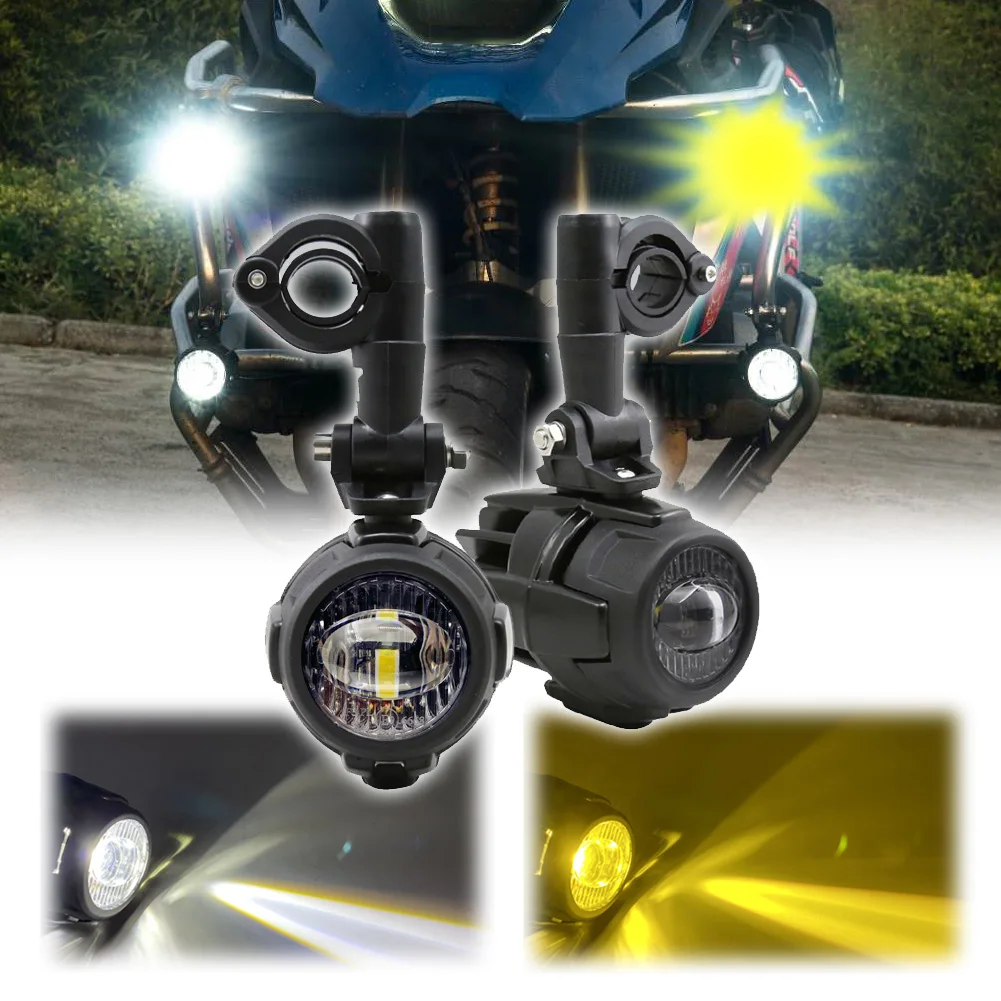
For a catalog reference, buyers can review the Universal Motorcycle LED Auxiliary Lights Spot Driving Fog Light with two color fit for BMW Waterbird as a product-data starting point. The listing name alone is not proof of fitment; request drawings, mounting photos, and a sample check on the intended motorcycle before approving a bulk order.
2. Specify the Job of the Light Before Comparing Beam Claims
For led spotlights for motorcycles, a narrow spot beam and a broad flood beam solve different problems. A spot-oriented beam is usually evaluated for forward reach on open roads. A flood-oriented beam is evaluated for near-field width, turn-in visibility, and low-speed route awareness. Adventure buyers should define the intended use instead of accepting a generic “spot/fog/driving” label.
| Procurement question | What to verify | Why it matters |
|---|---|---|
| Primary riding condition | Highway distance, unlit secondary roads, trail approach, or mixed use | It determines whether reach, width, or a mixed beam is the priority. |
| Beam sample | Wall pattern and road test evidence at a stated mounting height | Marketing images alone do not show cut-off control or usable spread. |
| Colour modes | Actual switch logic and approved use for each colour option | Two-colour motorcycle auxiliary lights need a clear operating and compliance plan. |
| Aiming hardware | Pivot range, lock washers, and vibration resistance | A beam that moves after off-road vibration cannot pass an adventure-use acceptance check. |
Ask for beam photos taken under a repeatable method: same distance, same camera position, stated voltage, and the same mounting height. This makes it easier to compare samples from different factories without relying on headline output claims.
3. Audit the Electrical Kit as a System
Electrical parts are often where inexpensive light kits generate the most post-sale support work. The procurement file should show the complete circuit: lamp leads, harness, connector type, relay, fuse holder, switch, trigger wire, and battery connection. A dedicated fused circuit and relay should be treated as a baseline review point when the lamps draw operating current; the factory headlight wire should not be assumed to carry the full additional load.
- Confirm the rated system voltage and the current draw stated for the complete pair, not one lamp only.
- Check whether the harness length suits the intended BMW adventure routing without tight bends or extensions.
- Inspect connector sealing, terminal retention, strain relief, and the replacement availability of the harness.
- Require a fuse specification, relay specification, and a clear wiring diagram in the carton.
- During sample fitment, move the steering from lock to lock and inspect any route near suspension movement.
For distributors, this is also a packaging question. If a light body is sold without a relay, fuse, or motorcycle-specific mounting solution, the carton and online description should state that clearly. Bundling ambiguity produces avoidable returns when installers expect a plug-and-play kit.
4. Check Mechanical Durability for Adventure Use
Adventure motorcycles expose led spotlights for motorcycles to vibration, water spray, dust, temperature changes, and occasional low-speed drops. Rather than accepting broad durability language, build an inspection list that purchasing and quality teams can apply to samples.
- Inspect the lamp housing, lens fit, cable exit, and mounting ear for visible gaps or inconsistent assembly.
- Check bracket thickness, coating coverage, thread engagement, and whether the supplied hardware is appropriate for the proposed mount.
- Verify that aiming adjustment can be locked without distorting the bracket or contacting the fairing.
- Request the supplier’s stated ingress-protection information and test documentation where required by the target market.
- Run a vibration and short road evaluation on the actual mounting position, then re-check beam aim and fastener torque.
Do not turn unverified assumptions into product claims. If a buyer needs a particular certification, salt-spray level, impact test, or thermal requirement, include it in the RFQ and sample approval sheet rather than inferring it from the product appearance.
5. Use a Sample-to-Bulk Acceptance Checklist
A decision-stage buyer benefits from a checklist that follows the item through sourcing, sample approval, and receiving inspection. The same document gives sales teams a more accurate way to describe motorcycle auxiliary lights to regional distributors.
- Fitment: model-year target confirmed; bracket drawings and sample photos approved; steering and suspension clearance checked.
- Optics: beam role defined; sample beam pattern reviewed; aiming mechanism tested after vibration.
- Electrical: harness contents listed; fuse and relay requirements confirmed; connector and wire-routing review complete.
- Mechanical: housing, lens, bracket, fasteners, and cable exits inspected against the approved sample.
- Packaging: lamp quantity, left/right or pair labeling, wiring diagram, hardware bag, manual, and spare-part policy listed.
- Market readiness: destination-market marking, documentation, and product-description claims reviewed by the buyer’s compliance process.
6. Questions to Send Before You Issue the Purchase Order
Use the following questions to make supplier answers comparable. They are especially useful when reviewing multiple led spotlights for motorcycles that appear similar in images:
- Which BMW adventure models and model years have been physically checked with this bracket and harness?
- What are the spot, flood, or mixed-beam options, and how were the beam samples measured?
- What exactly is included in one retail or wholesale unit: lights, brackets, harness, relay, fuse, switch, and instructions?
- What is the stated voltage and pair-level current draw, and what fuse is recommended?
- Can the supplier provide installation drawings, packing details, inspection criteria, and current product photos?
- Which requirements can be supported for the destination market, and which must be confirmed by the importer before sale?
Buyer’s Inspection Vocabulary for the RFQ
Put the exact product category in every RFQ line: led spotlights for motorcycles for BMW adventure fitment, led spotlights for motorcycles for forward reach, and led spotlights for motorcycles with a documented harness. This prevents a quote for generic lamps from being substituted for the requested led spotlights for motorcycles.
In the same document, name the required motorcycle auxiliary lights mounting position, the required motorcycle auxiliary lights beam function, and the required motorcycle auxiliary lights carton contents. Purchasing teams should record whether the proposed motorcycle auxiliary lights include brackets, hardware, relay, fuse, and switch.
For sample approval, label the test photos “led spotlights for motorcycles—beam check,” “led spotlights for motorcycles—steering-clearance check,” and “led spotlights for motorcycles—harness check.” Repeat the same labels on incoming inspection forms so that led spotlights for motorcycles from later batches are checked against the approved sample.
For channel partners, a clear listing should say whether the motorcycle auxiliary lights are supplied as a pair, whether motorcycle auxiliary lights use a spot or mixed beam, and whether motorcycle auxiliary lights need a separate vehicle-specific bracket. This makes the motorcycle auxiliary lights offer easier to quote and support.
Finally, require the supplier to confirm the approved configuration of led spotlights for motorcycles before production. The confirmation should identify the led spotlights for motorcycles housing, bracket, harness, packaging label, and sample reference. When a revised shipment of led spotlights for motorcycles arrives, compare those items before release.
Final Buying Decision
The most suitable led spotlights for motorcycles for an adventure program are the ones that can be verified as a complete system: correct mounting position, controlled beam purpose, protected electrical path, stable adjustment, and accurately specified packaging. A visually similar lamp may still create a poor purchasing outcome if fitment evidence, harness contents, or market requirements are left unresolved.
For BMW GS-oriented sourcing, approve the sample only after the motorcycle, bracket, harness, and beam pattern have been evaluated together. That discipline gives wholesalers and vehicle buyers a clearer basis for selecting motorcycle auxiliary lights, reducing installation surprises and making the final product offer easier to support.