EN
Bi-Focus Projector Headlights vs. Standard LED Headlights
An H7 LED headlight bulb upgrade can mean two very different things. One approach replaces the original H7 bulb with an LED bulb in the existing reflector or projector housing. The other replaces the headlamp assembly with a bi-focus projector design that uses a dedicated lens and a high/low-beam mechanism. Both can use LEDs, but they manage light in fundamentally different ways.
For distributors, vehicle-accessory buyers, and OEM-facing teams, the useful question is not simply which option is brighter. It is which system produces a controlled beam for a specific vehicle, fits the installation space, works with the vehicle electrical system, and can be reviewed against the rules of the target market. This comparison focuses on those checks.
What changes between a standard H7 LED headlight bulb and a bi-focus projector?
A standard H7 LED headlight bulb is usually a replacement light source. It must imitate the position of the original filament closely enough for the existing housing to form a usable beam. In a well-matched application, this can be a practical way to update light output while keeping the original lamp body. In a poorly matched application, the result may be scattered light, an uneven cutoff, hot spots, or glare.
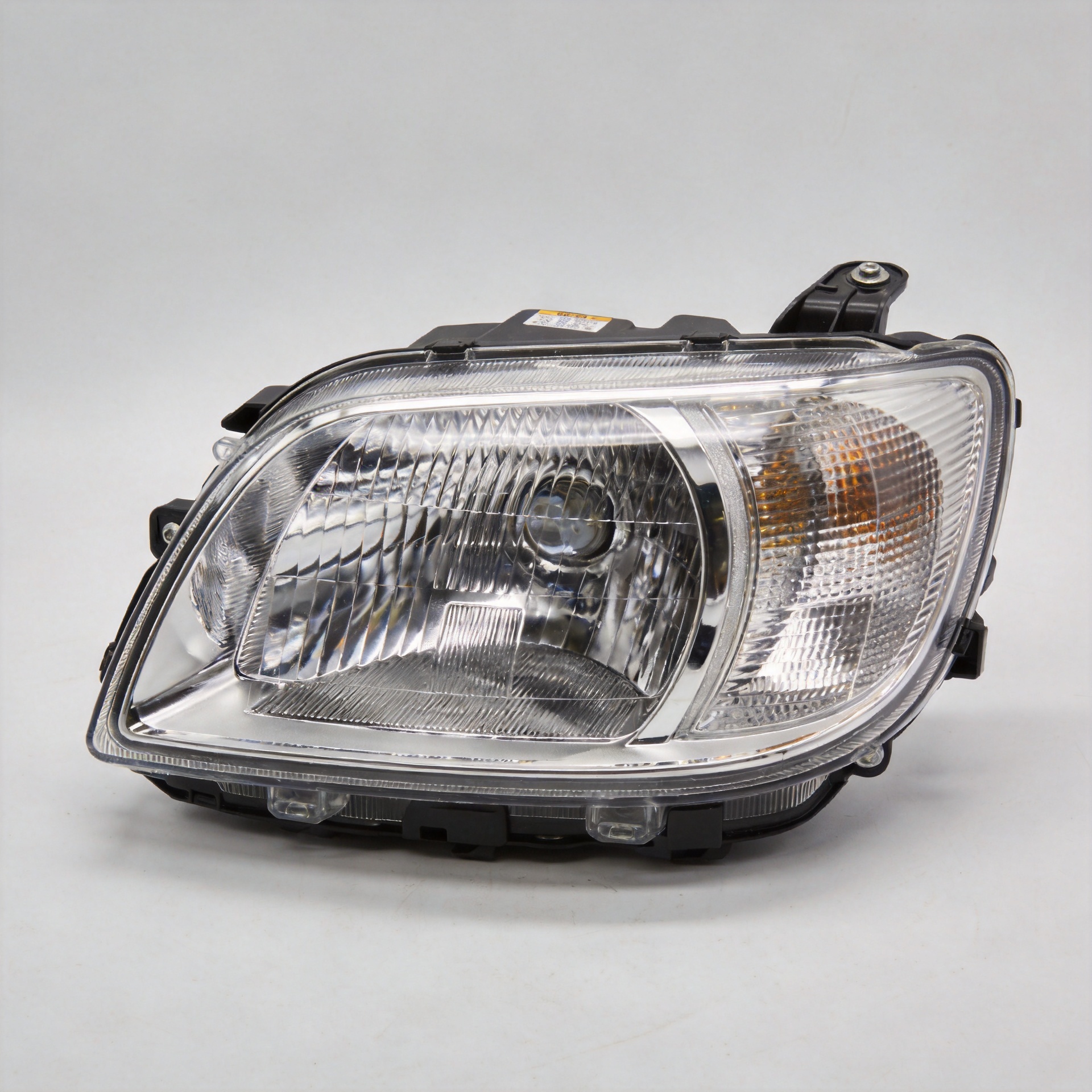
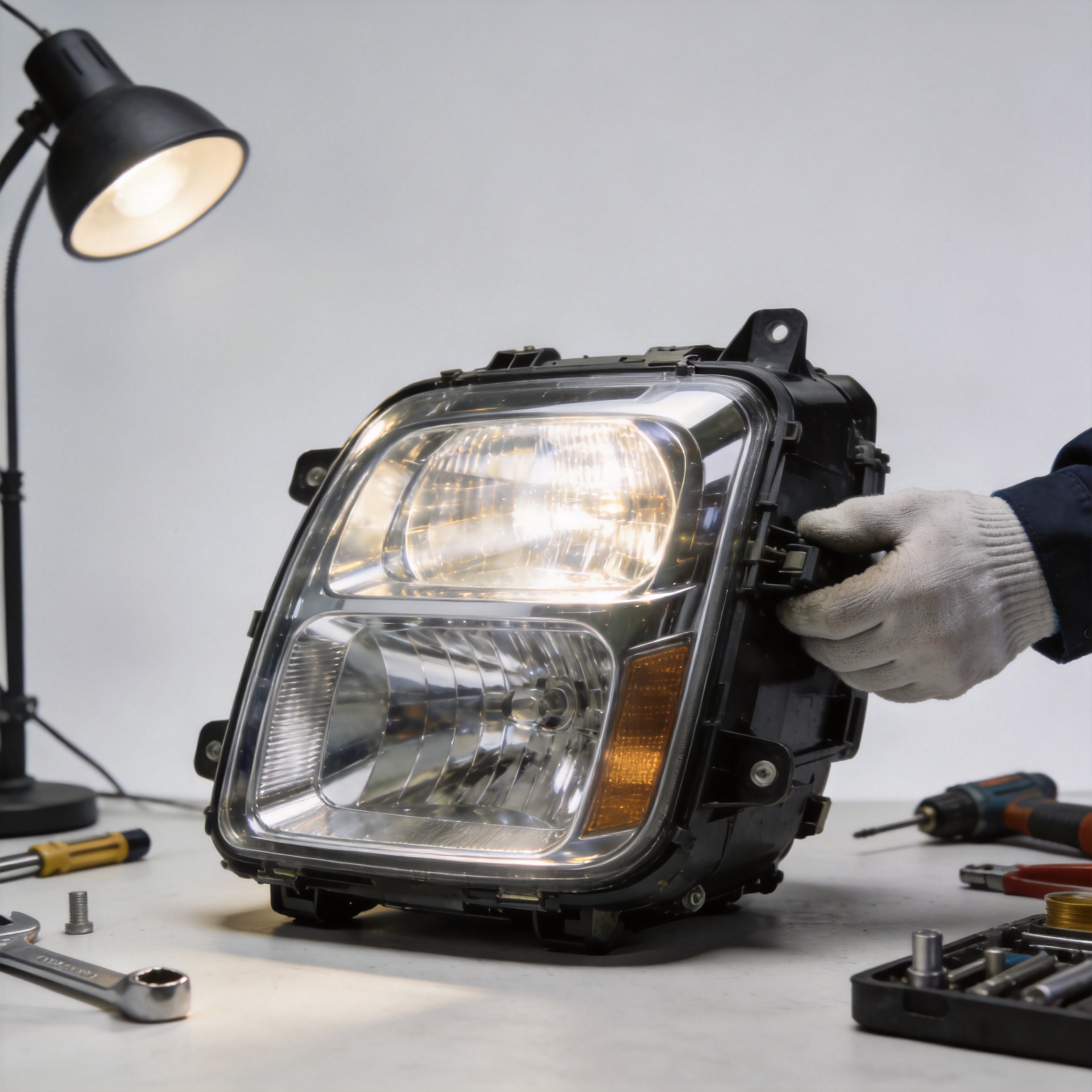
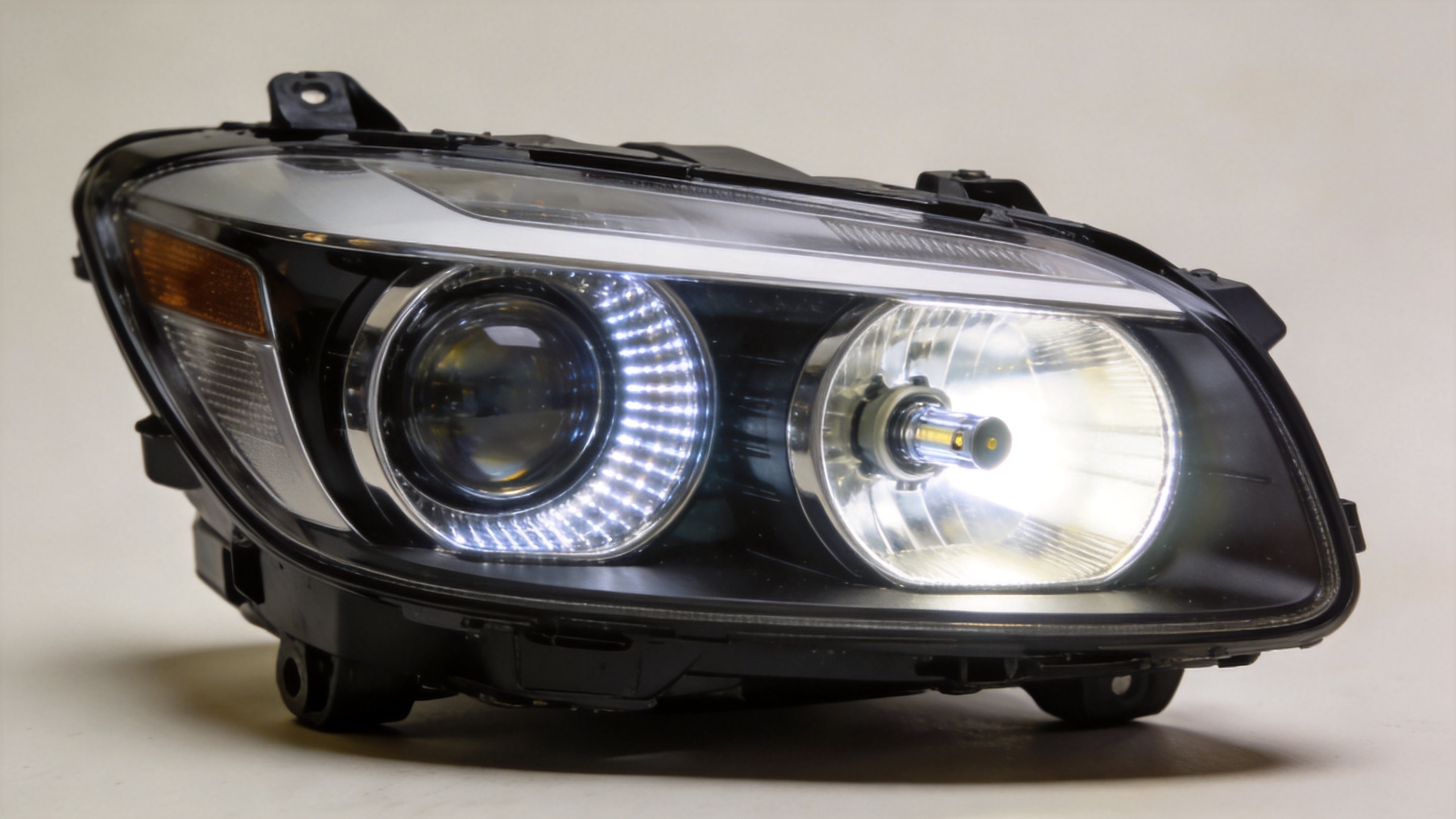
A bi-focus projector is an optical module or an integrated headlamp assembly. Its lens, reflector bowl, shield, LED source, and high/low-beam mechanism are designed as a system. In low beam, a shield helps create a defined cutoff. When high beam is activated, the mechanism changes the available light path rather than relying only on a different bulb position. That is why a projector option is normally evaluated as a complete headlamp solution, not simply as a bulb upgrade.
| Comparison point | Standard H7 LED headlight bulb | Bi-focus projector headlight |
|---|---|---|
| Optical basis | Uses the vehicle’s existing housing to shape light. | Uses a lens, shield, and optical module designed together. |
| Installation scope | Often a bulb-level replacement, subject to space and connector checks. | Usually an assembly or module-level replacement with more fitment points. |
| Beam control | Depends heavily on the original housing and LED emitter geometry. | Typically offers more direct control of cutoff and high/low-beam function. |
| Buyer priority | Fast fitment verification and realistic expectations for the existing lamp. | Vehicle-specific mounting, aiming, wiring, and compliance review. |
Beam pattern matters more than a headline brightness number
It is tempting to compare an H7 LED headlight bulb and a projector only by claimed lumens or wattage. That shortcut misses the job of a headlamp: putting usable light on the road while limiting unwanted light above the cutoff. A higher-output LED source can still perform poorly if the housing cannot focus it correctly.
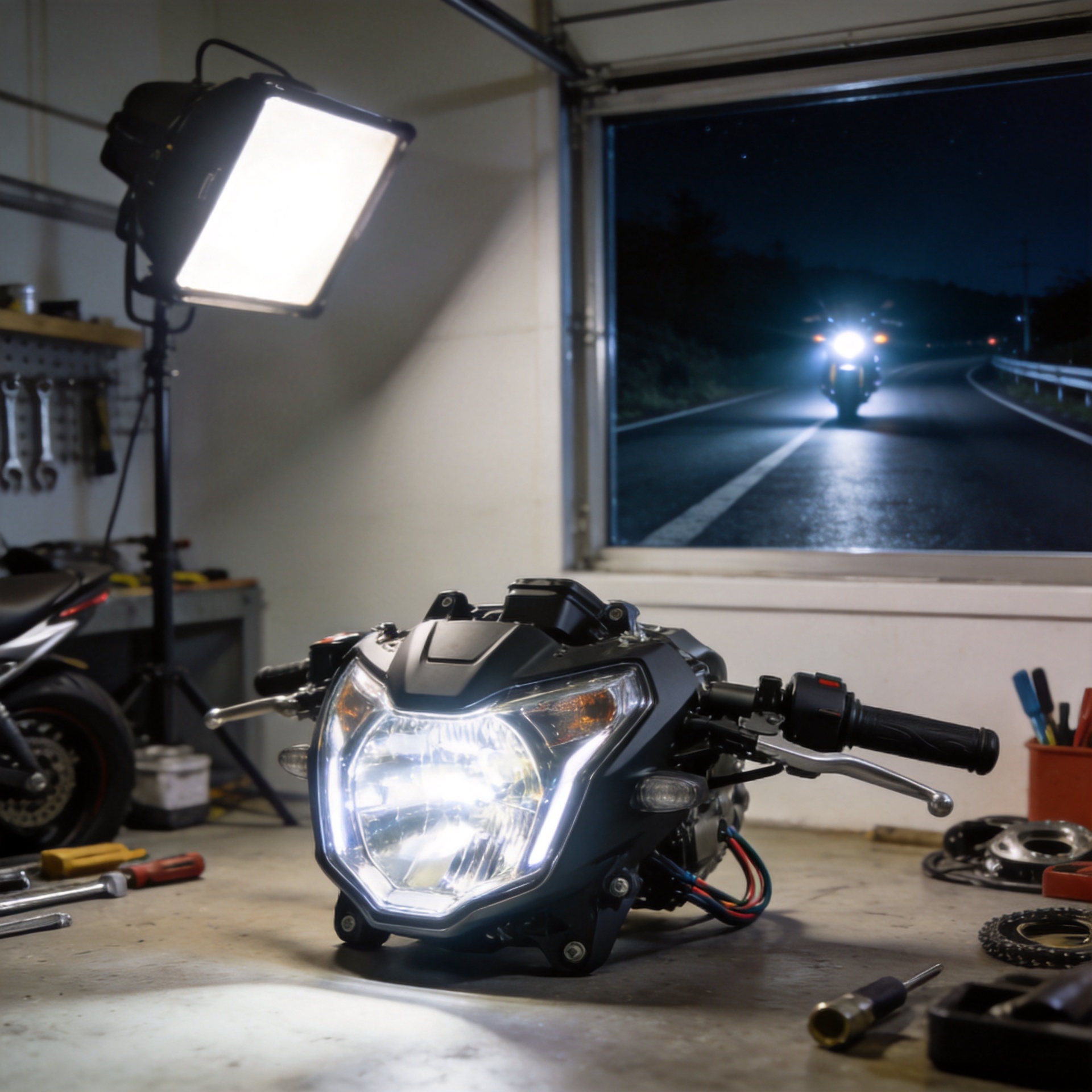
Think of the beam pattern as the distribution map, not the total amount of light. For low beam, buyers should look for a stable cutoff, even foreground coverage, controlled light at the left and right edges, and no obvious upward scatter during an aiming check. For high beam, the question becomes whether the additional distance light is usable without sacrificing the near-field view.
A bi-focus projector can be advantageous when the application needs a more deliberate low/high-beam optical package. But that does not make every projector assembly automatically better. Lens quality, heat management, internal alignment, vehicle mounting points, and final aiming still determine the result. Likewise, an H7 LED headlight bulb can be a sensible replacement if it is built for the relevant housing and verified in the installed vehicle.
Fitment is more than “H7 compatible”
H7 identifies a bulb category and connector arrangement; it does not confirm that every H7 LED product will fit every H7 vehicle application. The rear dust cap may lack clearance for a heat sink or fan. The bulb retaining clip may not seat securely. The LED driver may need room, and some vehicles may monitor bulb load or detect faults.
For a bulb-level upgrade, ask for the vehicle model, model year, headlamp version, low- or high-beam position, available rear clearance, connector style, and any dashboard-warning behavior. Then test the beam on the actual headlamp, not only on a bench. A plug-and-play claim should be treated as a starting point for validation, not the final proof of fit.
For a bi-focus projector assembly, add checks for housing shape, mounting brackets, DRL and turn-signal interfaces, aiming adjustment range, sealing surfaces, harness routing, and body-panel clearance. For example, the BMW E46 4-door LED bi-focus lens projector headlamp assembly is a vehicle-specific assembly type; buyers should confirm the exact vehicle configuration and local application requirements before purchase or installation.
Where each option makes more sense
Choose a standard H7 LED headlight bulb when the original housing is the right foundation
A standard H7 LED headlight bulb is usually the more practical route when the existing lamp body is in good condition, the vehicle-specific fitment has been checked, and the buyer wants to preserve the original appearance and installation scope. It can also make inventory planning easier for distributors that serve multiple bulb-replacement applications. The important limitation is that the original optical housing remains part of the system, so the bulb cannot correct a degraded lens, a weak reflector coating, or an unsuitable beam design.
Choose a bi-focus projector when the complete optical package needs to change
A bi-focus projector is worth considering when a vehicle-specific assembly offers the right mounting and the upgrade goal includes more than a new light source. Buyers may need a different headlamp appearance, a dedicated projector cutoff, integrated lighting functions, or a more controlled high/low-beam architecture. The tradeoff is a broader verification process: mechanical fit, sealing, wiring, aim, serviceability, and market requirements all need to be checked.
Use this procurement checklist before placing an order
- Confirm the vehicle application: Record model, model year, body style, headlamp version, and beam position. Do not rely only on an H7 label.
- Review the optical design: For a standard H7 LED headlight bulb, verify emitter geometry in the intended housing. For a projector, ask how low and high beam are achieved and how aiming is adjusted.
- Check physical and thermal clearance: Measure dust-cap depth, heat-sink room, fan clearance, and wiring space. For assemblies, confirm brackets, seals, and panel clearance.
- Check electrical integration: Confirm voltage range, connector type, driver placement, and possible vehicle warning or flicker behavior through an installed test.
- Inspect the beam after installation: Use a level aiming surface and confirm cutoff, symmetry, and glare control before the vehicle enters service.
- Review market rules: Road-use requirements differ by market and vehicle. Confirm the applicable lighting rules, marking expectations, and installation conditions for the destination market rather than assuming a retrofit is approved everywhere.
- Set sample acceptance criteria: For bulk orders, document fitment, beam pattern, sealing, electrical behavior, and cosmetic requirements so later batches can be compared with the approved sample.
How to make the comparison useful for B2B buying
For wholesalers and OEM programs, the choice is often about reducing returns and installation disputes. A standard H7 LED headlight bulb needs a disciplined compatibility matrix: vehicle application, cap clearance, adapter needs, electrical behavior, and beam-test result. A bi-focus projector program needs the same discipline plus assembly-specific controls such as housing fit, aiming hardware, lens condition, sealing, and vehicle lighting interfaces.
It is also useful to separate a product’s marketing specification from an acceptance specification. Marketing language may describe color temperature, output, or a plug-and-play installation. The acceptance specification should define what the buyer will actually inspect: the correct application, secure fit, stable operation, a usable beam, consistent assembly details, and documentation appropriate to the sales region.
Final decision: start with the vehicle and the optical goal
There is no universal winner between a bi-focus projector and a standard H7 LED headlight bulb. A bulb upgrade can be efficient when the existing housing is compatible and the installed beam is verified. A bi-focus projector can be the stronger choice when the vehicle needs a complete, vehicle-specific optical package with controlled low/high-beam behavior. In both cases, brightness is only one input. Fitment, beam control, thermal space, electrical integration, correct aiming, and destination-market requirements should decide the purchase.
For a product range that serves different vehicle platforms, use samples and application-specific checks before committing to a large order. That process turns a headlight upgrade from a catalog comparison into a repeatable sourcing decision.