EN
A Buyer’s Guide to Motorcycle Driving Lamps
For a parts wholesaler or motorcycle manufacturer, choosing motorcycle driving lamps is not simply a matter of selecting the highest lumen figure on a catalogue page. The right lamp has to deliver a usable beam, suit the intended vehicle platform, fit the electrical architecture, and meet the road-use expectations of the destination market. A product that looks attractive in a sample photo can still create costly returns if its bracket, connector, switching logic, or approval marking is wrong for the programme.
This guide is written from an OEM lighting-engineering viewpoint. It turns the buying conversation into a practical checklist for distributors, private-label teams, and vehicle projects evaluating motorcycle auxiliary and fog-light options.
Start with the job: driving beam, fog beam, DRL, or a combination
“Auxiliary light” is a broad label. Before requesting quotations for motorcycle driving lamps, define the lighting function. A driving lamp is typically intended to extend forward vision where high-beam use is appropriate. A fog-oriented lamp is designed around a different beam purpose and mounting context. A daytime running light (DRL) is about conspicuity rather than long-distance road illumination. Combination units can simplify packaging, but they also make control logic and compliance review more important.
For each SKU, document the intended function, beam pattern, mounting position, operating mode, and target-market use case. This prevents a common sourcing mistake: comparing lamps with different functions as though wattage or LED count alone made them equivalent.
Compare usable beam control—not headline brightness
Buyers naturally ask for lumen output, but a purchase decision should focus on where the light goes. A well-controlled beam helps put illumination into the road or trail area that matters while reducing stray light. Ask suppliers for beam-pattern photos, aiming guidance, optical drawings where available, and test information that identifies the operating mode. Review the lamp at the intended mounting height and spacing, not only on a bench.
For motorcycle driving lamps, the following comparison table is more useful than a single brightness claim:
| Check point | Why it matters to a buyer | What to request |
|---|---|---|
| Beam pattern | Determines forward reach, spread, and glare control | Pattern images and aiming instructions |
| Optical mode | Clarifies whether the lamp is driving, fog, DRL, or multi-function | Mode-by-mode specification sheet |
| Colour and control | Affects rider visibility, market expectations, and harness design | Switching diagram and connector details |
| Thermal design | Influences long-term LED performance and housing durability | Housing material and operating-condition information |
| Ingress protection | Helps assess exposure to rain, washdown, dust, and vibration | Declared rating plus test basis |
In practice, a lamp with a slightly less dramatic output figure but a repeatable, well-aimed beam can be the safer commercial choice. It is also easier for a distributor to explain accurately to dealers and end users.
Verify vehicle fitment and electrical integration early
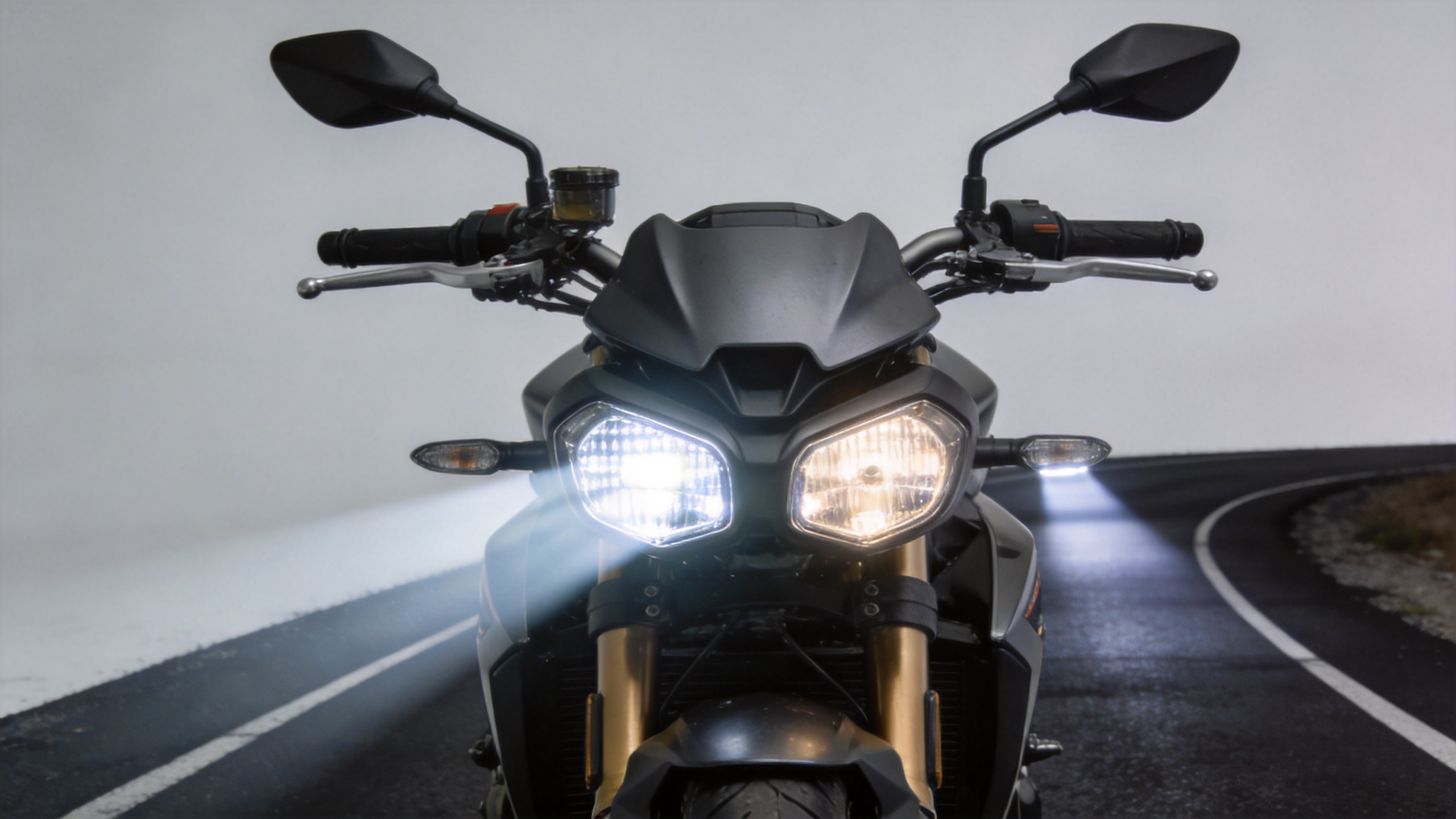
Fitment is where promising motorcycle driving lamps often become programme delays. Check the mounting bracket geometry, bolt size, allowable adjustment range, lamp clearance at steering lock, and possible interference with fairings, crash bars, windscreens, or luggage accessories. If the line targets multiple platforms, create a fitment matrix rather than relying on a generic “universal” claim.
Electrical integration deserves the same attention. Confirm system voltage range, current draw by mode, fuse and relay requirements, connector type, harness length, and whether the lamp needs a separate controller. For CAN-bus-equipped motorcycles or OEM projects, agree on the control approach before samples are approved. A clean installation is not only an aesthetic issue; it reduces warranty exposure from loose wiring, water ingress, and improper switching.
As one current fitment reference point, YIAALUX lists an Emark Certified LED Driving Headlight for BMW F800GS, F700GS, and F650GS. Use a product-specific listing like this to start a fitment discussion, then validate the exact model year, mounting kit, and market requirements with samples and technical documentation.
Treat approval and installation as separate purchasing gates
Road-use compliance is not a marketing badge. For markets using UNECE rules, Regulation No. 149 provides an approval framework for road-illumination devices, while relevant installation requirements must also be checked for the vehicle and lighting configuration. In North American programmes, SAE J581 is a recognized standard that provides test procedures, performance requirements, and guidance for auxiliary driving lamps. These references do not make a product automatically legal in every country or installation.
Build a market-by-market compliance file that records the required marking, applicable function, approval documentation, and installation limits. Then compare the physical marking on the production sample against that file. This is especially important when one housing is offered with different optics or control modes. Do not assume that an approval associated with one variant transfers to another.
Use samples to test the supplier, not only the lamp
A sample stage should answer commercial as well as technical questions. Set acceptance criteria before the sample ships: visual finish, beam pattern, connector and harness configuration, mounting hardware, packaging, labels, documents, and any required approval mark. Photograph the received configuration and retain the signed specification. If the programme is private label, approve logo position, artwork, carton language, and traceability requirements at this stage.
For wholesale purchasing, ask how the supplier will manage model changes, spare brackets, replacement harnesses, and packaging variations. For OEM sourcing, ask for the change-control process, inspection points, pilot-run expectations, and lead-time assumptions. Danyang Yeya Opto-Electronic serves automotive and motorcycle lighting buyers and can discuss OEM/ODM needs, but the agreed specification—not a broad capability statement—should define the order.
RFQ worksheet: questions that make motorcycle driving lamps comparable
Use the same worksheet with every supplier. It keeps motorcycle driving lamps comparable across quotations and helps purchasing teams avoid a decision based on an incomplete catalogue description.
| RFQ question | Decision use |
|---|---|
| What function is specified for these motorcycle driving lamps? | Separates driving, fog, DRL, and combination proposals. |
| Which beam images accompany the motorcycle driving lamps? | Allows an optical review before a sample is approved. |
| Which motorcycle driving lamps fit each named vehicle platform? | Turns a broad fitment claim into a model-by-model record. |
| What harness and connector are supplied with the motorcycle driving lamps? | Confirms installation scope and service-part needs. |
| Which market documents support the motorcycle driving lamps? | Creates a compliance review trail for the destination country. |
| What marking appears on the production motorcycle driving lamps? | Lets the sample be compared with the approved specification. |
| How are motorcycle driving lamps packed and labelled? | Checks private-label, traceability, and dealer-readiness requirements. |
| What changes require notice after motorcycle driving lamps are approved? | Sets a practical change-control expectation. |
For a first order, request a sample set that reflects the exact motorcycle driving lamps, bracket, harness, switch, label, and carton proposed for production. For repeat orders, retain the approved sample and the controlled specification together. That simple discipline helps a distributor compare motorcycle driving lamps from several sources on the same basis.
Finally, separate a technically promising lamp from an order-ready programme. Order-ready motorcycle driving lamps have an agreed function, confirmed vehicle interface, documented market review, and a sample that matches the bill of materials. If any of those items is missing, keep the purchase at evaluation stage rather than treating a quotation as final approval.
Final procurement checklist for motorcycle driving lamps
- Define the required function and target-market use before comparing products.
- Evaluate beam pattern and aiming data alongside output figures.
- Confirm fitment, wiring, switching, and mounting with the actual vehicle or fixture.
- Verify approval markings and installation requirements for each destination market.
- Approve a documented sample before placing a production order.
- Align packaging, labels, spare parts, and change control with your sales model.
A sound motorcycle driving lamps purchase is one that can be specified, installed, documented, and supported consistently. When buyers lead with beam function, vehicle integration, compliance evidence, and sample discipline, they make a stronger decision than when they chase headline brightness alone.