 EN
EN

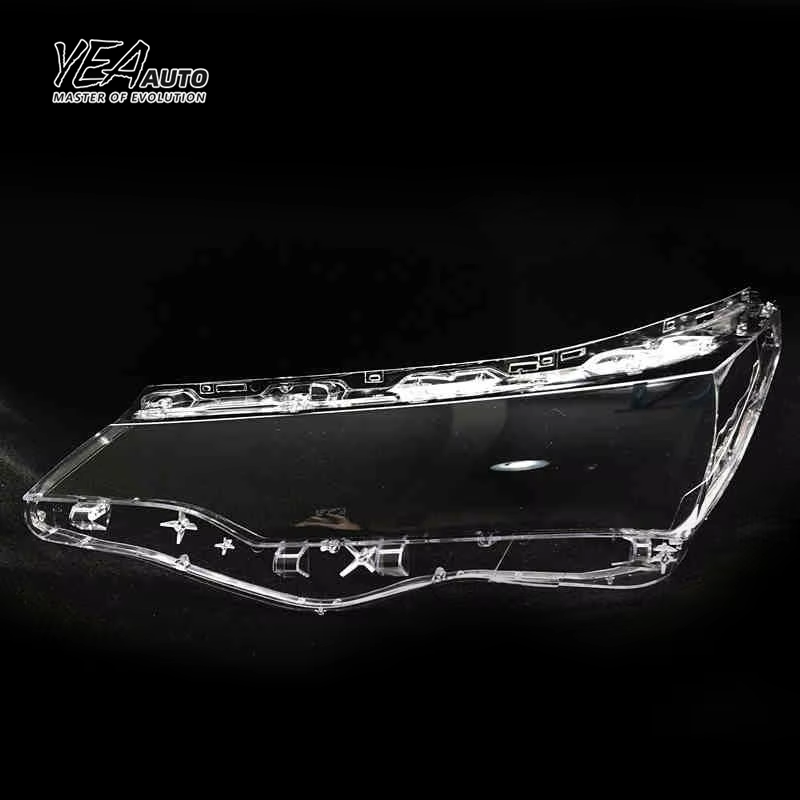
In the painstakingly managed environment of the Original Equipment Manufacturer (OEM) programs, the choice of each component specification is a calculated action with an implication on the safety, costs, and brand reputation. In the case of the headlight lens, often known as glass, which, however, is produced of polycarbonate of advanced a grade, a high impact resistance mandate cannot be compromised. This necessity is predetermined by a complicated system of safety standards, the reality of the durability needs, and the financial and legal aspects in the long perspective. This is the reason why impact resistance is one of the corner-stone specifications within any OEM headlight program.
First-line Safety and Regulatory Compliance.
The first one is the safety of occupants and road users, which is promoted by strict international laws.
Pedestrian Protection Standards: Vehicles have laws like EC/78/2009 in Europe, and other laws across the world that impose severe limitations regarding the demeanor of the front-end components during a pedestrian impact. The headlight lens requires design to take in energy and not break into sharp and lacerating pieces. High-impact polycarbonate is made to deform, crack or break in a controlled and less hazardous way than traditional silicate glass thereby lowering the risk of secondary injury to a great degree.
FMVSS/CMVSS and ECE Durability Mandates: Although these standards are concerned with the photometric characteristics of the entire headlamp, they, in effect, demand the integrity of the optical system. A fractured lens caused by a chip or small impact of a stone will automatically affect the beam profile, which will probably make the headlamp unsuitable to the light production and glare criteria. Impact resistance thus is a condition towards certified performance in the life of the vehicle.
In-Service Durability and Warranty Risk Management.
The front part of a car is a victim of unremitting road debris.
Stone Chip and Debris Resistance: In highways, traveling at high speeds pebbles and road debris are high velocity projectiles. The first protective measure is to use an impact-resistant lens that prevents the puncture and cracks that will crack the seal of the lamp. A faulty seal causes internal condensing, corrosion in the reflector and electrical breakdown- one warranty claim is guaranteed.
Low-speed impact and vibration resistance: Lenses other than projectiles need the ability to survive parking collisions, small collisions and decades of high-frequency vibration without stress cracks. Cracking does not only result in instant failure but also can spread over the years, to which the UV-protective hard coating is delaminated and the optical degradation is then accelerated.
Guaranteeing System Integrity, Functional Longevity.
The headlight is a closed system and the lens is the structural window of the head light.
Best Practices: Lenses are key to the Environmental Seal: The lens comprises a central portion of the hermetic barrier that contains delicate internal electronics, such as LED drivers, adaptive motor actuators, and complicated reflectors. A breakage violates this barrier and exposes these parts to moisture and contaminants that cause corrosion, short circuit and early failure of costly subsystems.
Maintaining Optical Focus: Recent headlights, particularly those of adaptive or matrix beam pattern, depend on fine optical focus. Any major effect that distorts the lens housing may cause the overall optical core to be misaligned and the beam pattern to be distorted, causing dangerous glare. High-impact resistance assists the assembly to sustain its structural geometry when stressed.
Total Cost of ownership and Brand Equity.
OEMs consider the elements prismatically to the total lifecycle cost and brand perception.
Cutting Warranty and Recall expenses: One of the most costly elements of the exterior to repair is a headlamp assembly. A lens that has been proven to be resistant to impact is an active investment to reduce the number of in-warranty replacement as a result of road damages. It also alleviates the disastrous danger of a recall in the occurrence of a material defect resulting in pervasive cracking.
Maintenance of Brand Reputation on Quality: When a headlight is cracked or fogged, it is one of the most salient indicators of low durability which affects directly the perceived vehicle quality. With the age of internet reviews and social media, these evident shortcomings can hurt the reputation of a brand proportionately when it comes to trustworthiness and sound construction.
Material Science The Engineered Solution.
OEMs do not identify polycarbonate as a low cost substitute to glass, but as an enhanced engineered material.
Inherent Ductility of Polycarbonate: Polycarbonate material has a great strength-weight ratio and natural ductility that enables it to bend instead of cracking under the impact. Material compounding and intelligent design are further used to add to this property.
Synergy with Hard Coat: The necessity to combine the impact resistance with the necessity to be hard on the surface. The tough PC material on the lower surface releases the impact energy and the hard material on the top offers protection against scratches. The system is designed in a way that the coating is bonded and operational even following a small impact incident.
We know that OEM specifications are the roadmap to the real world performance. Our headlight lenses are designed to surpass the high impact resistance requirements of the international OEM programs. We use impact-modified polycarbonate of high grade and make use of the molding processes that are aimed at maximizing toughness of materials. Our lenses are put through a rigorous standardized test, such as dart drop, temperature-conditioned impact tests so as to ensure that our lenses perform at -30degC up to the high temperature extremes. It is through combining this proven strength with our hard-coat technology that we are able to provide our OEM customers with a resilient component that ensures a durable, safe, and long-lasting component that creates a clear and unmistakable window to the road as long as the vehicle remains on the road.