 EN
EN

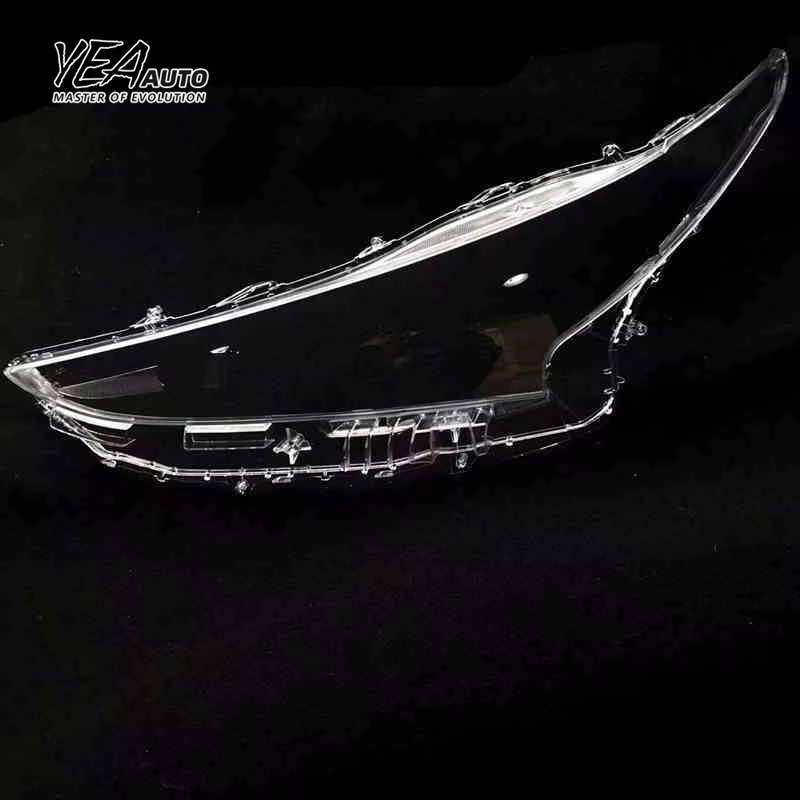
In the fastidious world of Original Equipment Manufacturing (OEM), every piece is audited in terms of its value on safety, longevity, and performance of the vehicle. A very strict set of requirements is designed to the headlight housing, which is a crucial structural component of the lighting assembly. One of them is high impact strength, and it is not only a desirable characteristic but a basic engineering and safety requirement. In the case of OEM buyers, the demand to specify housings with extremely high impact resistance is a requirement that cannot be compromised due to several important reasons.
Primary Occupant Protection and Safety.
The headlight assembly is installed in the front crumple areas of a vehicle. Components should also act predictably in case of a collision.
Controlled Deformation and Fragmentation Prevention: A housing that has high impact strength is built with the intention of absorbing and releasing energy in case of impact. It does not break into sharp and dangerous fragments that may create a secondary trauma to the pedestrian, other road users, or first responders. A major passive safety consideration is its capability to withstand integrity or rupture systematically.
Retention of Important Functions: In a small impact, an impact-resistant housing can cushion internal optical elements (reflectors, projectors, LEDs) and electrical systems, enabling important lighting functions to sustain themselves. This is crucial to visibility and safety after collisions.
Road Hazards Durability in the Real World.
The front of a vehicle is always subjected to environmental challenges throughout its life.
Stone Chip and Debris Impact: This is an effect of traveling at high speed, which will project small stones, road debris, and gravel at the front of the car. The housing provides a barrier of the first line. The high impact strength prevents cracks, punctures or any form of fracture that may cause the sealed chamber to be compromised thus resulting in the ingress of moisture, condensation and eventual lamp failure.
Resistance to Minor Impact and Vibration: In addition to projectiles, housings should be able to withstand low-speed bumps, parking nudges, and high-frequency vibration that is always present in driving. A material that is less impact resistant would tend to stress crack gradually and thus cause premature failure and warranties.
Securing Long-Term Seal Integrity and Optical Performance.
The sealed optical environment required is offered by the headlight housing.
Keeping the Environmental Seal: The housing should be firmly assembled to the lens (cover) by a permanent seal. The housing being impacted can break this seal by any deformation or crack. When it is broken moisture, dust, and contaminants get inside and lead to corrosion of reflectors, fogging of lenses, and electrical shorts. This directly reduces the light output and beam pattern accuracy.
Stability Precision Optics: LED drivers, adaptive lighting mechanisms and complex reflectors are internal components mounted directly to the housing. When the housing is not rigid enough to strike with a blow it may distort these fine optical pieces. This mal-alignment may cause the pattern of the beam required by law to be misshapen, and thus cause dangerous glare to other road users or diminish the visibility of the driver.
Material Behavior under adverse environments.
The strength of impacts is not a constant that can be measured; it needs to be steady throughout the working range of the vehicle.
Low-Temperature: It is found that most plastics are brittle in cold environments. OEM specs demand housings that are able to retain high impact strength (quantified by such a test as the Charpy or Izod Impact Test) at very low temperatures (e.g., -30degC and below). This will make sure that the housing will not fall apart in a disastrous manner when struck by a small impact during the winter season.
Environmental Stress Cracking (ESC): This involves the housing material having the ability to resist the cracking effect caused by stress when exposed to certain chemical substances such as road salts, oils or car wash detergents. Materials of high impact-grade are usually designed with this resistance consideration.
Warranty, Brand Reputation and Total Cost of Ownership.
In the case of an automaker, failure of components has a direct outcome on brand perception and money.
Elimination of Warranty and Recall Risk: A complete headlamp assembly replacement is a warranty-costly repair as a result of a housing failure. Indicating components of proven high impact strength is a proactive strategy to ensure that there is minimal field failures and warranty costs.
Maintaining Brand Quality Image: A broken or broken light is a very noticeable indicator of a low quality. OEMs invest in durable parts to guarantee that their cars have a reputation of durability and reliability of their ownership lifecycle.
In the case of OEM purchasers, need to demand high impact strength of headlight housings is a risk management decision that is based in its entirety. It is a basic need that will not only protect the occupants of the vehicles, but also guarantee the proper functioning of an important safety device (lighting), one that protects the warranty system of the manufacturer and the brand promise of quality. The housing is not just a dead shell; on the contrary, it is a structurally rated element and the material science is simply the direct transfer to actual safety and durability. The collaboration with the manufacturers that have perfected the art of engineering and choosing of materials used in high-impact applications is thus a strategic requirement in the automotive supply chain.