 EN
EN

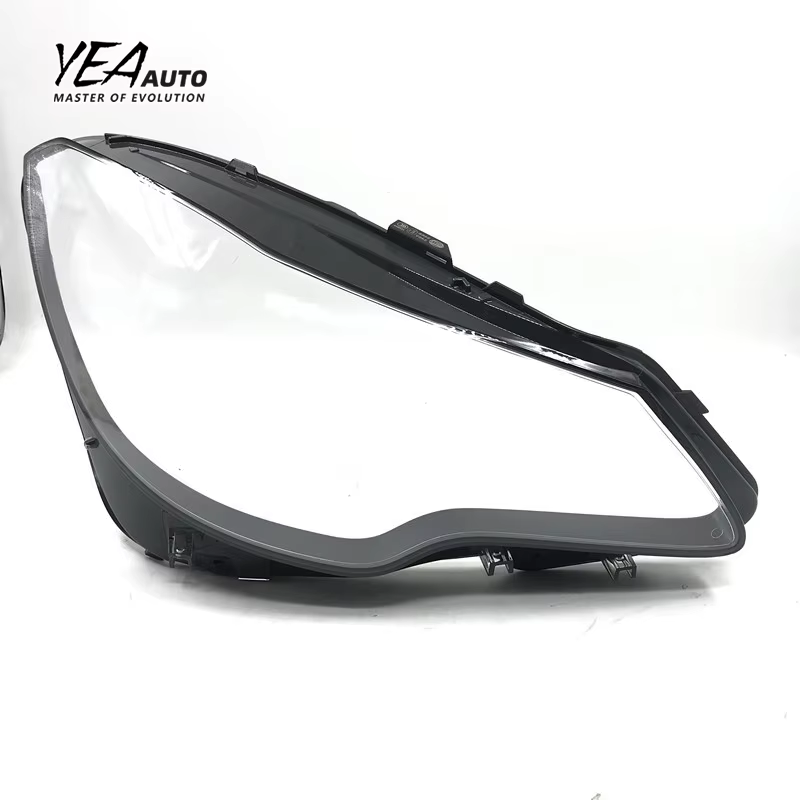
In modern vehicle lighting systems, every component must work together with extreme precision to ensure safety, durability, and regulatory compliance. Among these components, the automotive headlight housing serves as the structural foundation that supports the lens, reflector, LED modules, and electronic components.
For original equipment manufacturer (OEM) vehicle programs, high dimensional accuracy in headlight housings is not just a quality preference—it is a strict engineering requirement. Even small dimensional deviations can affect optical alignment, sealing performance, and overall system reliability.
The Role of Dimensional Accuracy in Automotive Headlight Systems
Dimensional accuracy refers to how closely a manufactured component matches its intended design dimensions. In headlight housings, this accuracy is critical because the housing must precisely hold multiple components in their exact positions.
A typical headlight assembly includes:
l Optical lenses
l Reflectors or projection modules
l LED light sources
l Heat sinks and electronics
l Sealing gaskets
Each of these parts relies on the housing for alignment and structural support. If the housing dimensions are even slightly incorrect, the entire system may not function as intended.
Ensuring Precise Optical Alignment
One of the most important reasons OEMs require highly accurate headlight housings is to maintain precise optical alignment.
Modern headlights use carefully engineered beam patterns to illuminate the road while preventing glare for oncoming traffic. These patterns are achieved through precise positioning of optical components such as reflectors, projectors, and lenses.
If the mounting points inside the housing are misaligned, even by fractions of a millimeter, several issues can occur:
l Beam patterns may shift upward or downward
l Light distribution may become uneven
l Glare for other drivers may increase
l The lighting system may fail regulatory testing
Because of these risks, OEM programs enforce extremely tight dimensional tolerances during production.
Maintaining Effective Sealing and Waterproof Protection
Headlight assemblies must remain sealed against water, dust, and humidity for many years of vehicle operation. The interface between the lens and the housing typically uses a gasket or adhesive seal.
Dimensional inaccuracies can compromise this sealing interface in several ways:
l Uneven compression of the gasket
l Small gaps between mating surfaces
l Increased risk of water intrusion
Moisture entering the headlamp assembly may lead to condensation, corrosion, and potential failure of internal electronic components. Therefore, maintaining accurate housing dimensions is essential for ensuring long-term environmental protection.
Meeting Strict Regulatory and Quality Standards
Automotive lighting systems must comply with international safety standards such as those used in Europe and North America. These regulations specify strict requirements for beam patterns, brightness levels, and glare control.
Dimensional accuracy plays a direct role in meeting these standards because optical components must be positioned precisely to produce compliant beam patterns.
OEM manufacturers therefore require suppliers to follow strict quality management systems and dimensional inspection procedures during production.
Achieving High Dimensional Accuracy Through Advanced Manufacturing
Producing headlight housings with tight tolerances requires advanced manufacturing techniques and strict process control.
Precision Mold Design
Injection molds used to produce plastic housings must be engineered with extremely high accuracy. Small variations in mold design can translate into dimensional errors in the final product.
Controlled Injection Molding Parameters
Temperature, pressure, and cooling conditions during injection molding must be carefully controlled to prevent warping, shrinkage, or distortion.
Dimensional Inspection and Quality Control
Manufacturers often use coordinate measuring machines, optical scanners, and automated inspection equipment to verify that each batch of housings meets design specifications.
These processes ensure that headlight housings consistently meet the tight tolerances required for automotive applications.
Manufacturing Capabilities at Danyang Yeya Opto-Electronic Company
Danyang Yeya Opto-Electronic Company provides integrated development and manufacturing services for automotive and motorcycle lighting components. With years of experience in the lighting industry, we focuses on delivering reliable structural parts and optical components that meet the requirements of modern vehicle lighting systems.
we supports international partners throughout the entire product lifecycle—from initial design collaboration to stable mass production. By combining engineering expertise with efficient manufacturing management, Danyang Yeya Opto-Electronic Company helps customers accelerate product development and maintain consistent supply for global markets.
Key capabilities include:
l Collaborative product development for automotive lighting applications
l Stable production processes for plastic and structural lighting components
l Strict dimensional and appearance quality inspection
l Scalable OEM and ODM project support for international customers
Through continuous process optimization and technical improvement, we is committed to delivering lighting components that combine precision, durability, and consistent manufacturing quality, supporting the evolving needs of global automotive lighting programs.