 EN
EN

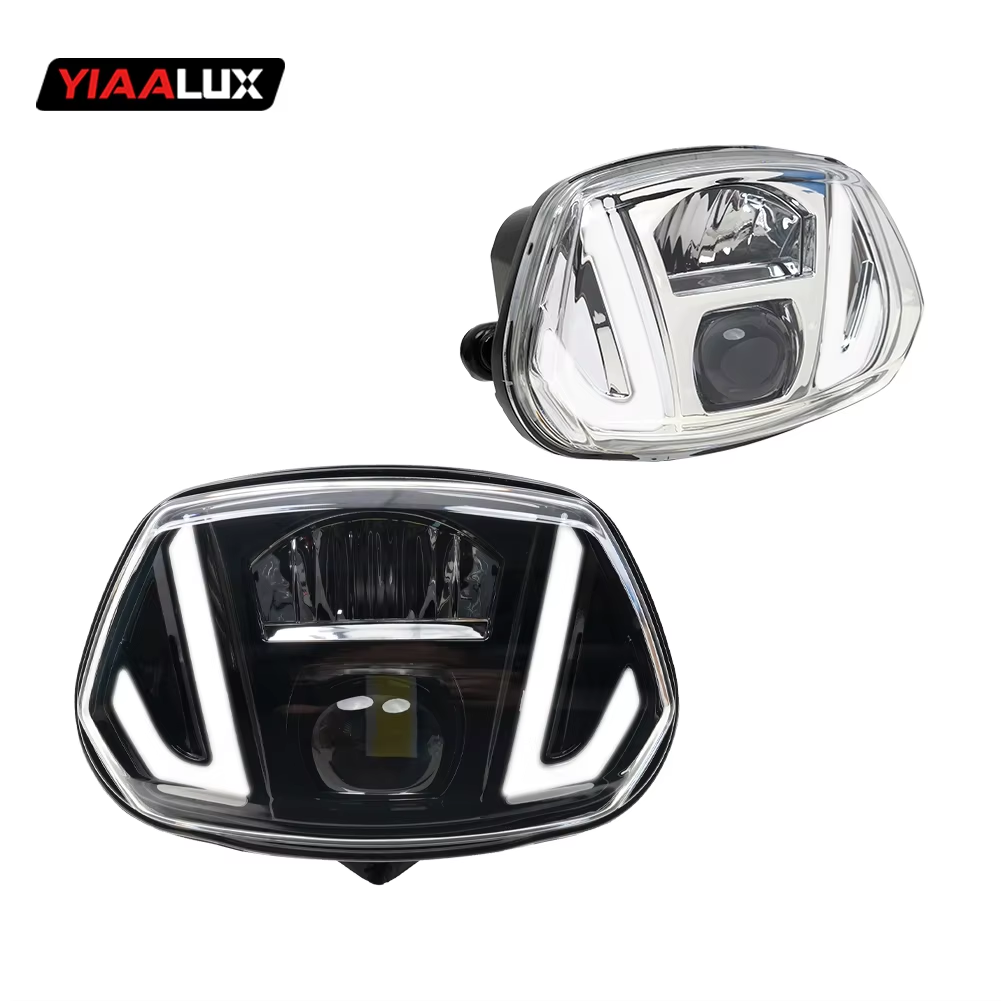
The phrase “lamp-free motorcycle” indicates a trend toward a particular type of motorcycle design. The tradition design which relies on bulb type lighting will be abolished and replaced by entirely sealed LED integrated lighting. Different from the traditional design which uses a light source with a bulb and reflector and is not easy to maintain, the lamp-free type design embeds LED chip, optics, and electronic driver in the headlight or taillight, allowing the styling to become more design freedom and enhance the reliability as well as lighting performance. From streetfighters to adventure bikes, lamp-free design can now be seen on today’s motorcycle.
Danyang Yeya Opto-Electronic Company Limited is a manufacturer focused on LED multifunctional lighting products like motorcycle headlight and taillight system for the lamp-free type. Here are 4 kinds of design features on those popular motorcycle lamps:
1. Sealed, Single-Piece Headlight Housings
Traditional motorcycle headlight consist of bulb, reflector, lens and removable back cover. Multi-component structure can easily cause water entering, and the connection parts can become loose due to the vibration or damage, bulb failure will also be a problem. Lamp-free headlight is entirely sealed as one piece. The LED chips are permanently soldered on the metal core PCBs and then mounted and bonded directly onto die-cast aluminum heatsinks. Polycarbonate lens are welded or bond onto the housing and achieve an IP65 or IP67 weather seal. Danyang Yeya lamp-free headlights are designed with such a rigid structure. No bulb holder is there which would be corrosive; rubber boot used will be broken after long term use, vents are easily plugged and etc. The sealed one-piece headlight housing is ideal to run in rain and snow, and will keep it working in pressure washing. For Motorcycle OEMs, the single structure greatly reduces the number of assembly process, since the lamp unit as one piece can be mounted into the motorcycle with only one connector required.
2. Ultra-Slim Profiles and Signature Lighting
The traditional light source and bulb need to be secured using a bulb holder and reflector in the headlight assembly, thus require relatively large space. By replacing these, the lamp-free headlight can achieve extremely thin dimension, less than 30-40mm; some is just to insert into the nose fairing of motorcycle, or stick on the front fender with ultra-thin light strip. Ultra-thin headlight shape has become a trademark of the lamp-free motorcycle in the naked and sports tourer design. Besides ultra-thin profile, the lamp-free design enables the special signature lighting. LED DRL ring shape, L shape light guide, or sharp angle accent strips, all these distinctive and brand characteristic lightings always are switched on as long as the motorcycle is working. Signature lighting uses side-emit LED chips, which emit light into the acrylic light guide, enabling even and dim light from a compact, ultra-thin housing. This is similar to LED taillights as well; compact, thin and full-width light strip have fully substituted traditional bulb lamp.
3. Integrated Beam Shifting Without Moving Parts
Low beam and high beam function is necessary for any vehicle lighting system. For lamp-free design, without accessible bulb to be swapped, beam shifting is usually performed through electronic mechanism or internal adjustable baffle. Bi-LED module composed by multiple banks of LED chips in the lamp housing has been the prevalent solution. Low beam uses one bank of LED chips and a specific cutoff baffle to produce a clean low-beam. Switching to high beam additional LED chips will be lit up or micro-motor is controlled by solenoid to move the baffle and obtain the focused high-beam. Danyang Yeya lamp-free headlights are engineered with precise Bi-LED optics. It can produce a well defined, glare-free low beam light according to ECE standard, and switch into powerful long range light at the high beam mode by activating the extra LED chips or moving the internal baffle with the micro motor and solenoid. There is no bulb holders to be attached, the integrated mechanism is protected from elements. This design has proved more reliable than the traditional incandescent bulb lamp assembly.
4. Structural Integration with Vehicle Bodywork
Lamp-free headlight and taillight should not be viewed as components added to a completed motorcycle design, they have become integral to the overall body work structure of the motorcycle itself. For headlight, the entire housing may become part of the front cowl structure, providing mounting for dash panels. For taillight, it may be perfectly integrated within the motorcycle's rear sub-frame or tail section with minimal gap or rubber parts. Danyang Yeya often works with OEM manufacturers to produce custom lamp-free headlight and taillight components with molded flanges and inserts attached onto specific chassis mounts or subframe supports to meet specific motorcycle design. Our engineers also pay great attention to LED heat dissipation by controlling the Housing thermal profile so as to fully utilize the light resource, ensuring durability and maintaining the perfect motorcycle aesthetic from the integrated design, unlike those add-on aftermarket lamps which do not possess original factory integration look. For BMW, Yamaha, Honda, and Vespa and many other popular models, Danyang Yeya is now producing various lamp-free headlight and taillight based on existing molds with quick turnaround and full OEM/ODM service.
Summary
The lamp-free motorcycles of the present have achieved four primary headlight and taillight design elements: sealed one-piece housings, ultra-thin profiles and signature lighting features, no-moving-parts beam shifting, and bodywork integration. Danyang Yeya Opto-Electronic Company Limited is committed to using innovative LED technology and meticulous manufacturing quality to create advanced lighting systems, and providing all round OEM/ODM service to customers for their needs in streetfighters, adventure, sport tourers and etc. Welcome to contact us for your lamp-free lighting design project.