 EN
EN

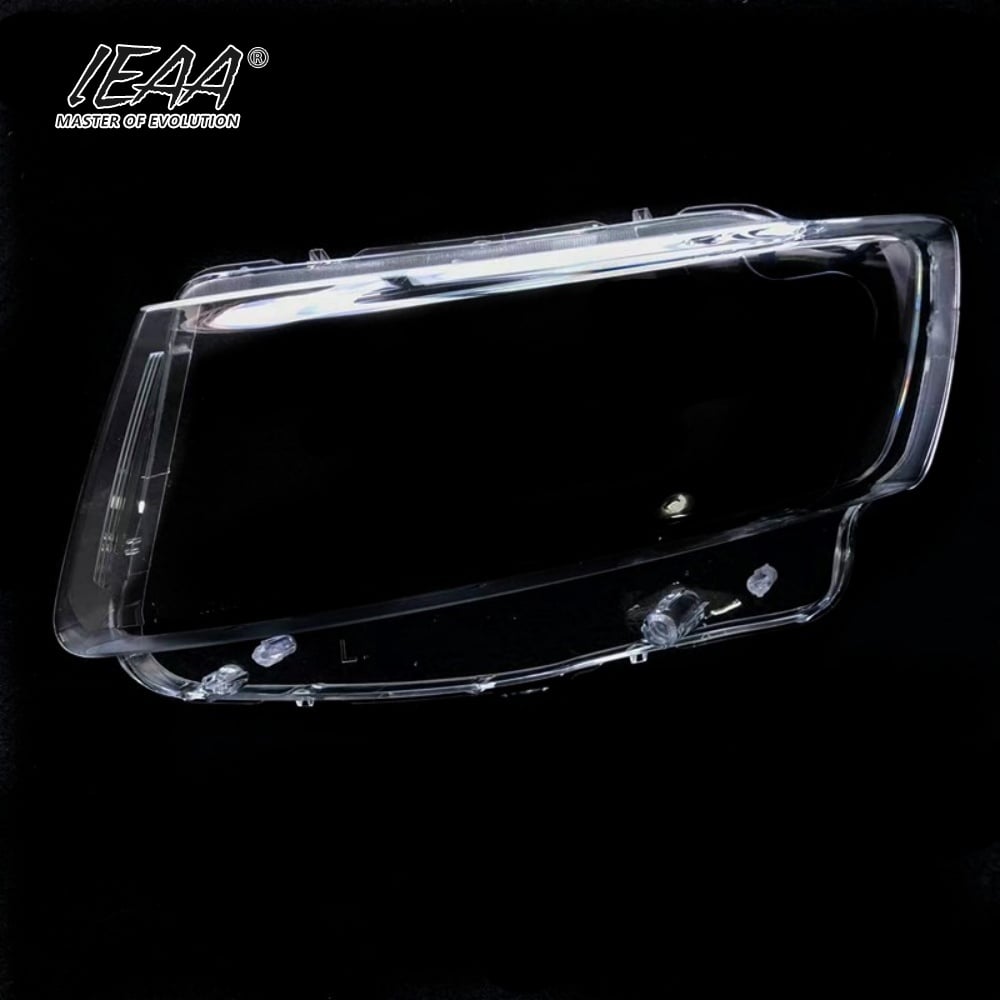
A significant change has been noted in the massive dedicated units of lighting to smart and adaptable modular headlights units. Modular headlights units consist of different and replaceable parts like the main projection module, daytime running light strip, turn signal module, and the adaptive driving beam module. All these are components constituting one. The core of this revolution is the headlight housing which initially began as a protective housing an element that came to play a dominant role in the development of modularity.
The Importance of Accurate Integration Systems.
High-end or
Contemporary House Design is developed in multi-functional chassis form.
The main intention of the chassis is to offer correct mounting position of independent modules.
Standardized Interface Points: This allows the housing to permit the use of docking points, alignment pins, or fastener bosses of each of the modules that are plug-and-play components. Such interface points will make it possible to position exactly the next module or device that has to be inserted into the housing so that it could allow the optical path to be aligned or the electric connections.
Integrated Electric and Thermal Architecture: The modular package is grounded on an internalized harness routing and a specified route of the electric and electronic thermal management. The architecture includes electric and data transfer paths and cooling paths of electric components and electronic components that may also be joint (e.g. joint cooling fins and paths of electric/electronics), to which all certified modules may be connected.
Facilitating Platform Scalability and Design Agility.
This chapter aims to
The scalability of the light systems and the molding in the body type makes the car models suitable to the scalability.
Common Housing, Different Configurations: It means that it is possible to use the common housing with various lamps configurations. The entrance level version of the vehicle would also be the base on which the normal reflector and halogen lamps would be attached in the normal reflector and halogen lamps part. The posh variant of the car would use the common housing to place the high-resolution LED matrix part and the dynamic turn lamps part.
Allowing Technology Upgrades and Servicing: Using a modular design, based on a solid housing, the vehicle may become less and less conservative. In case a lighting technology changes, a new optical or electronic module can be potentially developed that would be associated with the same type of housing. Likewise, when it comes to the repairs, a faulty module, including a DRL module, may maybe swapped as well without necessarily throwing away the more expensive headlamp itself.
Offering a Well-built System and Environmental Seal.
As a contribution to the end of modularity, it is, nevertheless, significant that the housing should match the big role of wrapping and covering the now more complicated system.
Favoring a Unitary Sealed System: Despite the existence of various modules, the assembled unit must be such that it is a unitary sealed system. The role of the housing is simply associated with the generation of the primary seal amid the environmental factors including the moisture and dust. The contacting surfaces of the housing to the various modules have inbuilt gaskets, seals and/or ultrasonic welding feature to facilitate the assembly of the sealed unit required prior to the actual sealing of the chamber.
Dealing with the Complex Loads and Vibration: The case must be conceptualized in the premise of the structural engineering in order to stand up against the different combinations loads effectively. The case should be able to bear the vibrations that may affect the stability of connectivity of the modules. The material of the case and the design of the ribbing are made in a way that is favorable to withstand this form of load.
Streamlining of Assembly and Logistics of Supplies.
In the eyes of the manufacturing process, the moduli house introduces innovations on the manufacturing process.
Parallel Assembly and Testing: Assembly and testing of different modules can be carried out separately before the process of assembling the modules into the casing. This improves the efficiency of the manufacture and testing process since regardless of the module that develops a fault it can be traced to the respective sub-module.
Streamlining Inventory Management: In the automobile sector, the cars inventory will not be represented by a wide range of lamps of different models, or even different cars, but by an array of universal housing platforms where modules may be replaced.
The headlight housing is what makes possible the lighting revolution that can be created with the use of modularity. The fact that the housing, instead of merely a box, is now an entirely validated integration platform allows the industry to have the sound platform upon which innovations can now take place since it is able to balance adequately the benefits of scale with the necessity to differentiate to a significant extent, or open the door to innovations based on developing the new solutions to not only lighting but also afford access to sustainable refresh cycles in their repair cycles. The final capabilities of the modularity of the headlamp system are dependent on the housing.