 EN
EN

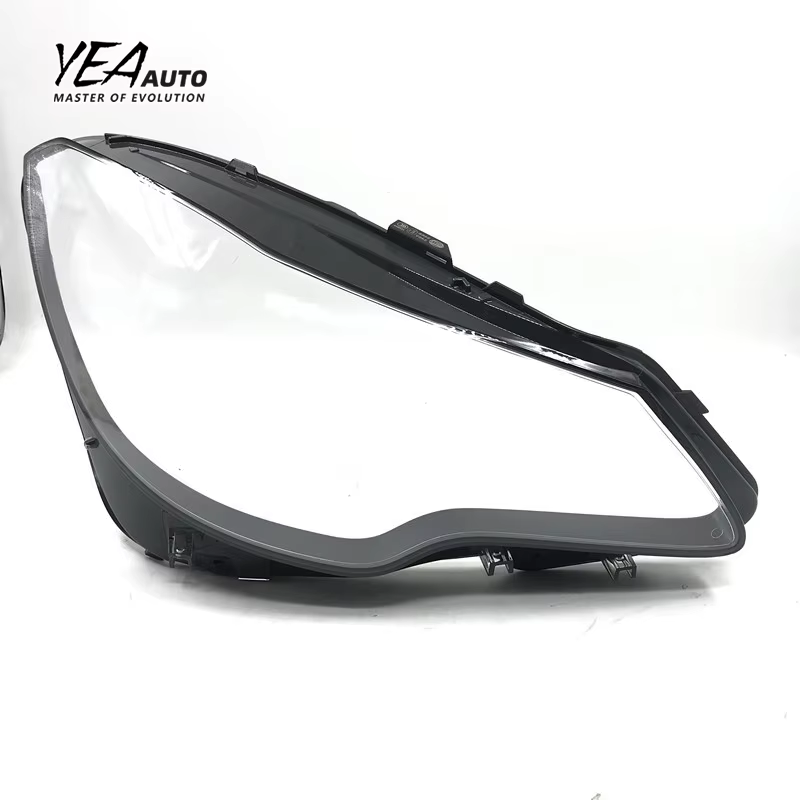
The headlamp is composed of connected systems involving optics, electronics, and thermal concepts integrated into the sophisticated setup of a modern vehicle. The reliability of the headlamp is not only based on the nature of the components making up the whole system but also on the way in which different components are interconnected. The basic system that is the headlight hosting unit has a key part to play in this process through active diminishment of stress that is involved in assembling the whole headlamp.
Correctly Molded Mounting Features, Align PINS.
The first role of the housing concerning stress relief is to locate finally and inaccurately to any internal component.
Integrated locator pins & sockets: The accuracy afforded by the injection molding process allows the forming of the housing with the locator features. The location of the sensitive pieces such as LED boards, Projector Modules, & Reflectors, is according to the locator pins, bosses, & slots. This, however eliminates the rugged locating force in the board assembly, the bracket bending, & the unusual locating force on the sensitive solder joints.
The Controlled Fastener Boss Design In regard to positioning, angulation, and support, the housing structural design incorporates positions for screw and clip fasteners. Realizing the point that the resultant force, considering the application of loading on fasteners and achieving the required level of torque value, is evenly distributed. This will help in avoiding stressing of the specific point hence causing breakage or housing contamination due to distortion.
BLOCK-Ish Design & Sub-assembly Integration.
In the modern designs for residence structure, the assembly can be sub-divided into sub-assemblies for stress management.
Front-Rear Module Separation: It could be provided by a separate compartment in the back - this would house the main electronic components and the heat sinks, with a separate compartment in the front. This could house and test the more sensitive electrical gadgets in an environment that is both clean but controlled without necessitating the moving of the big and sensitive electrical device. This is followed by the integration of the modules, which might either be a stress-free clip or even bolt process.
Snap Fit & Vibration-Damping Connectors: Screws are in place but not fixed; however, the utilization of snap-fit clips and vibration-damping grommets is helpful to an extent that there is a provision in such cases for having a floating part in the case of housing. The reason behind this is the differential rate of expansion of different materials (Al Heat Sink & Plastic Housing) or it provides damping to vibrations from the roads, which produces stress causing minute cracks in the case of ceramics (Ceramic Boards & Glass Lenses).
Stress-Reduced Sealing and Lens Integrations
The area around the interface of the lens and the housing is a region of very sensitive stress points. In recent designs, the housing has taken into consideration the interface of the housing and the lens.
Continuous Sealing Surfaces - Gradated Sealing
The flange of the lens engagement device of the housing has thus been made flat or along a curved surface proportional to the shape of the lens, hence creating a broad sealing surface. The process allows the sealant to be pushed into place uniformly or the use of a gasket. The process entails the application of excessive pressure to the flange, which may be inconclusive since it may be uneven, hence applying forces to the bending of the lenses and the housing.
Clamping by Equal Force: This is one of the designs that the lens retention system exhibits, where the same magnitude of force is achieved either in terms of perimeter clamps or in terms of various parts. In order to overcome the deformation of the housing, there is an increase in the level of applied force on the points of clamping since the seal will be held in its place without the lens being forced through the optical distortion stress.
Management of Thermal Build-Up.
The most dominant source of the assembly stress comes from the cyclic processes of several materials involved.
Design and Costs of Materials Used in Payment: System Design & Costs of Materials
The housing is designed using materials of known thermal expansion coefficients. Designing this housing will enable the creation of fixed points and slots that assist systematic expansion and contraction of the complete assemble. This will reduce thermal stress and hence any resultant structural deformance in terms of shear-off parts.
Installation of High-Heat Components (Isolated): High-power LED drivers or ballast circuits generate a lot of heat. These are installed in an isolated manner or mounted remotely to a metal body, which is basically pads that the cases are installed upon. These pads are used to allow dissipation of heat from the plastic piece where the heat-generating unit is mounted, to allow expansion of the heat-generating piece without subjecting the plastic housing to heat stress.
Of course, the headlight housing is the part of integrity of the assembly that has not been appreciated. This protects the whole set of headlights by optimizing the process of the assembly which has shifted from force-fit process to high-precision process. Smart design of the chassis plays an important role in the absorption of both mechanical and thermal stresses, which, if produced, produce harmful effects. Always managing the manufacturer that has the capability to perform exceptionally well, when it comes to car manufacturers or component suppliers, is a tough task. This reinforces the point that the headlamp assembled was of the components supplier category and was strong and sturdy.