 EN
EN

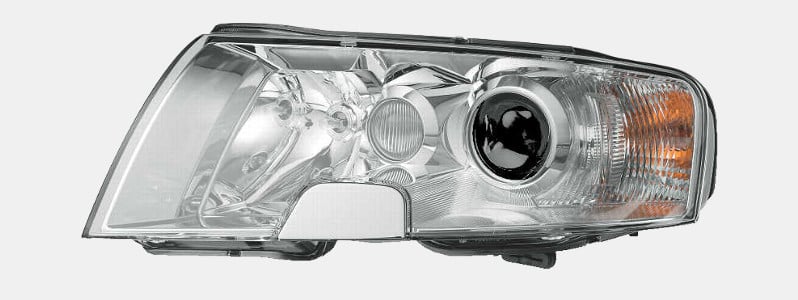
The sun is its most relentless and difficult enemy in a car headlight lens. The lens is positioned on the front of a vehicle and is exposed to the harsh sun radiations thousands of hours during a car life. It does not just regard its performance under this ultraviolet (UV) attack over a long period of the time as an aesthetic issue but a very decisive element to its safety, functionality, and sustainability during vehicle usage. It is necessary that the manufacturers and buyers understand the degradation mechanisms and the solutions that are engineered to fight these mechanisms.
The Problem: Polycarbonate Photo degradation.
The lenses of modern headlights are mostly composed of polycarbonate (PC) plastic which is selected due to its impact resistance and optical clarity. But the virgin PC by nature is prone to photodegradation. The chemical bonds of the polymer chains are broken by the high-energy photons of the UV radiation, especially in the wavelength range of 290-400 nm. The outcome of this process results in two major, mutually dependent types of degradation:
Yellowing (Chromatic Degradation): This is the most evident of the failures. The destruction of polymer chains forms chromophores- molecules that absorb visible light within the blue range which makes the lens appear yellow or brown. This selectively filters the passage of important shorter-wavelength light and changes the color temperature of the headlamp product to a darker and warmer appearance.
Optical Clarity Loss and Haze: At the same time the surface and the subsurface of the material may acquire micro-cracks, and rough morphology. This diffracts light that is being transmitted which is what is measured as haze. The haze blocks the accurate beam pattern and forms glare to the oncoming traffic and reduces the useful light to the driver. Hardly damaged material also becomes brittle, and loses its legendary impact resistance.
The Multi-layer Barrier System of Engineering Defense.
Headlight lenses are designed to have an advanced, multifaceted defense mechanism to allow performance throughout a standard service life of 10 years or more.
UV-Absorbing Substrate: The UV-absorber is built into the polycarbonate itself. In the process of compounding, certain UV-absorbing additives (UVAs) and Hindered Amine Light Stabilizers (HALS) are incorporated into the resin at an even rate. UVAs are like sunscreen and they absorb the harmful UV energy and give it out in form of harmless heat. HALS are regenerative antioxidants that counteract free radicals produced during photo-oxidation process and thus the chain-breaking is slowed down immeasurably.
The Critical Hard Coat: The most essential protection feature is a permanently bonded multi-functional coating that is placed on the exterior surface. This coating is of two uses:
UV-Blocking Frontline: It is developed to be totally opaque to UV radiation and will not allow any more than 99% of UV radiation to reach the PC substrate.
Abrasion-Resistant Shell: The identical coating offers a hard, cross-linked coating, which withstands scratching caused by road debris and car wash. This is essential since not only does this amplify the haze, but also opens up new avenues of UV penetration and points of stress concentrations.
Validating the Long-Term Performance: Accelerated Tests.
Accelerated weathering tests have been developed by manufacturers and OEMs as rigorous and standardized tests to forecast performance in the real world. Lenses are exposed to thousands of hours in special chambers which replicate and enhance sun radiation (xenon-arc or QUV lamps), heat and dampness.
The important measurements that are followed after testing are:
Yellowness Index (YI) Delta (DYI): Determines the extent of change in colour. The lens of high quality will exhibit a slight variation (e.g., DYI < 5 once years of testing equal to Florida sun).
Luminous Transmittance Retention: Measures the percentage of original light transmission which is retained. High quality lenses do not lose above 95 percent of the original transmittance with hastened aging.
Gloss and Haze Retention: Ensures that the integrity and optical clarity of the surface is maintained and that the levels of haze do not exceed 1-2%.
Engineered for Endurance
The fact that the automotive headlight lens can perform optimally in UV conditions in the long term is not an accident, but an intentional effort on the part of the engineering team. It is a war at the molecular level whereby material science is applied with high level and at the surface level where protective coating technology is used. A lens that is able to withstand this exposure still retains its clarity, its ability to form a beam precisely and its structural integrity. To any player in the automotive supply chain, the lenses that have a tested, proven UV defense system is an option that cannot be compromised on as an investment in the overall vehicle safety, compliance as well as beauty.
We design our automotive headlights lens to fight the battle of the environment stresses in the long run. It starts with high-end, pre-stabilized poly-carbonate resins, and our own multi-layer system of hard coating, which offers unparalleled UV filtration and abrasion protection. All batches are tested under rigorous accelerated weathering procedures (QUV, xenon-arc) in which we test and assure outstanding performance in terms of yellowness index maintenance, retention of transmittance, and haze. We have our vertically integrated manufacturing, so this defensive engineering is always being used and OEM and aftermarket partners are being supplied with lenses that are not only defined by the initial definition of clarity, but also their demonstrated longevity on the road.