 EN
EN

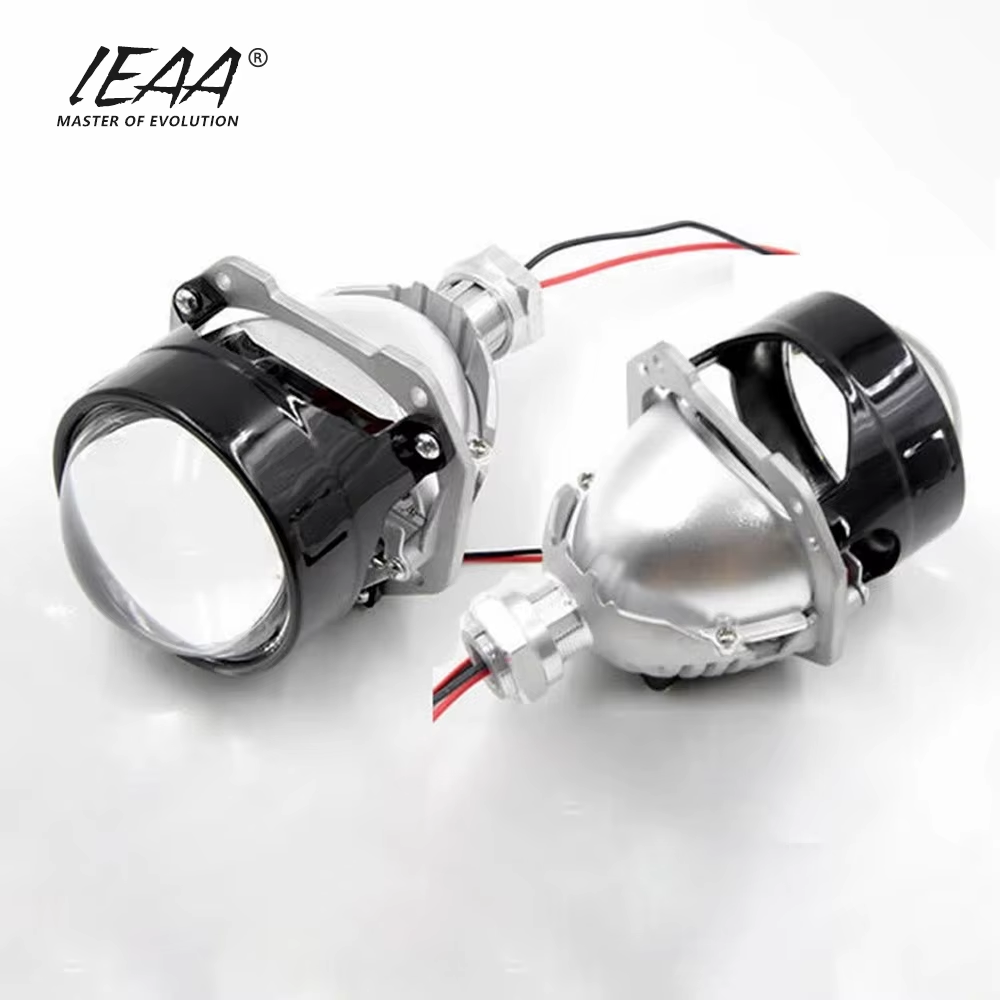
Modern headlamps have evolved to be more advanced systems of safety as opposed to the primitive systems of headlights in the history of automotive lights. Their main performance is an act of headlamp calibration - a delicate electronic and mechanical adjustment of the light beam to the stipulated legal and safety standards. Although the active aiming components are internal projectors and reflectors, the headlight lens is a very crucial, passive-but-important component of this high-precision calibration that remains needed during the entire life of the vehicle.
Delivering a Fluid and Reliable Optical Interface.
Calibration is based on the projection of a sharp and defined beam pattern on to a target wall. This light finally transfers through the lens and the optical characteristics of the lens should be even and predictable.
Minimal Optical Distortion: An excellent lens is designed such that it has accurate curvature and material that is uniform to add insignificant refractive error. The intrinsic distortion in the lens would be one of the uncontrollable variables, and a true calibration would not be possible because the internal adjustors would not be able to correct any flaws that were inherent to the lens.
Constant Surface Geometry: Both the inside and the outside surfaces of the lens are shaped to an absolute tolerance. This gives the same rate of exit angle of light rays throughout the lens area, giving the calibrated beam cutoff (particularly low beams) the sharp and straight look it has on the target, not the fuzzy or wavy one.
Stability of Calibration over the Long Run.
The calibration is not something to do once. The lens should safeguard the integrity of the calibrated setting against environmental issues which would otherwise misalign the setting.
Thermal Warping Resistance: Headlamps produce a lot of heat. The lens material (usually high grade polycarbonate) and the mounting design needs to be able to survive continual thermal cycling without becoming deformed permanently. A lens that bends with the heat would change the exit path of the light which would in effect nullify the factory calibration and may cause harmful glare.
Structural Integrity: The lens constitutes an imperative component of the structural shell of the headlamp. It should not be vulnerable to the effects of road debris and friction caused by vibration without breaking down or weakening its points of mounting. Any shifting of the lens housing will cause the overall optical assembly to shift resulting in misalignment.
Activating Advanced Lighting Technologies.
The lens is required even more by the modern adaptive and high-resolution lighting systems.
Interoperability with Complex Beam Patterns Technologies such as Adaptive Driving Beams (ADB) or digital matrix LEDs generate pixel-resolution light patterns in a dynamic format. These complex patterns have to be imaged by the lens without being scattered or ghasted. It is mostly the clarity and optical accuracy that has made it possible to use sophisticated calibration of each individual LED segment to produce a clean and high-definition light output to the road.
Precision-Molded Optical Features: Numerous lenses are based on micro-optical or prismatic structures or fresnel patterns made directly into the design. These characteristics are carefully determined to help in bending and dispensing the source light. These fixed optical elements must be factored in the process of calibration and the lens is to be produced with very high precision such that each device reacts to the calibration in the same way.
Enabling the Process of Calibration itself.
The physical design of the lens can be used directly to assist technicians in the calibration process.
Clear Reference Surfaces: There are lens housings that have flat or distinctly marked areas of reference around the edges. Automated calibration machines can use these as physical datum points on which to orient the vehicle or the headlamp assembly before the optical alignment takes place.
Cushioning Internal Adjusters: The lens shields the delicate mechanical or electronic leveling and aim adjusters inside the headlamp against corrosion, dust and moisture. An occupied or blocked adjuster makes calibration impossible.
The head light lens is much more than an opaque cover. It is one of the basic optical elements that preconditions the creation of required conditions to achieve high-precision calibration. It guarantees that the work of positioning the beam, whether in the dealership, factory or repair shop, is precise, efficient and permanent by offering a stable, predictable as well as a durable optical window. With lighting being one of the most important automotive safety features in the age, the contribution of the lens in the process of calibration is a direct contribution to safer roads by everyone.