 EN
EN
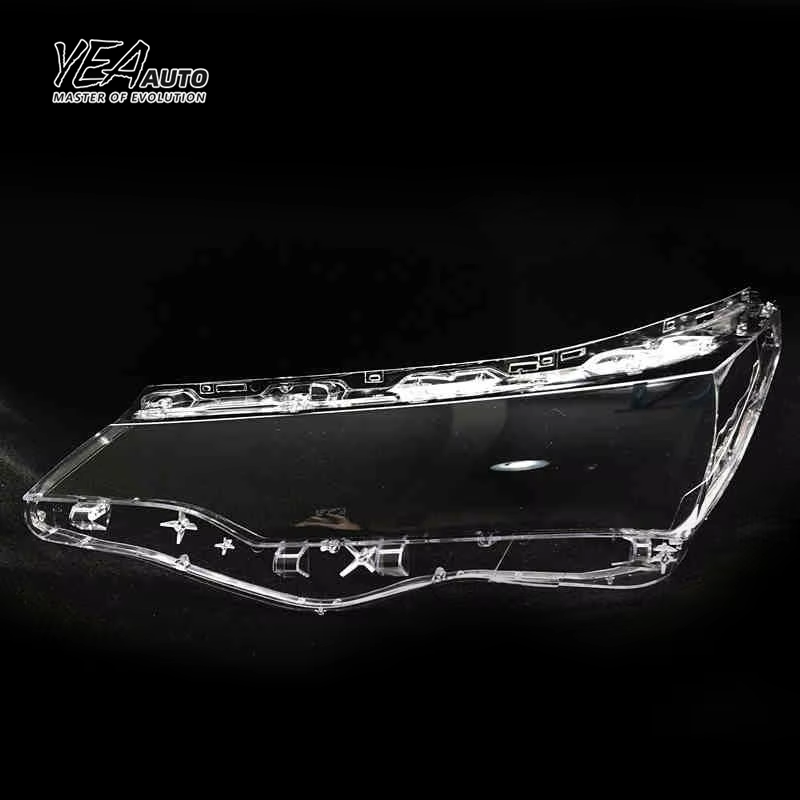
The headlight lens that is at the front side of a car is relentlessly attacked by the environmental conditions itself over a period of time which may go up to 10 years. Encouraging clearness of vision even under these conditions is not a chance feature, though a success which has been obtained by multi-layered planning. Knowledge of the systems to sustain the standards of clarity is quite essential to the manufacturers, as well as the purchasers as regards to safety, performance and beauty of the products in the long-term.
High-tech Coating System: 1st Line of Defence.
This is attributed to the fact that hard permanent coating of polycarbonate lens is the most critical point of preserving sharpness. It is a multipurpose endurance-oriented coating of this shell.
Hard, Abrasion-Resistant Finish: The finish is developed with cross-linked polymers in order to give it a 4H-6H pencil hardness. This provides a sacrificial layer that is impervious to road sand, dust and scratches of car wash brushes of micro sizes. It is not just because lack of such a layer would spread a thin haze of abrasiveness that would scatter light to create a momentary light haze to the beam and consequently glare increase.
UV-Blocking Chemistry: This is built-in and are pumped into UV absorbers which are believed to be of high capability as a sunscreen and therefore, it blocks more than 99 percent of the harmful ultraviolet and UV rays before it protrudes into the plastic underneath. It is the most important safeguard against the chemical degradation, which causes yellowing and a decrease in the transmittance.
Material Science: The Natural Strength of the Substrate.
The substrate of the lens is stabilized below the coating.
Optical-Grade, Stabilized Polycarbonate: is not a common plastic. It is a specially mixed polycarbonate, that is optical-grade, that has undergone pre-sets of UV stabilizers (Hindered Amine Light Stabilizers - HALS) and thermal stabilizers. These supplements work in conjunction with the surface coating to construct the free radicals and inhibit oxidative damage at the internal level and offer secondary insurance against the attenuation of transparency.
Hydrolytic Stability: This is made to resist the degradation by heat and moisture (hydrolysis). This ensures that the polymer chains will not be destroyed under the hot and wet environment of the engine bay that leads to a clouding and brittle of the polymer.
Structural Integrity: Thermal and Physical Stress Proofing.
To be able to be clear the lens must have a high shape and be in a high surface geometry.
Impact and Crack Resistance: Natural toughness of polycarbonate provides the option of resistance towards stone chip as well as low level impact that would have otherwise caused cracks or fractures. Once opened, a lens no longer has a closed nature but spreads the light all over.
Thermal dimensional stability Lens used and manufactured have to be designed to resist the distortion as lenses are subjected to extreme temperatures changing to freezing at night and hot engine heat during the day. The warping of the optical path of light distorts the beam. This is managed through proper designing of molds, Stress relieving moulding processes and use of material with high Heat Deflection Temperature.
The Sealed Environment: Excluding the Contaminants.
The transparency is also guaranteed in-house. On the housing the lens is closed hermetically.
As Seal of Internal Contamination: This prevents the entrance of any moisture, dust or road salts into the lamp. Stains on the reflector or within the lens would permanently lower the quantity of light generated and create obstructions to be seen.
Chemical Resistance: The surfacing done on the exterior and the underlying substrate is subjected to the test of resistance to automobile fluids, aggressive laundry solvents, bug remover solvents, and road tar. The resistance ensures that these chemicals do not etch, stain or craze the surface which will ultimately impair the clarity permanently.
Setting validity through simulation of reality.
Manufacturers ensure that the long term transparency is tested by putting them on accelerated testing that replicates the use of the roads over the years in a relatively shorter period.
Weathering Tests: Lenses are subjected to Expert weathering tests with thousands of hours in the QUV or Xenon Arc weatherometers (Slinger, 2005) of intense UV ray exposure and moisture and heat cycles are predicted to cause dozens of decades of solar exposure.
Taber Abrasion: The Taber Abrasion testing with standardized wheels is the test used to determine the ability of the coating to withstand the years of abrasive wear.
Chemical and Thermal Shock Cycles: Failure is not done to subject the equipment to excessive temperature, extreme chemicals and the environment of the environment.
We engineer clarity to last. Our multi-layer is the system that offers protection to our headlight lenses; this has enhanced better abrasion and ultra-violet capabilities. Our materials are stabilized optical grade precision molded to provide dimensional stability. The series of accelerated life tests including long periods of weathering and abrasion regimes is carried out on all parts to ascertain that what we have brought out of the factory would be the same that would last on the road. To our foreign partners, it can be defined as a product that is capable of assuring them a stable product that maintains its functionality and appearance and making their cars safe and high quality even after several years of use.