 EN
EN

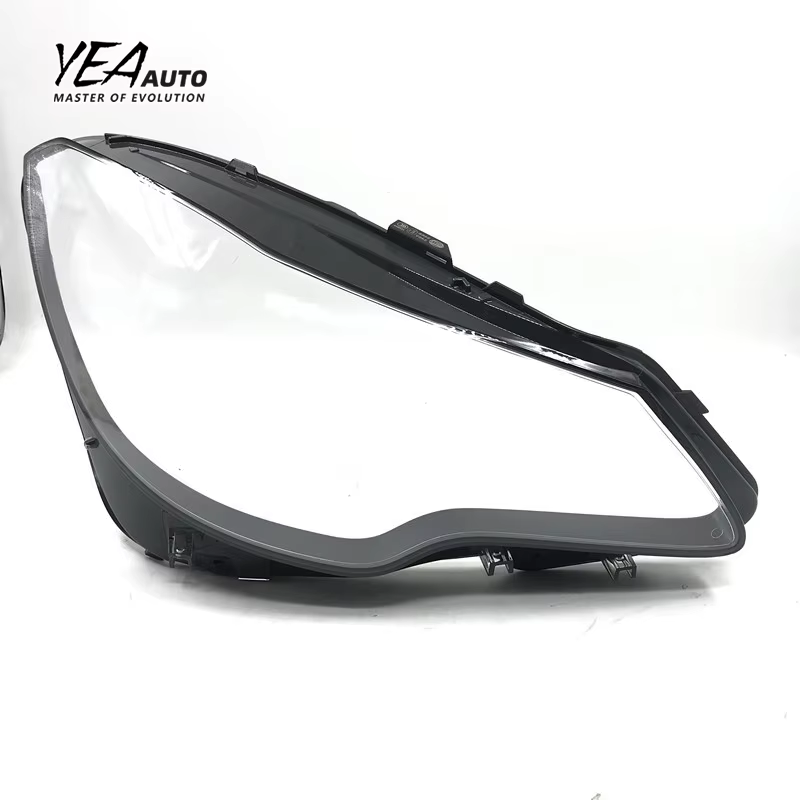
It is the highest temperature which is experienced by the automotive headlight assemblies inside a car. High temperatures of headlight Lens can then be exposed to temperatures above 100degC most of the times when compared to the low temperatures of the surrounding because of the high temperatures of the high-output light. It is important to remember with the case of polycarbonate "glass" that optical clarity must be infused throughout these thermal cycles. Only when the level of material science is high, there are proper production and other defense mechanisms, it can be successful.
The Threat: Degradation Thermal Effect.
The problem of the thermal cycling is a large concern of the lens clarity.
Material Degradation and Yellowing: Hiking the exposure to high temperatures may increase the rate of the thermal-oxidative degradation of the polycarbonate substrate and can be intensified by the internal conversion of heat of LEDs or DLC bulbs. It resembles UV degradation except that it is a chemical process and involves the breaking of polymer chains and may cause the permanent decrease in light transmittance in some cases (thermal yellowing) and change in the color of beams.
Failure in Coating System: The lens critical hard coat material by which the outer of the lens is created has a lower coefficient of expansion of temperature than the polycarbonate material that is located underneath it. The stress shear at the interface can also be created due to continuous expansion and contraction. This may bring about micro-cracking, delamination or crazing the coating, weak bond, or rigid coating. These faults are dispersing the light, and forming haze and cloudiness which is forever.
Internal Stress and Warpage The stresses, which are inside the lens, can be left stagnant in the lens in case of improper injection molding in the cooling. They may then be subjected to unequal thermal cycling and the component may not be capable of becoming straight thus its part will have a bended part. This mechanical distortion actually causes a modification in the exact angles of optical surfaces which cause a distortion of the beam and optical focus loss, despite the transparent material.
Stability Solutions of Engineering.
The manufacturers have built up a multi-layered defense to bring it to a point that it will as well withstand thermal cycling:
Table 2. Thermally Stable Polymer Formulation: The polycarbonate polymer is base polymer of polycarbonate and is chosen and compounded to: high Heat Deflection Temperature (HDT), and high thermal aging level. Other components added include additives (e.g. thermal stabilizers) to inhibit oxidative chain destruction when the temperature is too high. This is in order to make sure that the substrate will not discolor or harden due to under hood or working temperatures.
Coating Adhesion and Elasticity: It is not that the intent of the hard coating system is to be hard only, but rather thermomechanical compatible. The chemistries of developed advanced coating (i.e. a specific silicone hard coats or a combination of coating) is provided with a leeway of development and the coefficient of thermal expansion is comparative to PC substrate. This enables the coating to bend with the underlying material when going through heat cycles without cracking and shedding off. To develop a strong, molecular bond that is capable of resisting interfacial stress, the lens surface shall need advanced, pre-therapy e.g. by advanced plasma or chemical treatment.
Stress-Free Production: The injection molding is also extremely regulated. This includes:
Mold Temperature Control: It should be noted that one should make sure that it controls the cooling to reduce the stresses, which are contained in the frozen substance.
Scientific Molding Techniques: This is a scientifically-controlled pressure/ temperature, and is applied to manufacture parts that are in continuous stress.
Post-Mold Thermal Annealing: There are certain high specification methods whereby the lenses are placed in an oven under slow cooling and heating. This is done to freeze the stresses in order to stable structure that is very resistant to deformation to subsequent thermal cycles in the field.
Checking via Intensive Testing.
Accelerated life testing is demonstrated through performance. Environmental chambers: lenses are processed dozens of hundreds of times, between extremely high (e.g. +85degC or +105degC) and extremely low (e.g. -40degC) temperatures and in most cases with humidity. The assessment must be gauged in accordance with the cycling:
Eye Test: Delamination or distortion or haze and crack.
Optical Check: The values of luminous transmittance and the values of haze should be checked to ensure that the values are not below the strict values.
Adhesion Testing: The coating is undergone testing to examine the attachment to the coating by using the tests of cross-hatch tapes.
Thermal Endurance Scheme.
The ability to remain clear after thermal cycling is the test of quality and level of engineering of a lens. Polycarbonate is a process or decision that should be used in engineering that involves a thermally resistant compound, and coating body that is both compatible and elastic or the production sequence that is suggested to make a minimum of tension. The automotive suppliers and OEMs require specifications of lenses that were tested under such specifications. It successively keeps the performance of the headlight that is important in its safety, its proper beam shape and the entire amount of its light during the years of summer heat, winter cold, and thermal detachments both in and out of the daily traffic.
Our lens of headlights is made in a fashion that they should be able to sustain the heat climatic conditions. We use heat stabilized polycarbonate materials and use precision and stress controlled injection molding. We have a multi-layer coating system which is proprietary and has been developed with a high degree of adhesiveness as well as can be used in those cases where high degree of flexibility is required with thermal stress. Individual production is highly subjected to thermal cycling test in which we guarantee that our lenses have better than 95 percent of the light transmittance of the lens and will cause the lens to have no lens delamination and no optical distortion of the lens even at high temperatures. The promise of thermal durability is that our components will provide long life clarity and dependable service, to the highest levels of automotive usage anywhere in the globe.