 EN
EN

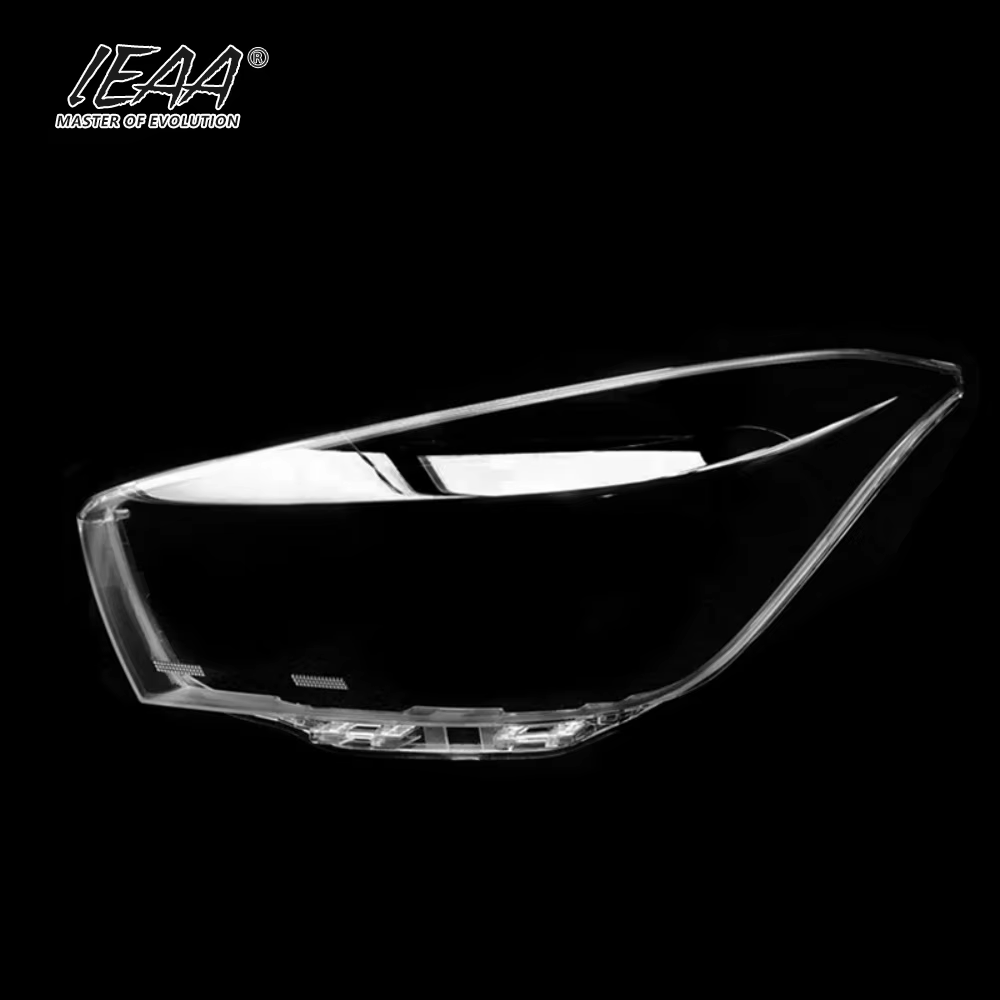
The lens or headlight glass is much more than a shield of a window. It is an optical component that is accurate and the conclusive element in the modelling the vehicles light output. Its main purpose is to ensure the accuracy of the beam focus which was engineered on the internal reflector or projector system. A deviation or a minute optical blemish in the lens might be enough to scatter light, blur important cutoff lines and affect the visibility of the driver and the incoming traffic. This is the way this important part is made to ensure uncompromising optical problems.
The science of focus: Precision optical Surfacing.
The engineered surface geometry of the lens is the most basic of these design characteristics. It is not a simple pane like a flat one, but a complicated optical device.
Micro- Structured Optical Features: The inside of a current day headlight lens is accurately molded into a calculated collection of prisms, flutes and lenses. All these microscopic structures have the ability to bend the incoming light rays at certain and preset angles. This optic network is used to focus, equalize and control the light of the light source so that the beam pattern formed at the projection is sharp and properly located on the road that the horizontal cutoff in the low beam is sharp and well placed.
Elimination of Aberrations: Engineers use advanced optical design applications to simulate the light path at the source, through the lens to the target. The curvature of the lenses and the micro-patterns are tuned so that the optical aberrations such as astigmatism (that will cause a point of light to smear into a line) and coma (that will make a comet-like tail of off-axis light points) are minimized. This gives a guarantee that the central hot spot and peripheral light is maintained in a precise focus.
Homogeneity and Material Consistency.
The precision of optical is not possible without an absolutely uniform medium. The optical material of the lens is also designed to be stable.
Optical-Grade Polycarbonate: The polymer is used not only due to impact resistance, but also due to the high and stable refractive index, as well as due to outstanding homogeneity. Any density, inclusion or internal stress-differences (birefringence) within the plastic would also serve as defects in a camera lens, where the light will bend randomly and the beam will be distorted.
Stress-Free Manufacturing: The injection molding process is carefully monitored to give rise to a lens with the least internal stress. Scientific molding and the accurate thermal control of the mold are very important. The remaining stress may form a lens within a lens effect, which causes changing focal points that ruin the accuracy of beams.
Design -Dimensional and Thermal Stability.
A lensed lens which under real world conditions is being deformed or changed in shape cannot stay in focus. The environmental forces are taken into consideration in its design.
Compensated to Thermal Expansion: The mechanical design of the lens, the mounting points and the overall curvature of the lens is compensated to the thermal expansion of both the lens material and the housing in which the lens is bonded. The idea is that the whole optical assembly should grow and shrink all together and maintain the essential spatial relation between the source of light, the optics inside the assembly, and the lens.
Structural Rigidity: The lens architecture has strategy ribbing and equal wall thickness to flex due to aerodynamic pressure, vibration or light impact. Any mechanical deformation causes the angles of the optical surfaces to be changed and the beam scattered.
Connection with the Sealing System.
The optical considerations, which is not only a mechanical consideration, is the method of attaching the lens to the housing.
Precision Sealing Flange: The lens has a strictly flat and dimensionally stable sealing flange on its periphery. This guarantees that it can bonded uniformly to the housing without causing twisting or straining which may cause a warping of the optical area. The imprecise seal may result in a local stress, which is a weak lens prism that bends the beam on the edges.
Photometric Testing of the Solution.
The final test of accuracy of the focus is in the beam pattern itself.
Goniophotometric Analysis: Headlamp test Assemblies of finished headlamps are tested in darkrooms with goniophotometers. The beam pattern obtained is matched on the digital design specifications and templates (ECE, SAE). The design of the lens is confirmed by the way the actual light output - sharpness of cutoff line, hot spot and overall distribution compares to the desired, sharp beam.
The last optical gatekeeper is the automotive headlight lens that is mandated with the responsibility of maintaining the sophisticated work of the other parts of the lighting system. It is a careful optical physics, material science, and precision engineering project in its design. It does the crucial job of keeping beam focus by incorporating micro-structured surfaces, ensuring purity of materials, making sure that there is dimensional stability, and maintaining a seamless integration. There can be no compromise on this precision- it is what will convert raw lumens into a safe, efficient and legally acceptable illumination scheme that will guide drivers throughout the life of the car.