 EN
EN

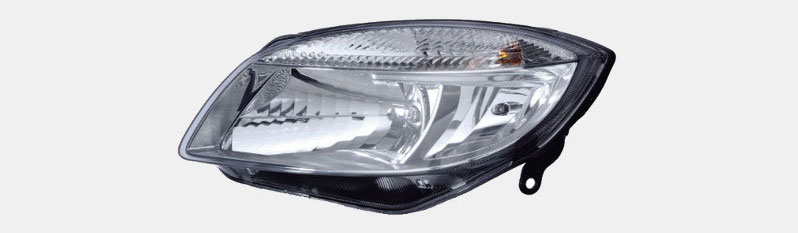
In the complex design of a car of today, a headlamp assembly is not just a light bulb. It is an integrated system consisting of optical, electronics, cooling systems and structural casing. The headlight cover is the central to its operation which goes way beyond protection. The design and quality are the key to achieving stable, secure and reliable integration of the whole headlamp assembly that influences the safety of the vehicle, its appearance, and its long-term performance.
Accuracy and Strength Characteristics.
One of the main structural parts that make the assembly of the headlight work as a whole and airtight is the headlight cover.
Dimensional Accuracy: A manufactured cover needs to fit the sealing surface of the lamp housing. This precision guarantees that the compression of the sealing gasket is homogenous that forms a protection against moisture, dust, and contaminants. Any diversion may cause loopholes, strains, or broken seals that may cause condensation and electrical breakdown.
Load Distribution and Vibration Dampening: The cover is secured and also helps in the overall rigidity of the assembly. It aids in the distribution of mechanical stresses occurring as a result of the road vibrations and impacts on the housing structure. A strong cover, usually composed of high strength polycarbonate, keeps the flex or resonance out of the housing where it might cause internal optical elements to shift, and consequently, keeps the beam pattern within acceptable tolerance throughout the life of the car.
Smooth Aesthetic and Aerodynamic Monolithic.
The visually dominant component of the headlamp is the cover which should blend perfectly with the design of the body of the vehicle.
Flush Contour Matching: The exterior curve of the cover should be the precise contours of the fender panel of a vehicle. This flowing over is most important in ensuring that the desired aerodynamic profile is realized, reduced wind noise and drag and maintenance of the aesthetic lines of the vehicle is maintained.
Material/ Finish Consistency: The surface finish of the cover, be it a clear, tint or with certain light-diffusing qualities, should be completely unbroken and tough. It needs to be yellow less scratchfree, and hazer-free so that the appearance of the assembled remains like new and the optical clarity remains high so that the integrated appearance will last many years.
Foundation of Internal Component Stability.
The cover has internal surface and mounting features which are important in the fixing of critical internal parts.
Optical Alignment Features: A significant number of contemporary covers have integrally molded locator pins, alignment sockets or mounting bosses. These features connect to projectors, LED modules, or decorative bezels within the housing to be sure that they are positioned and locked in the right focal and aesthetic positions. This ensures that the projection of the beam is constant and that there is harmony of the appearance.
Shielding of the Finely Worked Optics: The cover provides a shield around the internal reflectors and light guides as well as sensitive projector lenses, preventing them against mechanical damage and degradation caused by the environment. This shield is mandatory to the functionality of intricate technologies of lights such as Adaptive Driving Beams (ADB) or dynamic turn signals.
Enabling the Processes of Manufacturing and Service.
A cover that is designed makes it easy to assemble the headlamp in the first place and later on, should there be further servicing.
Assembly-Friendly Design: design details such as integrated mounting clips, well defined sealing channels, and accessible fastener points enable error free assembly on the production line. This accuracy is converted into quality and consistency in the production of each individual unit made.
Service and Repair: A cover that can be easily taken off and re-locked in modular designs would allow authorized repair or replacement of internal parts, to help ensure sustainable lifecycle management of the headlamp assembly.
The automotive head light cover holds the whole headlamp assembly together. It does not just play a protection role but also plays a very important role in structural support, environmental sealing, aerodynamic integration, and internal component alignment. To the manufacturers, a cover that is finely tuned is not a commodity, but an element of the systems that matters. Precise dimensional control, and resistance to wear is a key ingredient to creating headlamp assemblies that are dependable and visually consistent manufactured.