EN

How to Compare LED Motorcycle Running Light Options
When buyers compare motorcycle LED running lights, the first decision is not which housing looks brightest. It is which job the lamp must perform. A daytime running light helps other road users notice the motorcycle; a fog light is intended to support low-visibility riding; and a driving light is designed to extend useful forward illumination. These categories can overlap in a product range, but they are not interchangeable. Starting with the function prevents a common and expensive mistake: installing a high-output auxiliary lamp where a conspicuity-focused running light is actually needed.
For distributors, workshop buyers, and OEM teams, the practical comparison also includes mounting, wiring, vehicle fitment, and market compliance. This guide uses that sequence so the decision is based on the whole lighting system—not a lumen figure in isolation.
Start by Separating Running Lights, Fog Lights, and Driving Lights
Motorcycle LED running lights are primarily about daytime visibility. Their beam and control logic should make the bike easier to see without creating unnecessary glare. They are different from auxiliary driving lights, which concentrate or project light to improve the rider’s view after dark, and from fog lights, which are selected for specific low-visibility conditions and mounting positions.
| Light type | Primary purpose | What to compare first |
|---|---|---|
| LED running light | Daytime conspicuity | Approved function, light signature, integration with the existing headlamp |
| Fog light | Useful foreground definition in poor visibility | Beam pattern, aiming range, weather sealing, switch logic |
| Driving light | Additional forward reach or spread at night | Optics, beam aim, mounting rigidity, electrical load |
Many buyers begin with brightness. More accurately, brightness is only a starting point: the useful question is whether the optic puts light in the right place for the intended task. A lamp with the wrong function can complicate aiming, compliance review, and customer expectations even if it appears impressive on a bench.
Compare Beam Pattern Before Output Claims
Once the function is clear, compare the beam pattern. A narrow spot pattern favors distance, a wide pattern supports peripheral awareness, and a controlled running-light signature supports visibility to other traffic. Ask suppliers to explain the intended optical role rather than relying only on a headline output value.
This is especially important for motorcycle LED running lights installed near the main headlamp. The auxiliary unit should complement the motorcycle’s original lighting, not compete with it. A good comparison considers mounting height, spacing, lens orientation, and whether the lamp is used alone or as part of a pair. For long-distance road riding, a balanced spread may matter more than a single intense hotspot; for daytime use, a clearly defined signature and sensible dimming behavior may be the better priority.
Use a repeatable review checklist: identify the intended beam, verify that the housing can be aimed securely, and confirm the switch or control method. This approach turns an attractive product listing into an installation-ready option.
Review Mounting and Wiring as One System
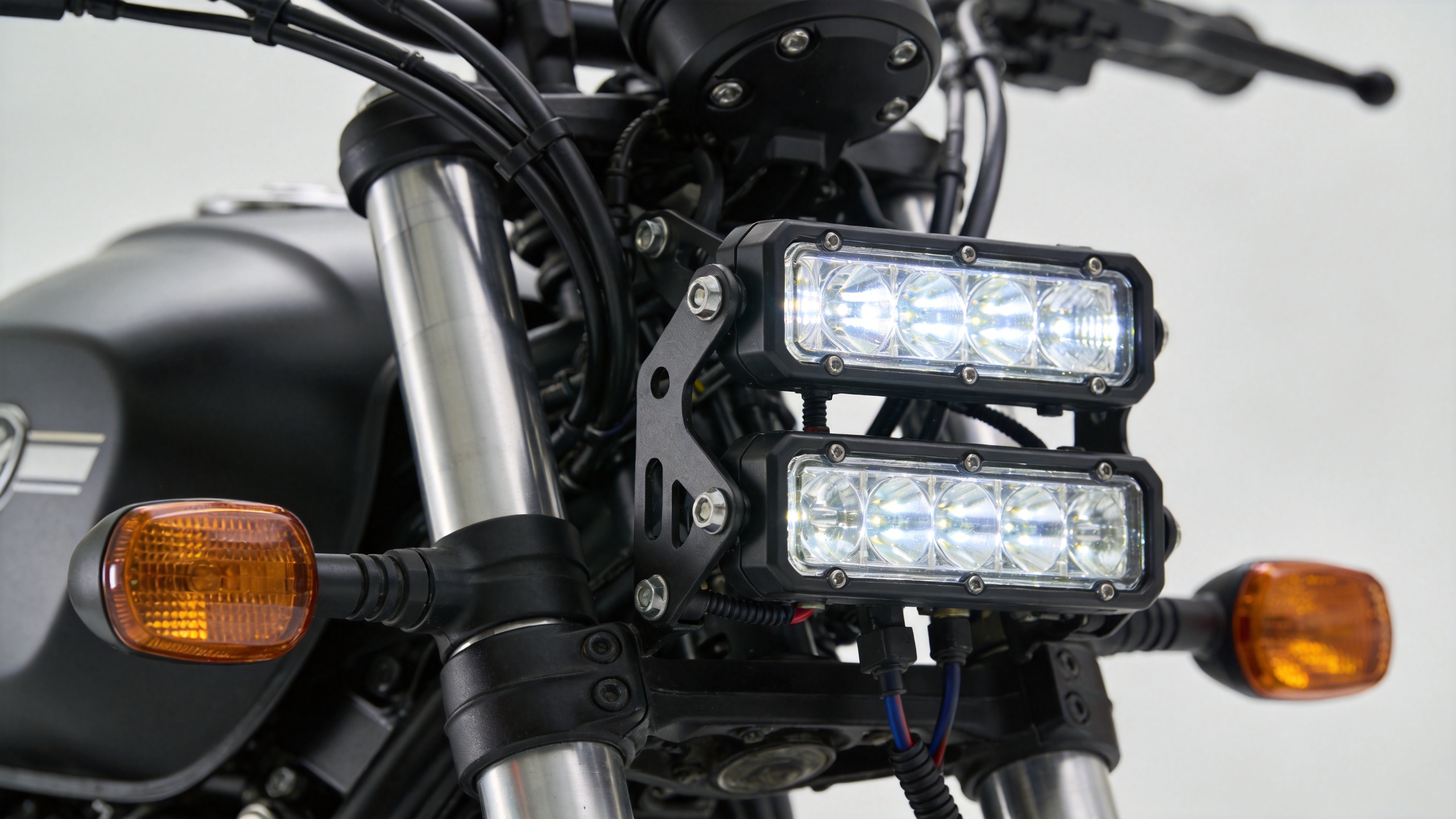
Installation is where apparently similar motorcycle LED running lights often diverge. A compact lamp can still be a poor fit if the bracket clashes with a fairing, fork geometry, crash bar, or windscreen. Before selecting a kit, document the motorcycle model, available mounting points, desired lamp spacing, cable route, and any need for a relay, fuse, or dedicated switch.
Many riders treat an auxiliary lamp as a standalone product, then discover that its real result depends heavily on the original headlamp pattern and the installation height. That is why a supplier comparison should include bracket design, connector type, cable length, service access, and protection from vibration and spray—not just the lamp body.
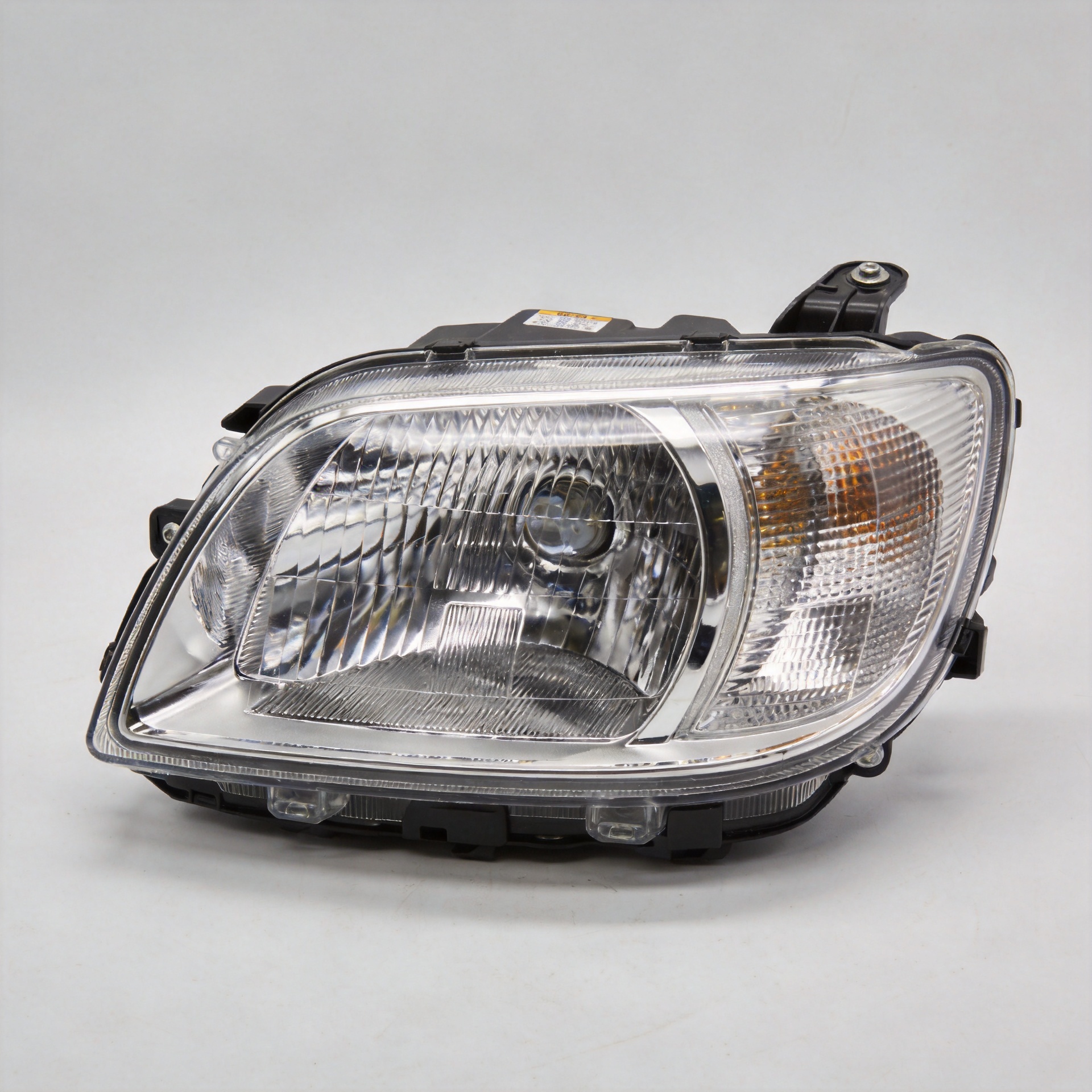
For BMW F800GS, F700GS, and F650GS fitment discussions, buyers can review this LED driving headlight for BMW F800GS, F700GS, and F650GS as a model-specific product reference. Its listing should still be evaluated against the intended lighting role and the buyer’s local installation requirements.
Check Vehicle Compatibility Beyond the Product Label
A label such as “universal” does not replace a compatibility check. Compare physical dimensions, bracket interface, cable routing, voltage range, and how the lamp interacts with the motorcycle’s existing electrical system. On modern motorcycles, installers should also consider whether the planned connection affects warning systems, control modules, or serviceability.
- Mechanical fit: confirm the bracket can sit on a stable structure without restricting steering, suspension travel, or cooling airflow.
- Electrical fit: size fusing and switching for the actual configuration, not an assumed generic setup.
- Optical fit: set an aiming procedure before delivery so the lamp does not create glare for oncoming traffic.
- Service fit: retain access to connectors and routine maintenance points.
For a purchasing team, these checks reduce returns caused by a lamp that is technically operational but impractical on the target motorcycle.
Make Compliance a Comparison Criterion, Not an Afterthought
Rules differ by market, vehicle type, and lamp function. In ECE-regulated contexts, the approval marking and the lamp’s specified function matter; TÜV Nord notes that daytime running lights require approval under ECE-R 87 and an approval mark in applicable cases. UNECE Regulation No. 53 also addresses how lighting and light-signalling devices are installed on L-category vehicles. These references do not make a product automatically suitable in every country, so buyers should verify current local rules, the exact marking, mounting position, switching behavior, and any inspection requirement before specifying a kit.
The practical takeaway is simple: do not market a driving light as a daytime running light, or vice versa, without confirming the product documentation and the intended installation. For importers and distributors, keeping the product function, approval evidence, and fitment guidance aligned is as important as the lamp’s appearance.
Use a Weighted Comparison for Your Target Use Case
For consideration-stage buyers, a weighted scorecard is more useful than a universal single choice. Assign more weight to the criteria that affect the target customer’s riding environment and service model.
- Define the required function: daytime visibility, low-visibility support, or extra night range.
- Rank the optical pattern and aiming control ahead of headline output.
- Confirm motorcycle-specific mounting and electrical integration.
- Review approval markings and local installation rules before purchase.
- Compare supplier documentation, replacement-part support, and customization options for your channel.
Manufacturers focused on motorcycle lighting can add value here by supplying consistent technical documentation and by discussing optical, structural, and electrical requirements early in the project. For private-label or OEM programs, confirm customization details such as appearance, branding, and lighting requirements through a documented development process rather than assuming one standard lamp fits every market.
Motorcycle LED Running Lights: A Fast Procurement Matrix
Use the following matrix to keep each motorcycle LED running lights comparison tied to the required function. For motorcycle LED running lights intended for daytime visibility, document the approval marking first. For motorcycle LED running lights intended to complement an OEM headlamp, document the control logic and dimming behavior. For motorcycle LED running lights fitted to an adventure motorcycle, document bracket clearance before confirming the order.
- Motorcycle LED running lights for urban traffic: compare the daytime signature and glare control.
- Motorcycle LED running lights for touring: compare mounting stability and service access.
- Motorcycle LED running lights for wet routes: compare sealing details and connector protection.
- Motorcycle LED running lights for BMW fitment: compare bracket geometry and cable routing.
- Motorcycle LED running lights with a white signature: compare the intended road-use requirements by market.
- Motorcycle LED running lights used beside auxiliary lamps: compare switch behavior so the functions remain clear.
- Motorcycle LED running lights sold as universal kits: compare real dimensions with the target motorcycle.
- Motorcycle LED running lights in a private-label range: compare documentation consistency across variants.
One further check matters for every motorcycle LED running lights quotation: identify whether the customer is asking for a visibility lamp, a fog-light function, or extra forward reach. That single question makes the motorcycle LED running lights specification more accurate. It also prevents a motorcycle LED running lights offer from being evaluated as though it were a driving-light package.
When comparing motorcycle LED running lights, record the beam role. When sourcing motorcycle LED running lights, record the vehicle fitment. When installing motorcycle LED running lights, record the wiring route. When approving motorcycle LED running lights, record the local compliance evidence. When supporting motorcycle LED running lights after sale, retain the aiming and service guidance.
Choose the Option That Matches the Job
The strongest motorcycle LED running light option is not automatically the highest-output or lowest-price. It is the one whose intended function, beam pattern, mounting method, electrical integration, and compliance evidence align with the motorcycle and the market. If the goal is to be seen in daytime traffic, prioritize a true running-light solution. If the goal is to see farther at night, compare auxiliary driving-light optics and installation controls instead. Keeping those roles separate produces clearer product specifications, safer installations, and more credible recommendations to end users.