 EN
EN

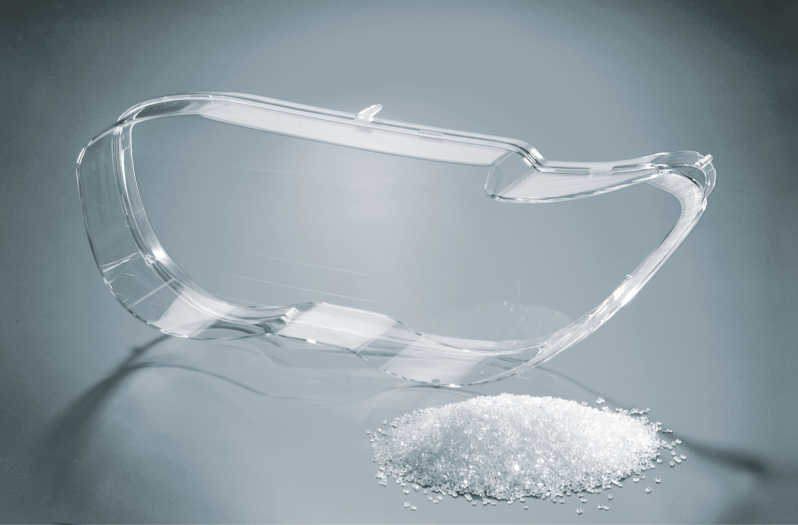
A very important part when choosing or producing automotive headlights is the cover or in other words; the lens. It acts as the initial barrier to road debris, UV radiation and weather in addition to giving a high transmission of light. One of the questions that should be considered by the designers, manufacturers, and even enthusiasts is: what are the standard thickness of these covers in the global markets?
Although there is no single and universally required thickness as determined by an international standard, no universal standard rate is available, but there are common ranges and vital aspects that are determined by industry standards and local safety requirements.
The Common Range: Avoiding Strength and Clarity.
Automotive headlight covers produced using polycarbonate (PC), which is the widespread product, are of 2.5 mm -3.5 mm thickness. This limit is an agreement which has been reached after many years of engineering and safety trials.
2.5 mm to 3.0 mm: This is very prevalent with most passenger cars. The thickness has an excellent balance. It has high impact resistance (such as the SAE and FMVSS 108 standards which restrict it with stone impacts) without adding weight, and can still project light efficiently behind it, and without distortion, due to the light units behind it.
3.0 mm to 3.5 mm and larger: commonly used in the high-performance applications, off-road cars, or where more structural rigidity is required in the lens surface of larger dimensions. Polycarbonate of greater thickness has more resistance to intense impacts.
Why is it Polycarbonate that Dictates the Standard?
The main reason why this range of thickness is effective is that polycarbonate is prevalent. PC is remarkably tougher than glass, and has an impact strength that is superior to other plastics, giving it a much skinnier, lighter profile without sacrificing its safety. Polycarbonate is however vulnerable to yellowing caused by the UV. As such a good UV-resistance high-quality coating is as important as the thickness of the base material. This veneer is expected to be measured in microns and shields the lens, as well as provides long-term optical clearness, which is uncompromising in terms of quality.
Major Influencing Factors on Thickness Choice.
Impact and optical performance testing is strong in markets in North America (in compliance with FMVSS 108) and Europe (ECE regulations). The engineered common thickness range passes these with a high degree of reliability.
In Design and Geometry: It is possible that a plain lens with a slight curve can be at the low end of the spectrum. Large or deep sculptured, or complicated covers can be made of heavier substance to give body and help avoid optical distortion.
Quality of the Material and Manufacturing: The quality of the raw polycarbonate and fineness of the injection molding process is crucial. The weak points may be formed by inconsistency of the material flow or contaminants and thus nominal thickness was rendered to lose its significance. Pellet to finished product stringent QC is necessary.
Performance Requirements: In headlights with high luminance LED or laser modules, the most critical element is the accuracy of lens optics and thermal control. A complete holistic thermal and optical design includes its cover thickness.
Our Production Philo: More than a Digit.
As a professional producer of innovative automotive LED lighting, we realize that a right thickness is not a finishing point. The result of our strategy is that each cover of a headlight is produced according to the best standards world-wide:
Precision Engineering: We omit our thickness depending on the exact design, the quantum of LED’s and what is required depending on target market requirements, but within the range of proven efficiency.
Material Excellence: The substrate is made of optical-grade and UV-stabilized polycarbonate.
Superior Coating: We use a high quality, various layers hard coating that prevents abrasion, yellowing and entraps long-lasting clarity and protection.
Holistic Quality Control: Each batch will be strictly tested on the consistency of the thickness, light transmission and coating adhesion. We do not only test the individual parts but the entire unit.
The general and efficient thickness of automotive headlight covers that are used in international markets focuses on 2.5mm to 3.5mm of polycarbonate that is coated and of high-quality. This criterion is less a strict guideline and more about utilizing the correct use of material science, which accomplishes the objectives of safety and durability and simultaneously addresses the optical performance standards. In testing a head light, you need to find consistency between high standard engineering, superior materials as well as flawless production, this is what forms the real reasons behind a trusted as well as a high performing product that passes the test of time as well as road conditions across all in the world.