 EN
EN
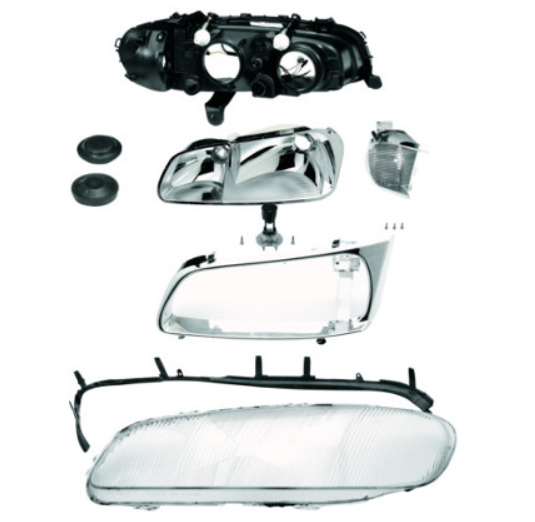
The automotive headlight is a safety compromising component of the car, since it serves as the primary optical interface of the car lighting and the road. The accuracy of its quality directly influences the beam and the safety of the drivers and the appearance of the vehicle. In line with this, a rigid and multi-level Quality Control (QC) rule is required to generate these elements. When it comes to manufacturers and when selling to B2B buyers, one should be aware of the key QC measures to ensure the safety of their products, their adherence to multiple regulations, and their satisfaction with their purchases in the long perspective. They are the most significant quality checking steps of the production of headlights covers.
Cleanliness of the Materials and Foresight.
The good cover is founded on the raw material. Stringent checks begin here.
Grade and Homogeneity Incoming polycarbonate (PC) or other resin used as optical grade should be inspected in grade and melt flow index and also inspected in terms of quantity of UV-stabilizer. Any contamination or inconsistency may occur and result in the internal defects of weak impact strength or yellowing.
Optical Transmission test: A percentage of light transmission is done on spectrophotometry on the samples of each production batch. This is required to bring the material to the required standards of clarity that is normally more than 90 percent to accommodate the requirements of clear lenses that guarantees the optimal transmission of light but not unnecessary dispersion.
Dimensional Precision and Geometric Precision.
This will require the housing to be covered by the cover that will fit the housing in an ideal way to ensure a perfect fit as well as beam alignment.
3D Scanning / CMM Inspection: To detect defects in the initial production objects, Coordinate Measuring Machines (CMMs) and high-precision 3D scanners are going to be used to compare the first-off sample and periodic production objects with the original CAD design. Key metrics include:
Critical Seal Surface Flatness/Warpage: The smallest form of warping can cause the seal to be torn open leading to condensation.
Locator Pin/Hole Positional Tolerance: Related to a fit between the lamp housing and the interior components.
Total Length and Width: Ensures that it fits into opening and body shape of the vehicle.
Soundness in Finish and Coating.
The light performance and the durability are directly influenced by the surface.
Visual Inspection using Controlled Lighting: It is an examination of all the covers in terms of smoothness of the surface with sink marks, flow lines, bubbles, inclusions or scratches. This is normally achieved using automated optical inspection (AOI) machines and skilled individuals.
Coating Thickness and Adhesion: Examinations of coating thickness (a wide led) and the cross-hatch adhesion (ASTM D3359) are needed in the case of hard-coated covers. The coating is not supposed to exhibit itself on abrasion and the environment.
Measurement of Haze and Yellowing Index: Accelerated weathering test (under the QUV or xenon arc testers) are conducted to foresee the long run performance. The change across haze and the change in the yellowing index (b-value) of the simulated years of the exposures to UV and thermal are measured.
Mechanical and Environmental Serviceability.
The cover must be able to survive the real life stresses.
Impact Resistance (Drop Test): Standardized tests, routinely used tests such as ball-drop test, which has a weight and height specified, handle the assignation of the ability of the cover to wear and tear through stone chips and minor impact without fracturing.
Thermal Cyclic and Shock Testing: Covers are tested in the different cycles between low temperature to high temperatures (e.g. -40degC to +90degC). It examines the dimensional integrity of the material employed, integrity of the seal between cover and housing (in assembled units), and thermal induced stress cracking.
Chemical Resistance: The resistance to typical car fluids (gasoline, oil, washer fluid), and solvents is also investigated to ensure that there is no softening, staining, or gloss loss occurs.
Radar Checking of Laser Performance.
Lastly, the cover must have the ability to operate with light properly.
Beam Distortion Analysis: A finished headlamp assembly (with cover installed) is initiated in an environment (a controlled darkroom). The beam shape of a photometric wall or via goniophotometer is researched on an unsanctioned distortion, scattering, or outside of a beam cutoff (specialized edge) needed or justifiably proposed by legislation (low beams). The cover must not have glare or hot spots.
The production of headlights covers is not one test as quality but a cacophony of measures, which is all related to each other. All the control points are important beginning with the purity of the initial pellet, final curvature and hardness of the surface are all essential. As far as B2B partners are concerned the best assurances concerning a stable supply chain is the assurance by the manufacturer to such attention to detail as noted procedures, tech equipment and traceable test forms. It makes sure that all covers of headlights not only look flawless, but also accomplish their greatest purpose of safety throughout the life of the vehicle.