 EN
EN

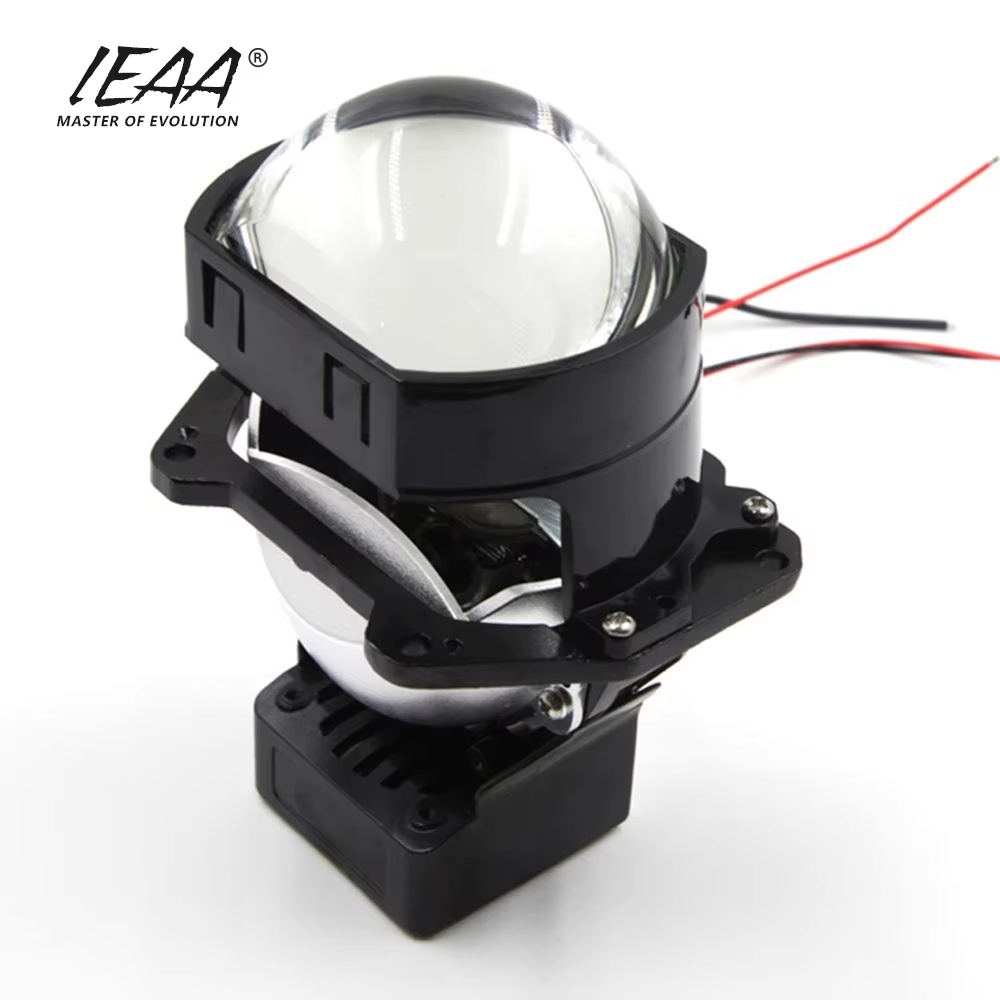
Production and design of an automotive head-light lens is a highly optical development program, with a very high level of accuracy considerably higher than standardized to a typical plastic part. The lens being the last component that defines the shape of the light beam until it reaches the road is supposed to meet strict requirements and criteria to be safe, meet the regulations and perform. To manufacturers and program managers, it is important to understand such requirements to achieve success in design validation, production, and homologation.
Dimensional and Geometric Toleracing.
The lens should be produced in a microscopic precision that guarantees the uniformity of fit and optical properties.
Critical Seal Surface Flatness: The flange to be mating the housing should have a very stringent flatness and position tolerances. Any deformation will break the hermetic seal which results in condensation and possible failure of internal electronics. Tolerance in this case is commonly defined in millimeters of a hundredth.
Accuracy of Optical Surface Profiles: The lens curvature (macro-shape as well as the micro-structured optical features such as prisms, flutes, lenslets) has to be identical to the CAD representation within a small margin of error. The deviations cause the angles of light refractions to vary, distorting the pattern of the beam design. This is confirmed with high-resolution 3D scanning, Coordinate Measuring Machine (CMM) inspection as compared to the digital master.
Homogeneity and Consistency of the refractive indices.
The beam should not be distorted by having the lens material not optically uniform.
Material Birefringence: When the polycarbonate is stressed in the mold, it might develop birefringence, which is the difference in refractive index with change in the polarization of light. Birefringence is used to produce visual effects such as beam distortion. Materials of optical quality and molding that makes use of stress control are required to ensure that birefringence does not exceed stringent values, which is frequently checked by polariscopes.
Batch-to-Batch Consistency: Refractive index of the raw polycarbonate should be similar in all batches. Any change in this primary property would alter the way the lens refracts light, and the whole headlamp assembly may be out of its official photometric limits.
Surface Quality and Finish Specifications.
A direct optical contact is the surface condition of the lens.
Visual Defect Standards: Programs identify strict requirements of the surface defects that are visible under controlled lighting. This consists of the permissible size, amount and position of inclusions, flow lines, sink marks or pits. Such flaws may reflect light, which would produce glare or spots of darkness.
Surface Roughness (Ra): The surface finish especially on non optical mounting features is regulated. Nevertheless, a given, extremely low roughness is needed even on optical surfaces in order to reduce diffuse scattering and provide a high-gloss, transparent look.
Photometric Performance Test
Although the entire headlamp is photometrically tested, the requirements of the accuracy of the lens program make this test passable.
Beam Pattern Fidelity: The lens should be made and manufactured in such a way that the cutoff line of the beam (in low beams), hot spot position, and general shape are not introduced deviations. In the design phase, prediction of performance is done using optical simulation software. During production, complete assembly sample and testing measures that the lenses of the tooling used in production produce beam patterns within the certified range of the approved type.
Light Transmission and Haze: As mentioned in the discussions above, the minimum light transmittance (e.g., >90) and the maximum haze (e.g., <1) are purely absolute requirements. These are not material specifications but are checked on completed lenses to take into consideration any form of degradation caused by the process.
Resistance to Environmental Stress over the Long Duration.
The optical accuracy should be made permanent. This program also involves the assurance that the lens will not lose its accuracy throughout its service life.
Post-Environment test: Lenses are thermal cycled, humid, and subjected to UV. Following testing, these should be re-measured concerning the important parameters such as dimensional stability (no warpage), light transmittance retention and coating integrity. Any significant change is the indicator of the inability to preserve optical accuracy in the course of time.
The precision engineering, materials science and quality control. One of the convergence points of precision engineering, materials science and quality control is the optical accuracy requirements of an automotive headlight lens program. They make sure that all the lenses, the early prototype and the million th production unit, do their job as a predictable and dependable optical component. In the case of program teams, these requirements are met not once but as a discipline, driven by complex measurement, statistical process control and profound comprehension of the fact that the lens is a key determinant of what is safe and compliant in the vehicle.