 EN
EN
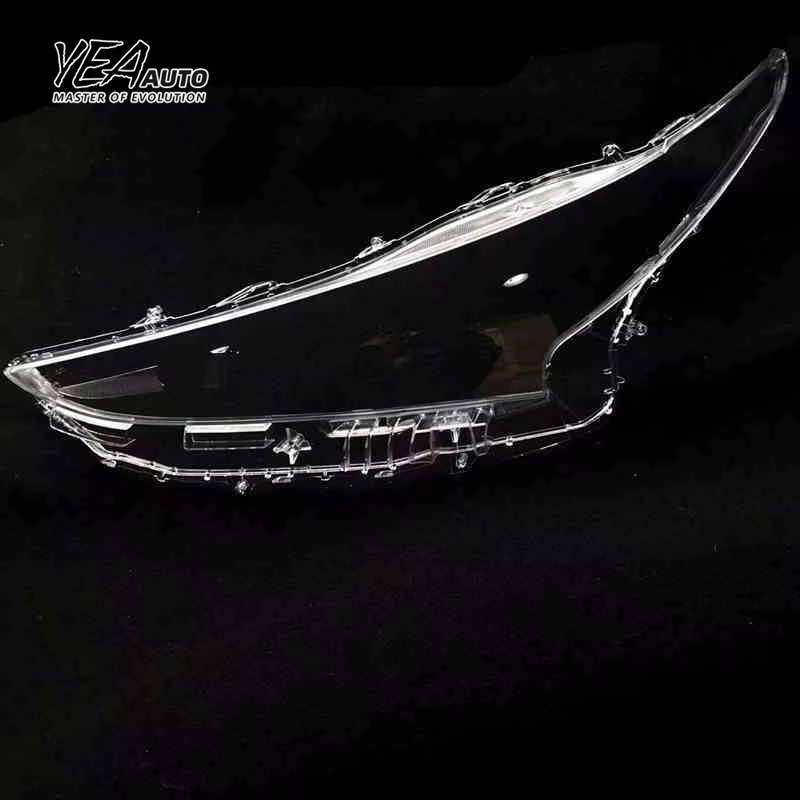
The car headlamp casing is the most essential part of the whole lighting system. It withstands the vibration, thermal forces, road debris, and other environmental hazards for a period of more than 10 years. Material is crucial, but the accuracy and the intricacy of injection type of molding process is the most critical factor which defines the final strength and tenacity of the housing. Even some techniques are applied in molding so that the structure of the plastic also becomes designed so that maximum performance of the plastic can be attained.
Gas-Assisted Injection Molding (GAIM)
Its technique is indispensable in the production of big and complicated casings that possess great structural strength.
Process In this method an inert gas usually nitrogen is introduced into the residual molten polymer inside the core of the partially filled mould where it cools and solidifies. The gas pressures the material towards the moulds walls to form a piece with a solid skin at outside and a hollow channel inside.
Advantages, Strength/Durability:
Less Sink Marks and Warpage: Eliminates uneven shrinkage that offers dimensional stability and flat sealing surfaces, which are important in waterproofing.
Greater stiffness-to-weight ratio: The gas hollows out the ribs and passages in the material do a great deal to help increase rigidity with no additional mass being added to the material; hence, it is able to resist flexing and creating optic misalignment or breaking as time progresses.
Minimization of Internal Stresses: Since cooling is done much more gradually, the residual stresses remaining in the part are minimized, and future environmentally induced cracking of the piece due to this factor is avoided.
Scientific/Decoupled Molding
It is an empirically oriented philosophy, not an isolated procedure that tries to have precise control of all the processes during the injection cycle.
Process: It separates and optimizes the four key processes, such as speed of injection, packing pressure, holding pressure, and cooling time independently. Parameters depend upon the rheological details on the particular material.
Strength/Durability: Advantage in Strength/Durability.
Optimal Fiber Orientation: The fill rates of the glass-fiber-reinforced materials are programmed to orientate the fibers in line to provide the highest tensile strength at locations of high stress.
Consistent, High density Part Packing: Eliminates weak spots, air pockets, or short-shots that would start an integrity failure under impact or vibration.
Reproducibility: With this, it provides the capability to offer part-to-part consistency i.e., all housings in a production lot are similar in terms of mechanical characteristics.
High temperature molding Rapid heat cycle molding (RHCM).
The method provides a high-quality surface and improves surface stability, especially for housing with complicated characteristics.
Process: The mold is heated dynamically to near or beyond the melting temperature of the injected material and hence it is quickly cooled after injecting the material in the mold.
Strength/Durability Strengths:
Eliminating Weld Lines: Weld lines are the intrinsic weak spots in the housings that have multiple gates or complex cores. At such junctions, material fusion can be done through RHCM to regain quasi-full strength.
Excellent Surface finish: It is a dense skin surface, which is highly glossy, increases the chemical attack and water permeability capacity.
Improved Circulation of Thick-Wall Sections: Filled completely and packed in thick mounting bosses or rib intersections, do not have internal voids.
In-Mold Sensing and Process Control.
In proactive quality assurance, real-time control of the feedback is needed.
Technology: Sensors are placed in the mold cavity, which records the pressure, a temperature, and fill pattern of the fly. This information can be used by the machine controller to modify parameters shot by shot.
Strong/Durability Advantages:
Immediate Defect Prevention: Sensitizes and removes variation in material viscosity or mold condition that either can lead to under-packed weak components.
Process Consistency-Test Data: Is this information testable and is it provided that all of the housing is produced within the close process window which has been demonstrated to possess optimum mechanical properties.
Two-Shot or Overmolding
To be provided in order to fit seals, connectors, or mounting inserts into the housing.
Process: The second, alternative material-e.g., flexible TPE to create a gasket or even harder plastic to create a reinforced insert-is then molded, too, into the first substrate in one single automated action.
Strength/ Durability Strengths:
Disappearance of Secondary Assembly: Creates a nice, permanent chemical/mechanical bond that is far more reliable than adhesive or press-clamp welds and presages a dramatic increase in leak resistance over the long term.
Localized reinforcement: It allows the reinforcement of insulated areas with high load without increasing the effective weight and thickness of the housing.
The plastic pellet is not only strong and resilient, but when forming the component in the shape of a headlight housing, the design controls the plastic and its plastic properties. Technologies like gas-assisted molding form interior structure for rigidity, scientific molding gives material structure predictability, while enhanced thermal cycling eliminates weak areas. There is a reason when beginning to cooperate with a manufacturer who can master such techniques within OEMs and Tier-1 suppliers. It ensures that not only will the housing be reliable in case it protects delicate optics, but also that it will be a perfect close and a solid foundation of the automobile which will withstand the appropriate attack of the highway.