 EN
EN

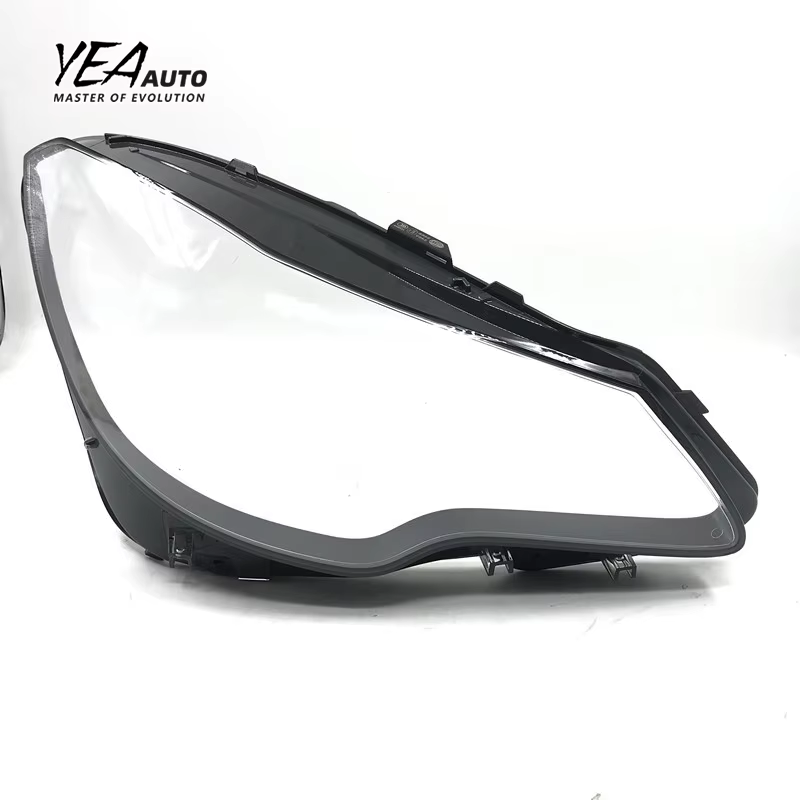
The headlight assemblies are essentially the visual interface that a car presents while operating in a nocturnal environment. Even though present headlight glass specifications call out a high-quality polycarbonate, what is extremely significant is that headlight glass design has a profound effect on the environment that is relentless and involves a multitude of factors. The success scenario, from the perspective of engineers and suppliers, would introduce a set of conditions that jeopardize headlight integrity when faced with a complex set of intersecting stressors.
Thermal Cycling-Exposure to Extreme Temperatures.
Headlights are subjected to a very dramatic and fast temperature change, which leads to profound material stress.
Operational Heat: High-intensity light sources such as HID and high-power LED create a huge amount of both radiant and conducted heat in the enclosed chamber and expansion in both the lens and housing is seen.
Outdoor temperature: outdoor temperatures can be as hot as 50degC in the desert, or as cold as -30degC in the arctic. Temperature shock between hot and cold is a major issue, e.g. when driving into a cold rain shower with hot lenses.
Design Review: The materials should be of close coefficient of thermal expansion as the housing to avoid failure of the seal. The design must ensure it can easily be extended and contracted repeatedly without incurring permanent cracks and delamination of coating.
Solar Radiation and loading of UV (ultraviolet) radiation.
The main cause of long-term material degradation is constant exposure to sunlight.
Photo-Oxidative Degradation: These are the UV photons that destroy the molecular chains of polycarbonate, causing yellowing, hazing, and embrittlement. Light transmission is limited, but worse, the beam is dispersed-resulting in glare-and the structure of the lens is weakened.
Design Solution: This is overcome by incorporating UV-blocking additives in the base polycarbonate resin and most importantly the use of high performance UV-blocking hard coating. This multi-layer coating system maintains optical clarity for as long as the vehicle lasts.
Moisture, Humidity, and Condensation.
Ingress of water and change of phases is always a challenge to the optical performance and electrical safety.
Pressure Differentials and Breathability: Headlights: Headlights are semi-sealed systems. Atmospheric pressure changes and internal temperature changes produce pressure differentials that may attract moist air. Although most assemblies contain desiccants or breathable membranes-baffles-to control this, the lens should create an ideal, permanent fitting with the housing.
Chemical effects of Water: Continued moisture in the assembly causes corrosion of reflective surfaces, oxidation of electrical contacts and fungi.
Design Consideration: The lens perimeter and sealing geometry have been designed to achieve uncompromising compression of the gasket. The choice of material provides hydrolytic stability, i.e. the plastic does not degrade when subjected to wet humid conditions.
Particulates Abrasive Damage and Impact Damage.
The facing front posture exposes the lens to a combination of constant stream of solid substances.
Sand, Dust, and Road Grit: These are fine abrasive particulates which, at velocity, microscopically scratch the surface. Scratching is cumulative and adds haze which scatters the light and makes overall efficiency low.
Stone and Debris Impact: Larger projectile can cause immediate cracks or chips, and this compromises the seal and structural integrity.
Design Consideration: The hard, sacrificial, hardened surface provided by the mandatory abrasion-resistant hard-coat is usually tested against Taber Abrasion standards. Plastic backbone supporting the polycarbonate gives the ductility to ensure the material does not break like glass does.
Chemical Exposure
Many corrosive material is experienced in the day-to-day driving.
Chemicals From The Road: De-icing Salts (chlorides), Asphalt Remainders, And Oil Film.
Vehicle Maintenance Chemicals: harsh car wash cleaners, bug cleaners, solvents and acidic wheel cleaners.
Design Consideration: Lens coating system must be chemically inert and not be etched, stained or softened by coming in contact with those agents. A usual procedure of the validation protocol is the chemical resistance test.
Dynamic Mechanical Stress: Pressure and Vibration Wave.
The lens is a part of the dynamic structure of the vehicle that is continuously exposed to forces.
High Frequency Vibration: The vibration that moves through the housing from an engine that is vibrating and a vibrating road eventually fatigues materials and loosens mechanical bonds.
Pressure waves: There is sudden fluctuation in pressure, when large vehicles pass or the vehicle is going in the tunnels, and this causes stress to the seal.
Design consideration: The mechanical design of the mounting points and the fatigue characteristics of material go a series of long-term vibration table tests where the assembly is not subjected to rattles or tear.
Environmental pre-engineering is a masterpiece in the design of an automotive headlight lens. It is not a matter of designing an open gate to light but creating a multi-purpose wall, which is optically correct, structurally sound, and hermetically sealed yet baked, frozen, sandblasted, UV-radiated, and even subjected to chemical tests during more than a decade. In the case of OEMs and Tier-1 suppliers, extensive knowledge of these crossing stress factors acts as an informed decision-making tool, from polymer chemistry to coating formulation as from geometric design to sealing technology, so this important safety element works perfectly in whatever direction the road takes it.