 EN
EN

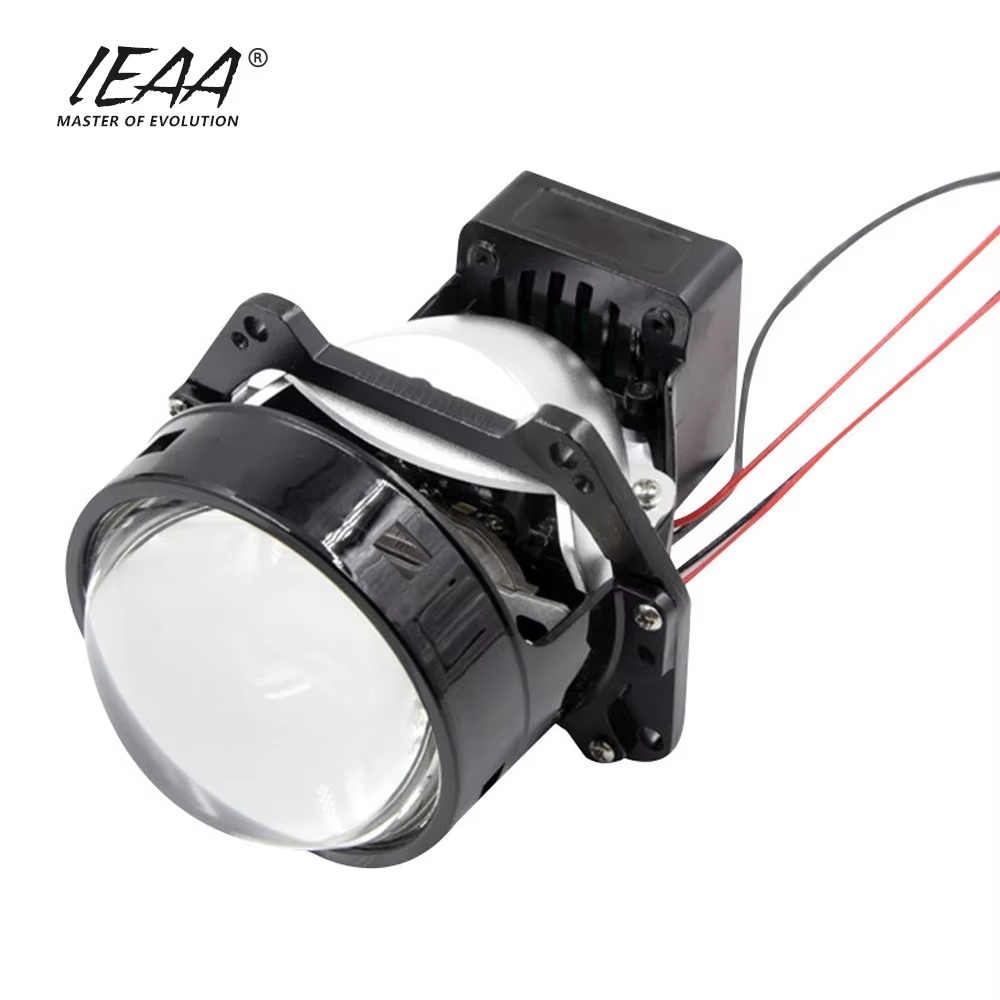
Automotive lighting systems have evolved significantly with the adoption of LED and advanced optical technologies. While brightness and efficiency are critical factors, optical clarity and beam accuracy are equally important. One of the most challenging engineering problems in headlight design is minimizing optical distortion at the edges of the lens.
Edge distortion can negatively affect the shape of the light beam, reduce illumination efficiency, and even create glare for other drivers. To solve these challenges, must carefully engineer headlight lenses using advanced optical modeling, precision materials, and strict environmental testing.
Why Edge Distortion Matters in Automotive Headlights
Optical distortion occurs when light rays passing through a lens are refracted unevenly, causing the beam to bend or scatter incorrectly. This problem becomes more pronounced near the edges of the lens, where curvature and thickness changes can alter how light travels.
If not properly controlled, edge distortion can cause several problems:
Reduced Road Visibility
Distorted light patterns may create uneven illumination, leaving dark areas on the road where hazards may be harder to detect.
Glare for Oncoming Drivers
Improperly refracted light at the edges of the lens can scatter upward or sideways, producing glare that may temporarily blind other road users.
Inconsistent Beam Patterns
Vehicle lighting systems must comply with strict beam pattern regulations. Distortion can prevent a headlight from meeting regulatory requirements in markets such as Europe and North America.
Because of these factors, minimizing optical distortion is essential for both driver safety and regulatory compliance.
Precision Optical Design for Edge Control
The first step in reducing optical distortion begins during the optical design phase. We use advanced modeling tools to analyze how light travels through each part of the lens.
Optical Ray-Tracing Simulation
Ray-tracing software simulates the path of thousands of light rays emitted from the light source. This process helps us understand how the lens geometry affects the final beam pattern.
By analyzing the behavior of light near the edges of the lens,our engineers can modify the design to:
l Adjust curvature
l Balance thickness distribution
l Optimize refractive angles
l Reduce light scattering
These simulations significantly reduce distortion before the lens is ever physically manufactured.
Optimized Lens Curvature
Edge distortion is often caused by abrupt changes in lens curvature. To minimize this effect, designers create smooth curvature transitions from the center to the edge of the lens.
This controlled curvature ensures that light rays remain properly aligned as they exit the lens surface. The result is a beam pattern that remains stable and uniform across it
Material Selection and Optical Stability
The material used in a headlight lens directly influences optical performance, durability, and long-term stability. Because automotive lighting systems operate in demanding environments—including temperature fluctuations, road debris, and continuous UV exposure—lens materials must maintain both mechanical integrity and optical precision over time.
High-Performance Optical Polymers
Modern automotive headlight lenses are primarily manufactured using optical-grade polycarbonate. This material has become the industry standard due to its combination of transparency, durability, and processing flexibility.
Key advantages of optical polycarbonate include:
l High light transmission for efficient illumination
l Strong impact resistance against road debris
l Excellent dimensional stability during manufacturing
l Lightweight construction that supports vehicle efficiency
These properties make polycarbonate highly suitable for complex optical lens designs used in modern LED and adaptive headlight systems.
However, maintaining long-term optical clarity requires careful material engineering. Under prolonged exposure to heat, humidity, and environmental stress, untreated polymers may experience molecular degradation that gradually affects transparency and mechanical performance.
To ensure stability in demanding automotive conditions, We rely on specially formulated materials designed for enhanced environmental resistance.
In addition to selecting high-quality base materials, modern headlight lenses incorporate specialized surface treatments that enhance durability and maintain optical precision.
These protective layers serve several important functions:
l Increasing resistance to surface abrasion from dust and debris
l Protecting the lens from long-term ultraviolet radiation
l Preserving surface smoothness for consistent light transmission
l Maintaining transparency throughout the product lifecycle
Because the outer surface of a headlight lens is constantly exposed to harsh environmental conditions, the stability of these coatings is critical. We therefore perform extensive reliability testing to confirm long-term adhesion and performance.
We has built extensive experience in the development of automotive and motorcycle lighting solutions for global markets. We focuses on integrating optical engineering, product innovation, and efficient manufacturing processes to deliver reliable lighting components for OEM and aftermarket customers.
With a strong emphasis on product development, we works closely with clients to design lighting solutions that meet specific vehicle requirements, performance standards, and market regulations. From concept design to large-scale production, every stage of the process is guided by strict engineering standards and quality management systems.
We supports international partners through a flexible manufacturing model that includes:
l Customized product development for automotive and motorcycle lighting
l Integrated design and production processes
l Scalable manufacturing for OEM and ODM projects
l Stable supply capabilities for global distribution
Through continuous innovation and technical refinement, We aims to provide lighting products that combine performance, durability, and consistent optical quality, helping customers remain competitive in the global automotive lighting market.