 EN
EN

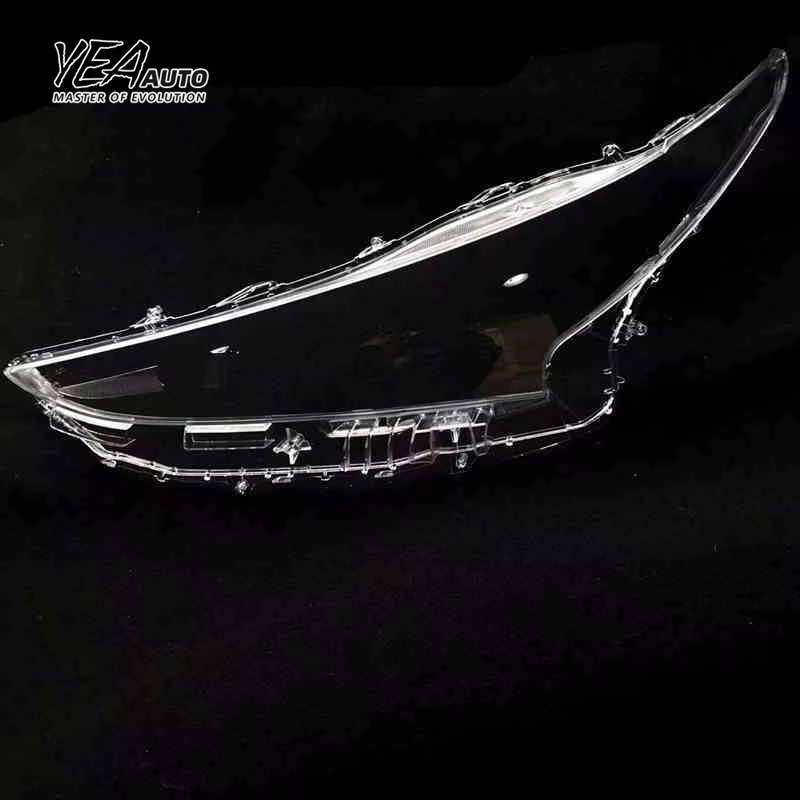
The issue of heat production management becomes a serious engineering concern with light technology in the automotive industry (such as high power LEDs and laser modules). The headlight cover which many people think it was just a transparent cover is essential to this thermal management ecosystem. This is how the modern covers are designed to resist and accommodate high temperature lamp systems.
Material Choice: More than simple Polycarbonate.
Although regular polycarbonate (PC) has a great impact resistance, there are heat deflection limits of heat.
Heat-Stabilized Polycarbonate Blends: These are special materials which are created to resist thermal aging and deformation over extended temperatures over 110degC, and still retains structural integrity directly over intensive light sources.
Glass Hybrid or Advanced Thermoplastics: In severe situations, it uses materials such as borosilicate glass or high temperature polymethyl methacrylate (PMMA) mixtures which have excellent thermal stability and minimum thermal expansion.
Combined Thermal Design Characteristics.
It is not just a matter of material choice:
Strategic Ventilation & Geometry: Covers can be made with particular curvature and internal ribbing to encourage airflow and eliminating the possibility of hot spots forming. Other designs have micro-ventilation channels whereby heat is allowed to escape without eroding dust/water sealing (IP ratings).
Increased Surface Area: Surface Area can be used to maximize cooled by calculations because the cover may be designed so that it has a maximum surface area to act as a passive heat sink.
Advanced Coating Systems
The most important is the protective hard coat. The higher the temperature the faster the degradation of the coating causing yellowing or hazing. Solutions include:
Nanoceramic /Siloxane-Based Hard Coats: This is a category of coating that is deposited through precise operations so as to create a heavy, inorganic-filled coating on the polycarbonate. They have high resistance to UV rays and thermal oxidative degradation, which guarantee clarity under thermal environments in the long term.
Infrared (IR) Reflective Coatings: In other modern designs the selective filter coating is used to enable the visible light to be transmitted freely and the infrared radiation (heat) is reflected out of the lens substrate completely eliminating thermal load.
Precision Sealing and Assembly.
Seals are subjected to heat that increases degradation. Adaptation involves:
High-Temperature Sealants: Silicone or other special elastomers are used that are said to maintain elasticity and sealing qualities at a broader range of temperatures (-40degC to +150degC+).
Compensated Mechanical Design: The various thermal expansion coefficients of the cover, housing and seals are taken into consideration to avoid stress cracks, micro-gaps or seal failure as a result of repeated thermal cycles.
Stringent Validation and Testing.
A high-temperature system cover is a verified system under extreme conditions:
Thermal Cycling Tests: The entire headlight assembly is subjected to thousands of cycles between a high heating temperature and extreme cold to model the years of use.
Hot Spot Endurance Tests: A high intensity light is placed on a specific region of the cover and left to burn over long periods of time to detect local deformation or discolouration.
Combined Environmental Tests: Thermal tests to test real-world performance, in combination with UV exposure and humidity.
Our Engineering Approach
These are challenges that we face as a professional manufacturer of the innovative automotive LED lighting. Our headlight covers are not off-the-shelf high-performance headlights. They are made as the result of co-engineering in the lamp system itself.
We design collaboratively by simulating thermally to estimate the temperatures in the lenses, we choose certified high temperature materials and we apply proprietary multi-layer coating in our own manufacturing plants. The batches are all subjected to rigorous thermal endurance QC, which makes sure the clarity, fit and safety of the cover are not jeopardized during the lifecycle of the product.
The challenge to design a headlight cover to fit into systems using high-temperature lamps is a complex task in materials science, optical engineering, and machining. It involves profound knowledge of the whole thermal system- LED chip to the outer lens. The objective of this is to make a cover not a mere passive window, but a dynamic, and long-lasting element that guarantees safety, performance, and long life of the most advanced automotive lighting systems on the road today.