
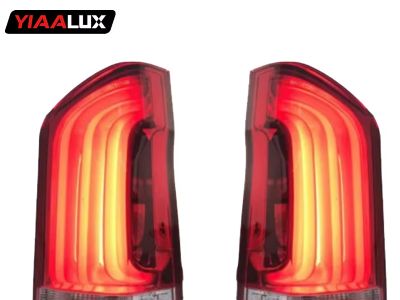
The Importance of Quality in Car Lights Manufacturing
Understanding the impact of lighting on vehicle safety and performance
According to transportation safety reports from 2023, about one third of all nighttime accidents are prevented thanks to proper automotive lighting. When driving at highway speeds, good headlights give drivers almost two extra seconds to spot obstacles ahead something that makes all the difference in avoiding crashes. The challenge these days is getting the right mix of brightness and focus. Headlights need to be bright enough to light up the road well over 120 lux but not so intense they blind other drivers coming the other way. Manufacturers are constantly working on this balance between visibility and safety for everyone on the road.
Phenomenon: Rising demand for high-performance LED lighting in modern vehicles
The global automotive LED market grew 19% year-over-year in 2023, driven by consumer and OEM demand for adaptive lighting technologies. LEDs deliver 220% more brightness than halogens while using 65% less energy. Manufacturers are now integrating smart features like automatic beam adjustment and weather-responsive patterns to meet advanced OEM requirements.
Principle: How quality manufacturing reduces long-term maintenance costs
High manufacturing standards reduce warranty claims by 40% over a five-year ownership period. Certified producers using automated optical inspection achieve 99.97% component compliance, compared to 92% on basic lines. This precision supports lifespans exceeding 12,000 hours—three times longer than uncertified alternatives—based on automotive quality benchmarks.
Trend: Shift from OEMs to specialized B2B suppliers in automotive lighting
83% of Tier 1 suppliers now partner with dedicated lighting specialists rather than general component makers. This shift enables 28% faster adoption of innovations like matrix LED and laser-assisted high beams. Specialized suppliers also reinvest 60% more of their revenue into R&D focused on durability and regulatory alignment.
Key Performance Factors: Brightness, Color Temperature, and Beam Precision
How Lumens and Lux Measurements Define Effective Brightness in LED Headlights
Brightness is measured in lumens (total output) and lux (illuminance at distance). High-performance LED headlights for commercial vehicles produce 2,000–4,000 lumens, doubling or quadrupling the 1,000-lumen output of halogen systems. According to the 2024 Automotive Lighting Report, optimal lux levels (50–75 lux at 25 meters) improve obstacle detection by 40% in low-light conditions.
Optimal Color Temperature Ranges (3000K–6500K) and Their Visibility Impact
Color temperature influences visibility and driver fatigue. Warm white (3000K–4300K) reduces eye strain on long drives, while cool white (5000K–6500K) improves contrast in rain or fog. Studies show that 5500K LEDs enhance peripheral hazard detection by 33% compared to warmer 3000K options.
Analyzing Beam Patterns: High, Low, and Fog Beam Precision for Road Safety
| Beam Type | Function | Regulatory Requirement |
|---|---|---|
| High | Long-range illumination (200+ meters) | ECE R112 <100W power cap |
| Low | Anti-glare urban coverage (50–75 meters) | DOT FMVSS108 glare limits |
| Fog | Wide, low-angled dispersion | IP67 waterproof rating |
Engineered beam patterns reduce intersection collision risks by 27%, as reported by IIHS in 2023.
Strategy: Matching Light Output to Driving Conditions and Vehicle Type
Heavy-duty trucks benefit from 6500K high beams on mountain routes, while urban delivery vans perform better with 4300K adaptive low beams. Dynamic lighting systems tailored to vehicle type and environment lower warranty claims by 19% in fleet operations, according to a comprehensive LED performance study.
Durability, Compliance, and Environmental Impact of LED Lighting
Lifespan Comparison: LED vs. Halogen and HID Lighting Technologies
LEDs last over 50,000 hours—25 times longer than halogen bulbs (1,250–2,000 hours) and five times longer than HID systems. This equates to 8–10 years of maintenance-free use under normal conditions, reducing replacement frequency by 87% compared to halogen technology.
Environmental Stress Testing: Vibration, Moisture, and Thermal Cycling Resistance
Premium automotive LEDs undergo rigorous testing, including:
- 50G vibration resistance for off-road durability
- IP67/68 waterproof ratings for submersion protection
- Thermal cycling between -40°C and 125°C (-40°F to 257°F)
Independent verification under MIL-STD-810G shows top-tier LEDs retain 95% lumen output after 3,000 hours in extreme humidity.
Controversy Analysis: Marketing Claims vs. Real-World Durability Data
Despite "decade-long" marketing claims, real-world performance varies significantly:
- 15–20% of budget LED units fail within 18 months
- Poor thermal management causes up to 40% variation in actual lifespan
- Third-party tests reveal 23% of products fall short of advertised IP ratings
These discrepancies highlight the importance of verified engineering over promotional promises.
Reduced Power Consumption of LEDs Enhancing Fuel and Battery Efficiency
LEDs consume 75% less energy than halogen equivalents, delivering tangible benefits:
- 0.2–0.5 mpg improvement in fuel economy for internal combustion engines
- 8–12% increase in EV range per charge cycle
- 30% reduction in alternator load during nighttime operation
This efficiency supports both performance and sustainability goals across vehicle types.
Lower Carbon Footprint and Recyclability of LED Components
LEDs offer significant environmental advantages:
- 90% of components are recyclable, compared to 45% for HID systems
- 62% smaller production carbon footprint per unit
- Mercury-free construction compliant with RoHS directives
Their modular design simplifies end-of-life recovery and reduces hazardous waste.
Trend: Automakers Prioritizing Eco-Friendly Suppliers in Procurement
Major OEMs now require ISO 14001 certification and closed-loop manufacturing from lighting suppliers. This aligns with global emissions targets calling for a 40% reduction in automotive component CO₂ output by 2030. Sustainable practices have become a decisive factor in supplier selection, reinforcing the link between environmental responsibility and market competitiveness.
Compliance with Automotive Lighting Standards: DOT and ECE Regulations
Key differences between DOT (USA) and ECE (Europe) regulatory frameworks
When it comes to manufacturing vehicle lighting systems, companies have to follow either the DOT standards from the US Department of Transportation or the ECE regulations set by the Economic Commission for Europe. These two sets of rules are pretty different from each other in practice. The DOT FMVSS 108 standard basically requires lights to produce balanced beam patterns with certain minimum brightness levels across North America. On the other side of the pond, the ECE R149 regulation places much greater emphasis on reducing glare and creating uneven light distributions suitable for European roads. Take ECE certified headlights as an example they actually go through special tests comparing how their beams interact with other vehicles at night, specifically looking to prevent situations where drivers get temporarily blinded. Meanwhile, under DOT guidelines manufacturers can legally create brighter lights that spread out evenly rather than being focused in particular directions. Because of these fundamental differences in what's allowed, most automotive lighting manufacturers end up creating separate versions of their products tailored specifically for each market they want to enter.
Ensuring legal compliance to avoid recalls and liability risks
Lighting that doesn't meet standards makes up around 23% of all car recalls according to NHTSA data from 2023. The fines are steep too – companies face penalties of up to $23k per violation in America and €30k across Europe. Government inspectors randomly check products, and anything off by just over 5% in color quality or brightness gets rejected outright. For manufacturers wanting their lights approved, they need to run extensive testing on prototypes. This includes putting components through brutal 1,000 hour heat cycles and dunk tests where water is splashed at different angles to simulate real world conditions. Passing these grueling trials is essential before any vehicle can hit the market with compliant lighting systems.
Role of third-party certification in verifying manufacturer adherence
Testing facilities such as TÜV SÜD and UL Solutions are essential players when it comes to meeting requirements for ECE type approvals. The certification process itself is pretty comprehensive, involving full 360 degree light measurements plus material checks at around fifteen different points throughout production. Even though the Department of Transportation lets companies certify their own products, most American trucking companies have started demanding outside verification lately according to a recent Fleet Safety Report from 2024, with about three out of four operators wanting this extra layer of assurance just to protect against warranty claims down the road. Getting certified through these standards opens doors worldwide while also keeping potential legal headaches at bay.
Evaluating a Trusted Car Lights Manufacturer: Reputation, Warranty, and Support
Evaluating Customer Reviews, Industry Certifications, and Track Record
Trusted manufacturers hold certifications such as ISO 9001 and IATF 16949, demonstrating consistent quality processes. A 2023 survey found brands with verified customer reviews had 63% fewer warranty claims than uncertified competitors. Prioritize suppliers with at least five years of OEM collaboration and documented adherence to regional lighting standards.
Warranty Terms as an Indicator of Product Confidence and Longevity
Leading manufacturers offer 3–5 year warranties—double the coverage of entry-level brands. Warranties exceeding 50,000 operating hours correlate with 38% longer real-world product lifespans (NHTSA 2023 data). Pay close attention to coverage for thermal degradation and water intrusion, the two most common failure points in automotive lighting.
Importance of Responsive Technical Support and Replacement Logistics
Top-tier suppliers provide 24/7 technical support and maintain regional distribution centers for same-day part replacements. This capability reduces vehicle downtime by up to 72% compared to suppliers reliant on overseas logistics, making it essential for commercial fleets requiring maximum uptime.
Case Study: Failure Analysis of Substandard Headlights in Fleet Operations
A 2022 study of 1,200 logistics vehicles revealed stark performance gaps:
| Factor | OEM Headlights | Third-Party Headlights |
|---|---|---|
| 2-Year Failure Rate | 11% | 89% |
| Moisture Intrusion | 3% | 68% |
| Lumen Degradation | 12% | 94% |
Fleets using non-certified headlights experienced 19% higher accident rates and 47% more roadside failures, underscoring the direct link between lighting quality and operational safety.
FAQ
What percentage of nighttime accidents are prevented with proper automotive lighting?
About one third of all nighttime accidents are prevented with proper automotive lighting.
How much did the global automotive LED market grow in 2023?
The global automotive LED market grew 19% year-over-year in 2023.
What are the lifespan comparisons between LED and halogen lighting technologies?
LEDs last over 50,000 hours, which is 25 times longer than halogen bulbs that last 1,250–2,000 hours.
What is the role of third-party certification in automotive lighting?
Third-party certification verifies manufacturer adherence to regulatory standards, providing assurance of quality and compliance, thereby reducing warranty claims and legal risks.
Table of Contents
- The Importance of Quality in Car Lights Manufacturing
- Key Performance Factors: Brightness, Color Temperature, and Beam Precision
-
Durability, Compliance, and Environmental Impact of LED Lighting
- Lifespan Comparison: LED vs. Halogen and HID Lighting Technologies
- Environmental Stress Testing: Vibration, Moisture, and Thermal Cycling Resistance
- Controversy Analysis: Marketing Claims vs. Real-World Durability Data
- Reduced Power Consumption of LEDs Enhancing Fuel and Battery Efficiency
- Lower Carbon Footprint and Recyclability of LED Components
- Trend: Automakers Prioritizing Eco-Friendly Suppliers in Procurement
- Compliance with Automotive Lighting Standards: DOT and ECE Regulations
-
Evaluating a Trusted Car Lights Manufacturer: Reputation, Warranty, and Support
- Evaluating Customer Reviews, Industry Certifications, and Track Record
- Warranty Terms as an Indicator of Product Confidence and Longevity
- Importance of Responsive Technical Support and Replacement Logistics
- Case Study: Failure Analysis of Substandard Headlights in Fleet Operations
- FAQ
- What percentage of nighttime accidents are prevented with proper automotive lighting?
- How much did the global automotive LED market grow in 2023?
- What are the lifespan comparisons between LED and halogen lighting technologies?
- What is the role of third-party certification in automotive lighting?
EN
AR
NL
FR
DE
IT
JA
KO
PT
RU
ES
ID
VI
TH
TR
HA